Showing posts with label food experts. Show all posts

Judgment of Paris

Readers, I'm still taking a bit of a mini-break from writing, so for this week I'll run one more post from Casual Kitchen's archives. Today's post is a fun one that shows how "experts" sometimes know a lot less than they think. 

Once again, thank you for all your support!
****************************************

The Judgment of Paris

Today's post is about a 1976 winetasting competition that made a roomful of French wine judges look like fools.

It used to be an article of faith among wine experts that the world's greatest wine came from one place: France. Back in the 1970s, for example, winegrowing regions like Napa and Sonoma California were thought of as producers of decent jug wines and not much more. And if you were to flip through a typical wine guide back then, you'd see barely any mention of Australia, South Africa, New Zealand or Chile.

Never mind that several leading winemakers in California were already making world-class wine. Nobody knew or cared. The best wines came from France, and that was that. This was the received wisdom of the world's wine authorities.

Until 1976. That's when a minor British wine merchant named Steven Spurrier held a winetasting event that changed everything. Spurrier was looking to publicize a Paris-based wine store he had recently purchased, and he dreamed up a seemingly ridiculous idea: invite a group of well-known French judges to blind taste France's best wines against several relatively unknown wines from California.

Spurrier thought he might be able to show the Paris wine community that some of these up-and-coming California wines could hold their own against the world's best. But of course the California wines would lose. Duh. If anything, the French judges would easily recognize their own wines--and probably score them higher out of pride.

And then the impossible happened. The California wines won. The French judges chose them over their own wines.

Today, we take for granted the idea that California's best wines are as good as any. But back then? The idea was laughable. But even more laughable was the fact that the judges at this tasting--among them some of the foremost tastemakers in French culture--literally could not tell which wines were from where. There's an amusing passage from George Taber's book Judgment of Paris that lays out the scene:

Raymond Oliver, the owner and chef of the Grand Vefour restaurant in Paris, one of the temples of French haute cuisine, swirled a white wine in his glass, held it up to the light to examine the pale straw color, smelled it, and then tasted it. After a pause he said, "Ah, back to France!" I checked my liste of wines twice to be sure, but Oliver had in fact just tasted a 1972 Freemark Abbey Chardonnay from California's Napa Valley.

Soon after, Claude Dubois-Millot of GaultMillau, a publisher of French food and wine books and magazines, tasted another white wine and said with great confidence, "That is definitely California. It has no nose." But the wine was really a 1973 Batard-Montrachet Ramonet-Prudhon, one of Burgundy's finest products.


Things went downhill from there. After the tasting was over and it was hideously apparent that these French wine "experts" had betrayed their own country's finest wines, they did what any self-respecting French person would do. They complained. One of the judges, Odette Kahn, furiously demanded her ballot back--once she learned she'd awarded her highest scores to two California reds.

Later, the entire French wine industry retaliated by banning Steven Spurrier from industry events and wine tours. And several of the judges refused to talk about the event at all--even after years had passed. It was too painful to discuss.

All of which raises a question: why would grown adults behave like this?

Think about it this way: if your ego was entirely invested in the success of your own country's wine, and you saw your precious national wines defeated in front of your eyes--and by your own hand!--you'd probably be capable of embarrassing and immature acts of rationalization too.

And the French wine community continued to rationalize. Later, they argued that the contest unfairly pitted "young" French wines against "less young" California wines. This actually wasn't true--all the wines were from similar vintages.

However, this complaint did raise the entirely valid question of which regions' wines would age better. Which is why Wine Spectator magazine ran an anniversary tasting ten years later with the same wines.

And the California wines won again--by an increased margin of victory.

So what is this story really about? Well, first, it's evidence of how blind-tastings can make even world-renowned wine experts look like dopes. More importantly, it's proof that we as consumers should drink what we like and never let experts tell us what to like.

Finally, it's about how our egos can go to embarrassingly great lengths to protect us from the truth. Here's what the now-infamous Odette Kahn--our wine judge who demanded her ballot back--later wrote in a French wine magazine:

The only lesson to be drawn from this tasting, in my opinion, is that certain winegrowers in California can produce (in small quantity, if my information is correct) wines of good quality, agreeable to taste.... I believe it is interesting for the French wine world to know this, but from this to proclaim (or to fear it to be proclaimed) that the California wines 'beat' our great wines, that is a leap, a very great leap.

This must be what they mean by "backhanded compliment."


For Further Reading/Viewing:
1) Judgment of Paris: The Historic 1976 Paris Tasting that Revolutionized Wine One of the best books I've ever read about wine, and the definitive history of this event.
2) Bottle Shock: A 2008 film dramatizing the 1976 tasting.
3) An excellent article from The Guardian about the tasting and its aftermath
4) Wikipedia on Odette Kahn.


One quick postscript for readers: I simply have to share one more scene from Judgment of Paris, where a French customs agent refuses to clear five cases of English wine into France. With the wine sitting on the floor in front of him, Steven Spurrier angrily asks the agent why he won't stamp the importation papers:

"Because English wine does not exist," the customs agent replied. "Here is my list of goods that can be exported from England to France. There is no wine. There is no such thing as English wine, so I cannot clear it through customs. I cannot clear what doesn't exist."


How can I support Casual Kitchen?
If you enjoy reading Casual Kitchen, tell a friend and spread the word! You can also support me by purchasing items from Amazon.com via links on this site, or by linking to me or subscribing to my RSS feed. Finally, you can consider submitting this article, or any other article you particularly enjoyed here, to bookmarking sites like del.icio.us, digg or stumbleupon. Thank you for your support!

Do You Trust Your Own Taste in Wine and Food?

Readers! For the next couple of weeks I'll be featuring some notable articles from Casual Kitchen's archives. I'm taking a brief break from writing to do a French language immersion in Quebec.

Once again, thanks for reading and supporting my work.

****************************************

Trusting Your Own Taste in Wine and Food

We have friends who simply cannot bear to drink a wine unless it has a 91 or greater score in Wine Spectator Magazine. Everything else is swill to them. Worse still, they simply will not go to any New York or New Jersey restaurant unless it has a Zagat rating of 23 or higher. To them, a restaurant that doesn't score well in Zagat's obviously can't be any good.

There are three distinct levels of tragedy in this.

First they guarantee that they'll always overpay for their wine and food. Second, they subsume their choices and wants to an unknown group of experts who can't possibly know what they like. And third, by doing these things, they'll never develop any genuine trust in their own tastes.

You might think that you can make better choices when you follow seemingly objective opinions from "experts." In reality, however, you are actually limiting your range of choices. Worst of all, you are building a habit of letting others do your thinking for you.

Here's the bottom line: Enslaving your preferences to others is the polar opposite of consumer empowerment, and it's contrary to everything Casual Kitchen is all about.

Here's a simple example why I think no one should subsume their choices and tastes to score, a rating, or any other seemingly objective measure of food or wine quality. A few months ago we had a wine tasting with friends, and I challenged everyone to blind taste-test two chiantis. I asked each person to tell me 1) which chianti they thought was the most expensive, and 2) which chianti they liked better.

None of us really has a "palate" in the winetasting sense. However, out of our group of four, three of us could easily tell which of the chiantis was the most expensive. Even more amazingly, all four of us still liked the cheaper chianti (which cost $15) more than the expensive one (which cost $35).

We chose for ourselves what we liked better, and happily, our choices ran counter to both the prices of the wines and the rating (apparently, the cheaper Chianti wasn't worthy of a rating because it didn't even have one). Did we prefer the less expensive wine because we have bad taste? Are our palates simply blind and deaf to good wine?

Does it really even matter? We like what we like. Isn't that a much better measure of your preferences than some wine or restaurant rating made up by people who don't even know you?

What is the insight here? It's that preferences are never objective, and your personal tastes will always be more important than the preference of any so-called expert.

Develop your own taste and your own palate. Don't rely solely on wine ratings or restaurant ratings. And most importantly don't pattern or reframe your taste preferences because of what some team of experts says. You can think and choose for yourself, and you don't need somebody else to tell you what wine tastes good or what food is desirable.

You are a better judge of that!

* This post was originally published on 5/11/2010.

Related Posts:
How to Start a Casual and Inexpensive Wine Tasting Club
27 Themes and Ideas for Wine Tasting Club Meetings
How Do You Define Truly Great Restaurant Service?
Ten Rules for the Modern Restaurant-Goer
How to Use Food and Wine Jargon Without Sounding Pretentious


How can I support Casual Kitchen?
Easy. Do all your shopping at Amazon.com via the links on this site! You can also link to me or subscribe to my RSS feed. Finally, consider sharing this article, or any other article you particularly enjoyed here, to Facebook, Twitter (follow me @danielckoontz!) or to bookmarking sites like reddit, digg or stumbleupon. I'm deeply grateful to my readers for their ongoing support.

The Judgment of Paris: The Blind Wine Tasting That Changed the World

Today's post is about a 1976 winetasting competition that made a roomful of French wine judges look like fools.

It used to be an article of faith among wine experts that the world's greatest wine came from one place: France. Back in the 1970s, for example, winegrowing regions like Napa and Sonoma California were thought of as producers of decent jug wines and not much more. And if you were to flip through a typical wine guide back then, you'd see barely any mention of Australia, South Africa, New Zealand or Chile.

Never mind that several leading winemakers in California were already making world-class wine. Nobody knew or cared. The best wines came from France, and that was that. This was the received wisdom of the world's wine authorities.

Until 1976. That's when a minor British wine merchant named Steven Spurrier held a winetasting event that changed everything. Spurrier was looking to publicize a Paris-based wine store he had recently purchased, and he dreamed up a seemingly ridiculous idea: invite a group of well-known French judges to blind taste France's best wines against several relatively unknown wines from California.

Spurrier thought he might be able to show the Paris wine community that some of these up-and-coming California wines could hold their own against the world's best. But of course the California wines would lose. Duh. If anything, the French judges would easily recognize their own wines--and probably score them higher out of pride.

And then the impossible happened. The California wines won. The French judges chose them over their own wines.

Today, we take for granted the idea that California's best wines are as good as any. But back then? The idea was laughable. But even more laughable was the fact that the judges at this tasting--among them some of the foremost tastemakers in French culture--literally could not tell which wines were from where. There's an amusing passage from George Taber's book Judgment of Paris that lays out the scene:

Raymond Oliver, the owner and chef of the Grand Vefour restaurant in Paris, one of the temples of French haute cuisine, swirled a white wine in his glass, held it up to the light to examine the pale straw color, smelled it, and then tasted it. After a pause he said, "Ah, back to France!" I checked my liste of wines twice to be sure, but Oliver had in fact just tasted a 1972 Freemark Abbey Chardonnay from California's Napa Valley.

Soon after, Claude Dubois-Millot of GaultMillau, a publisher of French food and wine books and magazines, tasted another white wine and said with great confidence, "That is definitely California. It has no nose." But the wine was really a 1973 Batard-Montrachet Ramonet-Prudhon, one of Burgundy's finest products.


Things went downhill from there. After the tasting was over and it was hideously apparent that these French wine "experts" had betrayed their own country's finest wines, they did what any self-respecting French person would do. They complained. One of the judges, Odette Kahn, furiously demanded her ballot back--once she learned she'd awarded her highest scores to two California reds.

Later, the entire French wine industry retaliated by banning Steven Spurrier from industry events and wine tours. And several of the judges refused to talk about the event at all--even after years had passed. It was too painful to discuss.

All of which raises a question: why would grown adults behave like this?

Think about it this way: if your ego was entirely invested in the success of your own country's wine, and you saw your precious national wines defeated in front of your eyes--and by your own hand!--you'd probably be capable of embarrassing and immature acts of rationalization too.

And the French wine community continued to rationalize. Later, they argued that the contest unfairly pitted "young" French wines against "less young" California wines. This actually wasn't true--all the wines were from similar vintages.

However, this complaint did raise the entirely valid question of which regions' wines would age better. Which is why Wine Spectator magazine ran an anniversary tasting ten years later with the same wines.

And the California wines won again--by an increased margin of victory.

So what is this story really about? Well, first, it's evidence of how blind-tastings can make even world-renowned wine experts look like dopes. More importantly, it's proof that we as consumers should drink what we like and never let experts tell us what to like.

Finally, it's about how our egos can go to embarrassingly great lengths to protect us from the truth. Here's what the now-infamous Odette Kahn--our wine judge who demanded her ballot back--later wrote in a French wine magazine:

The only lesson to be drawn from this tasting, in my opinion, is that certain winegrowers in California can produce (in small quantity, if my information is correct) wines of good quality, agreeable to taste.... I believe it is interesting for the French wine world to know this, but from this to proclaim (or to fear it to be proclaimed) that the California wines 'beat' our great wines, that is a leap, a very great leap.

This must be what they mean by "backhanded compliment."


For Further Reading/Viewing:
1)
Judgment of Paris: California vs. France and the Historic 1976 Paris Tasting That Revolutionized Wine One of the best books I've ever read about wine, and the definitive history of this event.
2)
Bottle Shock: A 2008 film dramatizing the 1976 tasting.
3) An excellent article from The Guardian
about the tasting and its aftermath.
4)
Wikipedia on Odette Kahn.

One quick postscript for readers: I simply have to share one more scene from Judgment of Paris, where a French customs agent refuses to clear five cases of English wine into France. With the wine sitting on the floor in front of him, Steven Spurrier angrily asks the agent why he won't stamp the importation papers:

"Because English wine does not exist," the customs agent replied. "Here is my list of goods that can be exported from England to France. There is no wine. There is no such thing as English wine, so I cannot clear it through customs. I cannot clear what doesn't exist."


How can I support Casual Kitchen?
If you enjoy reading Casual Kitchen, tell a friend and spread the word! You can also support me by purchasing items from Amazon.com via links on this site, or by linking to me or subscribing to my RSS feed. Finally, you can consider submitting this article, or any other article you particularly enjoyed here, to bookmarking sites like del.icio.us, digg or stumbleupon. Thank you for your support!

Knowing When Not to Be a Food Snob

About a year ago, there was an amusing dispute between Michael Ruhlman (author of Ratio and The Making of a Chef) and food writer Kelly Alexander. It all started when Alexander penned an article earnestly celebrating the miso salmon entree at The Cheesecake Factory.
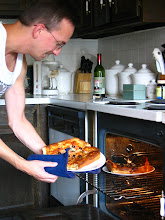
Ruhlman, predictably, made fun of her.

So Alexander made a bet with him that if he actually went to The Cheesecake Factory, he'd like the food there too. Irony of ironies, she won the bet. Ruhlman liked the food!

But what interests me about this story isn't that The Cheesecake Factory's food is good (duh, of course it's good: it's specifically engineered that way). Rather, I'm interested in the behavior of Ruhlman and his friends while they were at the restaurant--in particular their appalling condescension and food snobbery.

A few examples:

1) One of Ruhlman's dinner guests asks, "Do you think the Roadside Sliders are made of possum?"

2) Another dinner guest wolfs down a plate of pasta carbonara, but excuses himself by saying, "it's a guilty pleasure, liking bad pasta."

3) And when asked if he'd like chicken on his pasta carbonara, Ruhlman responds, "why would I want chicken on it?" (by the way, kudos to the waitress for her flawless response to a question that I can only describe as existentially condescending).


Presumably, all of this banter is tres funny to Ruhlman and his pals. It must be a blast to join a group of foodies on a journey to the culinary hinterlands where you can sit around a dinner table, condescend to your waitress and make hilariously witty comments mocking the food. It's almost as if they fail to realize that the people and the environment around them are real, rather than some movie about the Midwest that they happen to be watching.

I like Ruhlman. I really like his thinking about food. But if this is how he typically behaves when he steps outside of his food bubble, the vast majority of Americans will never accept his ideas. And that's the real shame.

And seriously, if I had a nickel for every food critic who expects to find haute cuisine at a national restaurant chain... well, I guess I'd have a hell of a lot of nickels. Is it really so difficult to grasp the idea that normal people occasionally enjoy casual meals at casual restaurants?

Look, the food at the vast majority of American restaurants is casual, often mass-produced, usually hyperpalatable, and typically contains staggering amounts of calories. It's also often incredibly delicious. Understand this for what it is, and don't expect haute cuisine in places where it shouldn't be.

It goes without saying that you don't have to eat this food, or even like it. And you are more than welcome to campaign against it (heck, campaigning against overpriced, hyperpalatable, over-salted food is one of my favorite pastimes here at Casual Kitchen). You are welcome to like what you like, dislike what you dislike, and explain--on your own food blog, even!--exactly why.

But when you deliberately set foot inside a national restaurant chain, try to recognize that the food should be judged in the context of its genre. Stop recoiling in mock horreur when your pasta carbonara comes with peas or existentially optional grilled chicken. Don't be quite so oblivious to the fact that the rest of the world may not follow your obscure rules of food decorum. And at least try to be nice.

And that joke about possum? Come on.

Readers, what's your take?

Related Articles:
Kelly Alexander's
Love Story to The Cheesecake Factory at NPR.org
Ruhlman's
admission of defeat and description of his infamous Cheesecake Factory dinner

Related Posts:
Food Absolutism
How to Resist Temptation and Increase Your Power Over Food
Obesity and the Obama Administration: A Blogger Roundtable Discussion
On the True Value of a Forgotten Restaurant Meal


How can I support Casual Kitchen?
If you enjoy reading Casual Kitchen, tell a friend and spread the word! You can also support me by purchasing items from Amazon.com via links on this site, or by linking to me from your own blog, or by subscribing to my RSS feed. Finally, you can consider submitting this article, or any other article you particularly enjoyed here, to bookmarking sites like del.icio.us, digg or stumbleupon. Thank you for your support!

Trusting Your Own Taste in Wine and Food

We have friends who simply cannot bear to drink a wine unless it has a 91 or greater score in Wine Spectator Magazine. Everything else is swill to them. Worse still, they simply will not go to any New York or New Jersey restaurant unless it has a Zagat rating of 23 or higher. To them, a restaurant that doesn't score well in Zagat's obviously can't be any good.

There are three distinct levels of tragedy in this.

First they guarantee that they'll always overpay for their wine and food. Second, they subsume their choices and wants to an unknown group of experts who can't possibly know what they like. And third, by doing these things, they'll never develop any genuine trust in their own tastes.

You might think that you can make better choices when you follow seemingly objective opinions from "experts." In reality, however, you are actually limiting your range of choices. Worst of all, you are building a habit of letting others do your thinking for you.

Here's the bottom line: Enslaving your preferences to others is the polar opposite of consumer empowerment, and it's contrary to everything Casual Kitchen is all about.

Here's a simple example why I think no one should subsume their choices and tastes to score, a rating, or any other seemingly objective measure of food or wine quality. A few months ago we had a wine tasting with friends, and I challenged everyone to blind taste-test two chiantis. I asked each person to tell me 1) which chianti they thought was the most expensive, and 2) which chianti they liked better.

None of us really has a "palate" in the winetasting sense. However, out of our group of four, three of us could easily tell which of the chiantis was the most expensive. Even more amazingly, all four of us still liked the cheaper chianti (which cost $15) more than the expensive one (which cost $35).

We chose for ourselves what we liked better, and happily, our choices ran counter to both the prices of the wines and the rating (apparently, the cheaper Chianti wasn't worthy of a rating because it didn't even have one). Did we prefer the less expensive wine because we have bad taste? Are our palates simply blind and deaf to good wine?

Does it really even matter? We like what we like. Isn't that a much better measure of your preferences than some wine or restaurant rating made up by people who don't even know you?

What is the insight here? It's that preferences are never objective, and your personal tastes will always be more important than the preference of any so-called expert.

Develop your own taste and your own palate. Don't rely solely on wine ratings or restaurant ratings. And most importantly don't pattern or reframe your taste preferences because of what some team of experts says. You can think and choose for yourself, and you don't need somebody else to tell you what wine tastes good or what food is desirable.

You are a better judge of that!

Related Posts:How to Start a Casual and Inexpensive Wine Tasting Club
27 Themes and Ideas for Wine Tasting Club Meetings
How Do You Define Truly Great Restaurant Service?
Ten Rules for the Modern Restaurant-Goer
How to Use Food and Wine Jargon Without Sounding Pretentious

How can I support Casual Kitchen?
If you enjoy reading Casual Kitchen, tell a friend and spread the word! You can also support me by purchasing items from Amazon.com via links on this site, or by linking to me or subscribing to my RSS feed. Finally, you can consider submitting this article, or any other article you particularly enjoyed here, to bookmarking sites like del.icio.us, digg or stumbleupon. Thank you for your support!