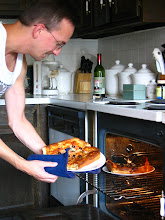
Grant McCracken, an anthropologist and an insightful commentator on modernity, offered an intriguing quote recently about Martha Stewart:
"She's the mistress of the semiotic codes dear to the upwardly aspirational middle class… Martha's semiotics were powerful. Fresh flowers. Fresh linens. Fresh colors. And an embargo on all things unsophisticated and déclassé."
To anyone who lived through the 1990s, this quote captures Martha Stewart's brand perfectly.
Except that things change. Eras and generations change. And Martha's brand, at least in that form, simply doesn't click with the Millennial generation. Millennials don't even want to buy homes, much less fill them with fresh linens and flowers. They don't bake. Or read magazines.
But the companies out there selling to us need to keep brands like these alive, alive for as long as they can. This is done by "repositioning" and "staying relevant," both repulsive marketing terms that, to me at least, merely serve to underscore the rampant cynicism infesting the world of branding and consumer products.
As an example: Do you remember Emeril? Remember him and his show, his celebrity cookbooks and celebrity-branded cookware? Do you remember "Bam!"? Martha Stewart's company bought the entire Emeril brand, back in 2008, in a failed effort to stay relevant. Once upon a time Bam! was cool. It helped sell a lot of overpriced cookware. Now nobody remembers.
So how does "Martha Stewart" (as a brand) stay relevant, now that civilization has thankfully moved on from mansions, fresh linens and other pretensions of a lost, pre-financial crisis era? How does Martha sell--and more importantly, what does she sell--to a generation that doesn't even cook?
Back to the cynical parlance of modern media: Martha will "pivot." She'll attach her trusted name to a food delivery service.[1] She will "reposition" her brand by getting on the marijuana bandwagon, doing a bunch of campy skits with Snoop Dogg to sell you trendy cannabis products. All of which will make her "relevant" to today's consumers.
In other words, she'll do anything, literally anything, to sell to you.
Doesn't it make you feel like a sucker, having stuff like this force-fed to you? Do you enjoy being encouraged to chase one branded aspirational lifestyle in one era--only later still to see it replaced by another new, "more relevant" branded aspirational lifestyle in a later era, just so you can chase that too?
The whole thing feels like an extended elaborate joke, played on three generations of consumers.
Timeline of Martha Stewart, her brand, and her companies:
1999: Martha Stewart IPOs her company, market value reaches $1.8b
2003-4: Stewart indicted, convicted and jailed for lying under oath and obstruction of justice in connection with a suspicious sale of shares of Imclone stock, one day before Imclone collapsed in value (due to failing to receive FDA approval for the drug Erbitux).
2005: Martha's comeback: Stewart is released from prison, and over the next few years, her company announces deals to sell Martha Stewart-branded merchandise at Kmart, Macy's and JCPenney, all of which devolve into lawsuits. Later she announces deals to sell merchandise through Petsmart, Michaels and Home Depot.
2011: After serving a five year ban from public markets as part of her conviction settlement with Federal regulators, Martha Stewart rejoins her namesake company's board of directors.
2015: After years of declining ad sales, declining branding revenue and declining circulation of her various publications, Martha Stewart Omnimedia is sold to Sequential Brands [ticker: SQBG] for $350m.
2019: Sequential Brands, collapsing under a mountain of debt, firesales Martha Stewart's brand, as well as the Emeril Legasse brand, for a mere $175 million, [2] less than half what they paid for it just four years earlier, and less than one-tenth of Martha Stewart Living Omnimedia's peak valuation. Sequential Brands now trades at penny-stock levels, at approximately 50c a share.
2019: Martha Stewart announces a deal with Canopy Growth Company, a Canada-based cannabis company, to market a line of cannabis supplements and other pot-infused wellness products for pets.
Footnotes:
[1] It's hard not to notice the rich irony of Martha Stewart's meal delivery service brand using the slogan "recipes from America's most trusted home cook." As if calling your meal delivery service "home cooking" actually makes it so.
[2] Get ready: now yet another company will likely be ramming a pivoted and repositioned Martha and Emeril in our faces all over again.
READ NEXT: Aspirational Marketing and the Unintended Irony of Pabst Beer
You can help support the work I do here at Casual Kitchen by visiting Amazon via any link on this site. Amazon pays a small commission to me based on whatever purchase you make on that visit, and it's at no extra cost to you. Thank you!
And, if you are interested at all in cryptocurrencies, yet another way you can help support my work here is to use this link to open up your own cryptocurrency account at Coinbase. I will receive a small affiliate commission with each opened account. Once again, thank you for your support!
Showing posts with label consumer empowerment. Show all posts
Showing posts with label consumer empowerment. Show all posts


Greeting Card SCAM! How to Save $6 (Or More) on Greeting Cards -- and Defeat the Greeting Card Industry Once and For All
Why are greeting cards so ridiculously expensive?
It's hard not to think about the incredibly fat and juicy profit margins of these little folded pieces of paper when you find Mother's Day, graduation and birthday cards priced at $4.99, $6.99, and even $8.99 in your local suburban grocery or drug store. Sure, some have glitter or cute ribbons on them. And bad poetry. But the bottom line is this: greeting cards are one of the most profitable products in modern retailing.
And long term readers of this blog know why: it has everything to do with competition. Or the lack thereof.
While there are plenty of items in our grocery stores sold at fair prices and reasonable markups, there are also certain items sold at unfair prices under surprisingly limited competition. Many branded/advertised foods, the dreaded spice aisle, and of course greeting cards are all good examples of non-competitive submarkets in the grocery/retail world.
Two companies dominate the greeting card aisle, Hallmark and American Greetings, making it one of the least-competitive segments of all of retail. Worse, when consumers need a card for Mother's Day or an almost-forgotten anniversary card for a spouse, they don't care that much about the card's price. Typically, they just need to get the card and get on with their day.
An economist would call this a non-competitive market with minimal price sensitivity. An investor like Warren Buffett would call this a wonderful business,[1] because in markets like these companies can actually raise prices, every year, little by little, and consumers just passively keep buying cards like they always do.
There may appear to be thousands of cards to choose from, the choice is illusory. The market and its egregious prices are under complete duopoly control. And that's why you can hardly find a card for less than $4.99 any more.
Just to focus our attention here: for $4.99 you can buy a paperback book. Or five pounds of pasta. Or three dozen eggs. Or three pounds of lentils! Many of Casual Kitchen's most popular laughably cheap recipes cost less than this.
Looking downfield a little bit, I wonder what the consumer reaction will be to the first basic greeting card that exceeds the $10 price point? It's coming. And here's something really mortifying: at the rate card prices are currently compounding, we could easily be paying $20 for greeting cards in a decade, give or take. [2]
Which brings us to a question: how high does the price of a greeting card have to go before it becomes... insulting? Or even condescending? As in "We, the greeting card industry, have so little regard for you consumers that we expect you to mindlessly pay 60,000% markups for a folded card."
Don't misunderstand: I have no problem paying money for a gift card. But I have a huge problem paying sums of money that are ridiculously divorced from the value we receive from that expenditure. As an empowered consumer, you should too.
So, what do we do? Well, as in many consumer empowerment situations, the answer is "it depends." But a good starting point is to stop using our typical buying patterns. Clearly, the greeting card cabal can easily prey on us if we seek to satisfy our greeting card "needs" the way we always have.
One solution we know won't work: going to another retailer. Remember the simple technique of going to a local ethnic grocery store to find more reasonably-priced spices? This tactic, which worked so well to subvert the non-competitive grocery store spice aisle, isn't effective against the anti-competitive greeting card industry. They've pretty much locked up control of all of the shelf space at all retailers, everywhere.
Which takes us to a more elegant solution, something we might call a modified "don't want it!" technique. Rather than submitting to the greeting card cabal, and paying their prices on their cards, screw 'em. I'm playing this game on my own (much more fun) terms, by making my own cards.
So, for Laura's birthday, this was this year's card:
Sure, we save a little money. But more importantly, Laura LOVED it. She thought this card was hilarious, adorable even. We both got a huge laugh out of it. And it was free. FREE. [3]
And if I can do this with my pitiful artistic ability, you can do better.
Here's the broader takeaway for anyone interested in consumer empowerment: in any anti-competitive marketplace where prices are way out of line with the value we receive, don't buy. Don't be so damn obedient. Figure out another way. Play chess.
Footnotes:
[1] Lamentably, American Greetings and Hallmark are both privately held. Recall elsewhere in Casual Kitchen where we discussed how easy it is to self-fund many of your consumer products purchases by investing in the stock of the company and receiving dividend payments. That won't work here unfortunately.
[2] Don't laugh, hear my math: Assume a $7.99 card and imagine the greeting card cabal gradually raises prices at an average 8% annual rate, consistent with recent pricing activity. In just 12 years, that $7.99 card will have compounded to $20.12. It's coming.
[3] Okay, I lied. It wasn't quite free: the cost was technically 1 sheet of standard copy paper at $7.49 per 500 sheets, or about 1.5c. Thus I provided Laura with an amusing birthday card for less than one 300th of the price of a standard $4.99 greeting card.
****************
You can help support the work I do here at Casual Kitchen by visiting Amazon via any link on this site. Amazon pays a small commission to me based on whatever purchase you make on that visit, and it's at no extra cost to you. Thank you!
And, if you are interested at all in cryptocurrencies, yet another way you can help support my work here is to use this link to open up your own cryptocurrency account at Coinbase. I will receive a small affiliate commission with each opened account. Once again, thank you for your support!
It's hard not to think about the incredibly fat and juicy profit margins of these little folded pieces of paper when you find Mother's Day, graduation and birthday cards priced at $4.99, $6.99, and even $8.99 in your local suburban grocery or drug store. Sure, some have glitter or cute ribbons on them. And bad poetry. But the bottom line is this: greeting cards are one of the most profitable products in modern retailing.
And long term readers of this blog know why: it has everything to do with competition. Or the lack thereof.
While there are plenty of items in our grocery stores sold at fair prices and reasonable markups, there are also certain items sold at unfair prices under surprisingly limited competition. Many branded/advertised foods, the dreaded spice aisle, and of course greeting cards are all good examples of non-competitive submarkets in the grocery/retail world.
Two companies dominate the greeting card aisle, Hallmark and American Greetings, making it one of the least-competitive segments of all of retail. Worse, when consumers need a card for Mother's Day or an almost-forgotten anniversary card for a spouse, they don't care that much about the card's price. Typically, they just need to get the card and get on with their day.
An economist would call this a non-competitive market with minimal price sensitivity. An investor like Warren Buffett would call this a wonderful business,[1] because in markets like these companies can actually raise prices, every year, little by little, and consumers just passively keep buying cards like they always do.
There may appear to be thousands of cards to choose from, the choice is illusory. The market and its egregious prices are under complete duopoly control. And that's why you can hardly find a card for less than $4.99 any more.
Just to focus our attention here: for $4.99 you can buy a paperback book. Or five pounds of pasta. Or three dozen eggs. Or three pounds of lentils! Many of Casual Kitchen's most popular laughably cheap recipes cost less than this.
Looking downfield a little bit, I wonder what the consumer reaction will be to the first basic greeting card that exceeds the $10 price point? It's coming. And here's something really mortifying: at the rate card prices are currently compounding, we could easily be paying $20 for greeting cards in a decade, give or take. [2]
Which brings us to a question: how high does the price of a greeting card have to go before it becomes... insulting? Or even condescending? As in "We, the greeting card industry, have so little regard for you consumers that we expect you to mindlessly pay 60,000% markups for a folded card."
Don't misunderstand: I have no problem paying money for a gift card. But I have a huge problem paying sums of money that are ridiculously divorced from the value we receive from that expenditure. As an empowered consumer, you should too.
So, what do we do? Well, as in many consumer empowerment situations, the answer is "it depends." But a good starting point is to stop using our typical buying patterns. Clearly, the greeting card cabal can easily prey on us if we seek to satisfy our greeting card "needs" the way we always have.
One solution we know won't work: going to another retailer. Remember the simple technique of going to a local ethnic grocery store to find more reasonably-priced spices? This tactic, which worked so well to subvert the non-competitive grocery store spice aisle, isn't effective against the anti-competitive greeting card industry. They've pretty much locked up control of all of the shelf space at all retailers, everywhere.
Which takes us to a more elegant solution, something we might call a modified "don't want it!" technique. Rather than submitting to the greeting card cabal, and paying their prices on their cards, screw 'em. I'm playing this game on my own (much more fun) terms, by making my own cards.
So, for Laura's birthday, this was this year's card:
 |
| I muffed the ice cream cone, but that's an exact likeness of Laura. |
Sure, we save a little money. But more importantly, Laura LOVED it. She thought this card was hilarious, adorable even. We both got a huge laugh out of it. And it was free. FREE. [3]
And if I can do this with my pitiful artistic ability, you can do better.
Here's the broader takeaway for anyone interested in consumer empowerment: in any anti-competitive marketplace where prices are way out of line with the value we receive, don't buy. Don't be so damn obedient. Figure out another way. Play chess.
Saved six bucks. She's amused (and impressed even) by my artwork.— Daniel Koontz (@danielckoontz) May 16, 2019
And on her birthday neither of us was exploited by the greeting card cabal. For once. pic.twitter.com/k3OiVAUEKy
Footnotes:
[1] Lamentably, American Greetings and Hallmark are both privately held. Recall elsewhere in Casual Kitchen where we discussed how easy it is to self-fund many of your consumer products purchases by investing in the stock of the company and receiving dividend payments. That won't work here unfortunately.
[2] Don't laugh, hear my math: Assume a $7.99 card and imagine the greeting card cabal gradually raises prices at an average 8% annual rate, consistent with recent pricing activity. In just 12 years, that $7.99 card will have compounded to $20.12. It's coming.
[3] Okay, I lied. It wasn't quite free: the cost was technically 1 sheet of standard copy paper at $7.49 per 500 sheets, or about 1.5c. Thus I provided Laura with an amusing birthday card for less than one 300th of the price of a standard $4.99 greeting card.
****************
You can help support the work I do here at Casual Kitchen by visiting Amazon via any link on this site. Amazon pays a small commission to me based on whatever purchase you make on that visit, and it's at no extra cost to you. Thank you!
And, if you are interested at all in cryptocurrencies, yet another way you can help support my work here is to use this link to open up your own cryptocurrency account at Coinbase. I will receive a small affiliate commission with each opened account. Once again, thank you for your support!
Big Grocery Stores + Decision Fatigue = Sticky Consumers
I stumbled onto an interesting post last week remarking on the tediousness of navigating a new 30,000 item grocery store and figuring out where everything is.
Decision fatigue is a real thing, and--if I'm any evidence--it's one of the reasons I hate going to new grocery stores. We got a new Wegmans in our part of New Jersey recently, and as much as I love that grocery store chain (this is something perhaps only people from Upstate New York can truly understand), I don't want to change to a new store.
Why? Because it's incredibly time-consuming, annoying, and vaguely stressful to "learn" a new store.
Hmmmm. Maybe that's part of the game.
An important idea in marketing is the concept of stickiness: the idea that it's not enough just to win a customer. You have to keep that customer, keep them coming back.
In the corporate world, companies will do all kinds of things to keep customers sticky. They'll use periodic discounting, branding, associative advertising and all kind of other techniques to keep our buying behavior as habitual as possible. In my old Wall Street career, every company would brag about how sticky their customers were, while laughing about how easily they could manipulate and play their suppliers off each other. In other words, their customers were always sticky, but whenever they themselves were customers, they weren't sticky at all. Always manipulating, never manipulated.
The point here is that sticky customer is a manipulated customer. There's a lesson in there for us as consumers.
Well, I now realize, with my typical window-licking slowness, that the complexity of a big store is yet another factor that makes us into sticky customers. Customers do not want to have to learn an entirely new grocery store. They don't want to spend time wandering around looking for items, and waste weeks--or even months--of grocery store trips acclimating to a new product geography. Just like buying a given consumer product or even a given brand is largely a habit-based decision, going to the same store and knowing where everything is likewise is based on habit, and it keeps us going to the same store. It keeps us sticky. And it keeps us coming back.
Except that truly empowered consumers don't want to be sticky! We want to be brand disloyal, able to switch stores and brands based on our needs, not theirs. We want companies to compete for our consumer dollars, and we want to buy our items when we see the prices we desire to pay.
But I haven't figured out a solution to the "big store" problem, not yet.
READ NEXT: When Things Don't Make Sense
AND: Using Your Sophistication and Great Taste Against You
*********************
You can help support the work I do here at Casual Kitchen by visiting Amazon via any link on this site. Amazon pays a small commission to me based on whatever purchase you make on that visit, and it's at no extra cost to you. Thank you!
And, if you are interested at all in cryptocurrencies, yet another way you can help support my work here is to use this link to open up your own cryptocurrency account at Coinbase. I will receive a small affiliate commission with each opened account. Once again, thank you for your support!
Decision fatigue is a real thing, and--if I'm any evidence--it's one of the reasons I hate going to new grocery stores. We got a new Wegmans in our part of New Jersey recently, and as much as I love that grocery store chain (this is something perhaps only people from Upstate New York can truly understand), I don't want to change to a new store.
Why? Because it's incredibly time-consuming, annoying, and vaguely stressful to "learn" a new store.
Hmmmm. Maybe that's part of the game.
An important idea in marketing is the concept of stickiness: the idea that it's not enough just to win a customer. You have to keep that customer, keep them coming back.
In the corporate world, companies will do all kinds of things to keep customers sticky. They'll use periodic discounting, branding, associative advertising and all kind of other techniques to keep our buying behavior as habitual as possible. In my old Wall Street career, every company would brag about how sticky their customers were, while laughing about how easily they could manipulate and play their suppliers off each other. In other words, their customers were always sticky, but whenever they themselves were customers, they weren't sticky at all. Always manipulating, never manipulated.
The point here is that sticky customer is a manipulated customer. There's a lesson in there for us as consumers.
Well, I now realize, with my typical window-licking slowness, that the complexity of a big store is yet another factor that makes us into sticky customers. Customers do not want to have to learn an entirely new grocery store. They don't want to spend time wandering around looking for items, and waste weeks--or even months--of grocery store trips acclimating to a new product geography. Just like buying a given consumer product or even a given brand is largely a habit-based decision, going to the same store and knowing where everything is likewise is based on habit, and it keeps us going to the same store. It keeps us sticky. And it keeps us coming back.
Except that truly empowered consumers don't want to be sticky! We want to be brand disloyal, able to switch stores and brands based on our needs, not theirs. We want companies to compete for our consumer dollars, and we want to buy our items when we see the prices we desire to pay.
But I haven't figured out a solution to the "big store" problem, not yet.
READ NEXT: When Things Don't Make Sense
AND: Using Your Sophistication and Great Taste Against You
*********************
You can help support the work I do here at Casual Kitchen by visiting Amazon via any link on this site. Amazon pays a small commission to me based on whatever purchase you make on that visit, and it's at no extra cost to you. Thank you!
And, if you are interested at all in cryptocurrencies, yet another way you can help support my work here is to use this link to open up your own cryptocurrency account at Coinbase. I will receive a small affiliate commission with each opened account. Once again, thank you for your support!
Worrying About All the Wrong Things
The average consumer is 15 times more likely to drown in the bathtub than to die of pesticide-related causes, and they are 1,500 times more likely to die in a car wreck than die of pesticide-related causes. But people still get in their car and drive.
--Jayson Lusk
It's interesting to think through examples where we as humans are both risk-blind and probability-blind. We fear flying and would rather drive, despite overwhelming evidence that the risk of the latter vastly exceeds the risk of the former. In my case, even though I know the relative risks of flying versus driving, I'd still rather drive.
Our minds evolved to their modern form perhaps half a million to a million years ago, long before statistics and probability were conceived as a way of looking at reality, and long before our day-to-day reality became as complex as it currently is. And once you have any familiarity with domains of behavioral finance or the psychology of human decision-making, you quickly absorb the disturbing truth that the decision making process of our own brains is obscure and opaque to us. We don't even understand ourselves.
Back to flying for a second. When you think about what flying really entails--basically waiting in a line to use a kiosk, followed by waiting in another line to get into another line to line up for a shoeless, beltless and semi-dehumanizing kabuki theater of body scans, luggage x-rays, and getting yelled at, followed by another long wait, followed by another line, followed by multiple hours in a cramped seat inside an aluminum tube breathing in other peoples' germs--all of a sudden a long drive doesn't seem so bad. Even when we know all the statistics. Thus it's completely understandable that our brains tell us to avoid the entire experience of flying.
I enjoyed writing that last paragraph, but it pretty much ruined flying for me for a while.
Now, on to pesticides. One thing that's extremely compelling to our hindbrains about PESTICIDE RISK!!1!! is its vividness. It brings to mind rhetorically powerful books like Rachel Carson's Silent Spring, spunky activists like Erin Brockovich, and infamous pollution disasters like the 1970s-era Love Canal. All you have to do is juxtapose these stories with a few reports of babies with birth defects, or young women with cancer (even better if you have photos), and you can easily hack readers' amygdalae.
And of course not only do we fear multi-syllabic chemicals and pesticides, and we fear even more so the idea that we might actually be eating them.
But then again: How sedentary or active are you? Do you make sure to sleep properly? Do you use seat belts? How many (surprisingly toxic) acetominophen or ibuprofen pills do you take in a given week? How much sugar do you consume in a given week? How much alcohol? And to go "meta" for a moment: How much time do you spend worrying about things that seem worrisome... but aren't?
These would all be questions worth considering long before worrying about pesticides.
Don't get me wrong: I'm not telling you to go out and drink a glass of Roundup. I'm certainly not saying pesticides aren't bad. I'm just asking readers with critical thinking skills to think through what's worth worrying about.
Further Reading:
1) Jayson Lusk is the author of The Food Police, a book well worth reading and discussed here at Casual Kitchen in multiple posts.
2) Risk Savvy by Gerd Giggerenzer
3) For better risk awareness in the healthcare industry, see H. Gilbert Welch's excellent book Less Medicine, More Health.
4) Thinking, Fast and Slow by Daniel Kahneman
*************************
You can help support the work I do here at Casual Kitchen by visiting Amazon via any link on this site. Amazon pays a small commission to me based on whatever purchase you make on that visit, and it's at no extra cost to you. Thank you!
--Jayson Lusk
It's interesting to think through examples where we as humans are both risk-blind and probability-blind. We fear flying and would rather drive, despite overwhelming evidence that the risk of the latter vastly exceeds the risk of the former. In my case, even though I know the relative risks of flying versus driving, I'd still rather drive.
Our minds evolved to their modern form perhaps half a million to a million years ago, long before statistics and probability were conceived as a way of looking at reality, and long before our day-to-day reality became as complex as it currently is. And once you have any familiarity with domains of behavioral finance or the psychology of human decision-making, you quickly absorb the disturbing truth that the decision making process of our own brains is obscure and opaque to us. We don't even understand ourselves.
Back to flying for a second. When you think about what flying really entails--basically waiting in a line to use a kiosk, followed by waiting in another line to get into another line to line up for a shoeless, beltless and semi-dehumanizing kabuki theater of body scans, luggage x-rays, and getting yelled at, followed by another long wait, followed by another line, followed by multiple hours in a cramped seat inside an aluminum tube breathing in other peoples' germs--all of a sudden a long drive doesn't seem so bad. Even when we know all the statistics. Thus it's completely understandable that our brains tell us to avoid the entire experience of flying.
I enjoyed writing that last paragraph, but it pretty much ruined flying for me for a while.
Now, on to pesticides. One thing that's extremely compelling to our hindbrains about PESTICIDE RISK!!1!! is its vividness. It brings to mind rhetorically powerful books like Rachel Carson's Silent Spring, spunky activists like Erin Brockovich, and infamous pollution disasters like the 1970s-era Love Canal. All you have to do is juxtapose these stories with a few reports of babies with birth defects, or young women with cancer (even better if you have photos), and you can easily hack readers' amygdalae.
And of course not only do we fear multi-syllabic chemicals and pesticides, and we fear even more so the idea that we might actually be eating them.
But then again: How sedentary or active are you? Do you make sure to sleep properly? Do you use seat belts? How many (surprisingly toxic) acetominophen or ibuprofen pills do you take in a given week? How much sugar do you consume in a given week? How much alcohol? And to go "meta" for a moment: How much time do you spend worrying about things that seem worrisome... but aren't?
These would all be questions worth considering long before worrying about pesticides.
Don't get me wrong: I'm not telling you to go out and drink a glass of Roundup. I'm certainly not saying pesticides aren't bad. I'm just asking readers with critical thinking skills to think through what's worth worrying about.
Further Reading:
1) Jayson Lusk is the author of The Food Police, a book well worth reading and discussed here at Casual Kitchen in multiple posts.
2) Risk Savvy by Gerd Giggerenzer
3) For better risk awareness in the healthcare industry, see H. Gilbert Welch's excellent book Less Medicine, More Health.
4) Thinking, Fast and Slow by Daniel Kahneman
*************************
You can help support the work I do here at Casual Kitchen by visiting Amazon via any link on this site. Amazon pays a small commission to me based on whatever purchase you make on that visit, and it's at no extra cost to you. Thank you!
Triggered to Pay Extra
There's a new field of battle in the chess game between consumers vs the companies who sell to us. Have you noticed how easily consumers fall for words like:
Sustainable
Ethical
Green
Baby-Friendly
Chemical-Free
These words are magical. All you have to do is wave a few of them in front of consumers and they instantly say "Ooh, ooh! Can I pay extra?"
We're teaching a brand new generation of consumers to respond autonomically to any premium-priced product containing any of these words.
So what company then wouldn't use these words? Words are free! You can as many of them as you want, in any order, anywhere on the package, and you can trigger a meaningful percentage of consumers to pay more for product. Often significantly more.
This reminds me of a post I wrote years ago about a bar of extra ethical chocolate I received which used these types of words, along with photos of smiling women meant to represent definitely-not-exploited members of a Bolivia-based cocoa cooperative.
What was shallow and deeply cynical about this chocolate was that you could easily see from the fine print on the label that most of the ingredients came from totally different countries from where this cooperative was, and worse, all the high-value, highly profitable work--the making of the chocolate itself--was done in Switzerland, thousands of miles away. For all we know the smiling, definitely-not-exploited laborer on the package could have been a stock photo.
With all this in mind, an empowered consumer has to consider a few things. Such as:
1) If a company uses a word on a label, does that make it true?
2) What do these words really mean? ("Chemical-free" would be a good place to start.)
3) Are these words really any different from vacuous marketing words from prior generations, like "heart-healthy" or one of my personal favorites: "a good source of seven vitamins and minerals"?
4) Have you ever seen a product with marketing copy that said "Unsustainable" or "Unethical" or "Baby-Unfriendly"?
And finally:
5) What price premium are you willing to pay for words? Will you pay double? Triple? Quadruple? Where is your limit?
Readers, what do you think?
You can help support the work I do here at Casual Kitchen by visiting Amazon via any link on this site. Amazon pays a small commission to me based on whatever purchase you make on that visit, and it's at no extra cost to you. Thank you!
And, if you are interested at all in cryptocurrencies, yet another way you can help support my work here is to use this link to open up your own cryptocurrency account at Coinbase. I will receive a small affiliate commission with each opened account. Once again, thank you for your support!
Sustainable
Ethical
Green
Baby-Friendly
Chemical-Free
These words are magical. All you have to do is wave a few of them in front of consumers and they instantly say "Ooh, ooh! Can I pay extra?"
We're teaching a brand new generation of consumers to respond autonomically to any premium-priced product containing any of these words.
So what company then wouldn't use these words? Words are free! You can as many of them as you want, in any order, anywhere on the package, and you can trigger a meaningful percentage of consumers to pay more for product. Often significantly more.
This reminds me of a post I wrote years ago about a bar of extra ethical chocolate I received which used these types of words, along with photos of smiling women meant to represent definitely-not-exploited members of a Bolivia-based cocoa cooperative.
What was shallow and deeply cynical about this chocolate was that you could easily see from the fine print on the label that most of the ingredients came from totally different countries from where this cooperative was, and worse, all the high-value, highly profitable work--the making of the chocolate itself--was done in Switzerland, thousands of miles away. For all we know the smiling, definitely-not-exploited laborer on the package could have been a stock photo.
With all this in mind, an empowered consumer has to consider a few things. Such as:
1) If a company uses a word on a label, does that make it true?
2) What do these words really mean? ("Chemical-free" would be a good place to start.)
3) Are these words really any different from vacuous marketing words from prior generations, like "heart-healthy" or one of my personal favorites: "a good source of seven vitamins and minerals"?
4) Have you ever seen a product with marketing copy that said "Unsustainable" or "Unethical" or "Baby-Unfriendly"?
And finally:
5) What price premium are you willing to pay for words? Will you pay double? Triple? Quadruple? Where is your limit?
Readers, what do you think?
You can help support the work I do here at Casual Kitchen by visiting Amazon via any link on this site. Amazon pays a small commission to me based on whatever purchase you make on that visit, and it's at no extra cost to you. Thank you!
And, if you are interested at all in cryptocurrencies, yet another way you can help support my work here is to use this link to open up your own cryptocurrency account at Coinbase. I will receive a small affiliate commission with each opened account. Once again, thank you for your support!
Neomania
neomania [nee oh MAY nee uh] noun; An obsession with the new.
Neomania is disease of modernity. And in fact the most telling examples of neomania usually involve tech gadgets. Ask any iPhone owner, especially while he's lining up outside an Apple store excitedly waiting to be separated from a thousand dollars.
But neomania exists in the world of food too. It appears in ingredient bragging, a topic we've discussed previously here at Casual Kitchen. It seems so cool to be the first food blogger to share some exotic-sounding ingredient with your readers. For example, ten years ago, if you were one of the early bloggers to offer a recipe featuring "garlic scapes" you were too cool for school! You were in the know, ahead of everybody else.
What about neomania in restaurants? I know I unfairly pick on New Yorkers all the time here, but New York City is simply loaded with people obsessed with going to the latest restaurant. And since restaurants in New York City have an 80% fail rate within five years, neomaniac New Yorkers always have an unlimited supply of the "new" to chase.
Travel? Yep. If you're the first person in your circle to go somewhere, you get tremendous status heirarchy points. First among your friends to visit Medellin? Check. First to Iceland? Check. Bali? Laos? Tibet? Check. Another bonus: trendy locations go in and out of fashion over the years, so when a hip tourist location goes from new to old to new again, you can say you went there before it was cool--and be right twice!
What's consistently depressing about neomania is how within months of a thing being new, it's quickly no longer new, and we contemptuously roll our eyes at things we recently thought were amazing. You might be too cool for school if you were early to the garlic scapes trend, but heaven help you if you were late to it. Borrrr-ing!!
Think about various trendy concepts in the restaurant industry: sea foam, lobster ravioli, avocado toast, or, for the beverage neomaniacs among you, overpriced "mules" served up in a distinctive copper cup. And think about how, if we look back honestly at the trumpeting of these experiences when they were trendy, how we all now feel vaguely sheepish having participated in the neomania when it happened: how we wish we hadn't written that me-too recipe featuring garlic scapes, just like everyone else did at the same time. How we wish we hadn't paid $15 for that mule in the trendy copper mug in that trendy upscale bar. And how we'd rather forget all about that time we paid $42 for an entree of "scallops and sea foam" at some restaurant whose name we can barely remember... that isn't even in business any more.
Neomania in cooking
There's one instance where I find neomania to be particularly offensive: when I see a perfectly perfect recipe appallingly butchered by neomaniacs. One example that comes to mind is taking a flawless, timeless recipe like apple pie or apple crisp, and using some abstruse, expensive neomaniacal new apple variety that nobody's ever heard of [1] when anyone with half a soul knows that in-season, traditional Macintosh apples [2] are the only acceptable variety to use for apple pies and crisps.
Finally, if we extend our time horizon a bit, we can see how neomania has caused us to introduce needless, even harmful elements to our lives. Consider the now-infamous government food pyramid, or worse, things like olestra, a new (and supposedly healthier) oil. I'm not sure which is worse: a set of food recommendations that were exactly, exactly wrong, or a new oil that became infamous for causing anal leakage.
Neomania is a type of infirmity, an illness, because it causes us to shun already-familiar things that work well and chase "new" things that usually don't work at all.
The new is rarely better, but it's always designed to seem so. And it certainly tricks enough of us as we scramble from vacation spot to vacation spot, from ingredient brag to ingredient brag, from new restaurant to newer restaurant, from tech gadget to tech gadget, constantly straining for more, when what we already had worked better all along.
READ NEXT: Is Organic Food Healthier? Or Just Another Aspirational Product?
AND: A False Referent
[1] The new "Jazz" apple variety comes to mind, itself ironically a cross of two other neomaniacal apples: Royal Gala and Braeburn.
[2] Okay, maybe Cortlands in a pinch.
You can help support the work I do here at Casual Kitchen by visiting Amazon via any link on this site. Amazon pays a small commission to me based on whatever purchase you make on that visit, and it's at no extra cost to you. Thank you!
And, if you are interested at all in cryptocurrencies, yet another way you can help support my work here is to use this link to open up your own cryptocurrency account at Coinbase. I will receive a small affiliate commission with each opened account. Once again, thank you for your support!
If Companies Can, They Will
A follow up thought from last week’s post, which I began with a truism: If companies can hike prices, they will.
We can extend and broaden this truism if we want to:
If companies can do anything, they will.
This includes irritating things like discontinuing or changing a product that you like, ending maintenance or support services for a product you’ve already bought, buying out a competitor’s product and discontinuing it, forcing product upgrades[1], and so on. They can do all these things… in addition to pulling typical garden-variety stunts like putting in stealth price hikes.
Average consumers[2] tend to have a common response to these things: they get angry, they complain, they shake their fists, and they whine about how greedy corporations put profits before people, etc. And then they call on a parent figure (usually “the government”) to “do something” about it.[3]
These reactions are understandable, but effete. Truly empowered consumers do not bother to ineffectually shake their fists at some company. Instead, they go Bill Belichick on that company! They get cold, rational, solution-minded and creative. And they beat that company at its own game by finding alternatives and substitutes for the products that these companies sell. Our goal here is to understand the greater chess game being played around us so we can navigate it as effectively as possible.
It’s a pointless, unprofitable and effete exercise to impotently shake your fist at whatever latest greedy thing whatever greedy company did. Stop buying.
Footnotes:
[1] Technology companies are the worst offenders here. A typical example would be Microsoft rolling out increasingly complex operating systems that slowed down computer performance, which drove consumers to upgrade to new computers, after which Microsoft would roll out a still more bloated operating system, driving yet another upgrade cycle, etc. In the 1990s, cynical computer industry observers used to say that Microsoft sold “bloatware,” not software. Fortunately, today’s computer buyer has more options, and can now choose among various free operating systems (e.g., Chrome, Linux), and this has devastated Microsoft’s formerly dominant market position. They had it coming.
[2] But not Casual Kitchen readers of course.
[3] Even worse, they do any or all of these things on Twitter, a place where no one has ever listened, ever. The online equivalent of screaming in your car.
*********************
You can help support the work I do here at Casual Kitchen by visiting Amazon via any link on this site. Amazon pays a small commission to me based on whatever purchase you make on that visit, and it's at no extra cost to you. Thank you!
And, if you are interested at all in cryptocurrencies, yet another way you can help support my work here is to use this link to open up your own cryptocurrency account at Coinbase. I will receive a small affiliate commission with each opened account. Once again, thank you for your support!
We can extend and broaden this truism if we want to:
If companies can do anything, they will.
This includes irritating things like discontinuing or changing a product that you like, ending maintenance or support services for a product you’ve already bought, buying out a competitor’s product and discontinuing it, forcing product upgrades[1], and so on. They can do all these things… in addition to pulling typical garden-variety stunts like putting in stealth price hikes.
Average consumers[2] tend to have a common response to these things: they get angry, they complain, they shake their fists, and they whine about how greedy corporations put profits before people, etc. And then they call on a parent figure (usually “the government”) to “do something” about it.[3]
These reactions are understandable, but effete. Truly empowered consumers do not bother to ineffectually shake their fists at some company. Instead, they go Bill Belichick on that company! They get cold, rational, solution-minded and creative. And they beat that company at its own game by finding alternatives and substitutes for the products that these companies sell. Our goal here is to understand the greater chess game being played around us so we can navigate it as effectively as possible.
It’s a pointless, unprofitable and effete exercise to impotently shake your fist at whatever latest greedy thing whatever greedy company did. Stop buying.
Footnotes:
[1] Technology companies are the worst offenders here. A typical example would be Microsoft rolling out increasingly complex operating systems that slowed down computer performance, which drove consumers to upgrade to new computers, after which Microsoft would roll out a still more bloated operating system, driving yet another upgrade cycle, etc. In the 1990s, cynical computer industry observers used to say that Microsoft sold “bloatware,” not software. Fortunately, today’s computer buyer has more options, and can now choose among various free operating systems (e.g., Chrome, Linux), and this has devastated Microsoft’s formerly dominant market position. They had it coming.
[2] But not Casual Kitchen readers of course.
[3] Even worse, they do any or all of these things on Twitter, a place where no one has ever listened, ever. The online equivalent of screaming in your car.
*********************
You can help support the work I do here at Casual Kitchen by visiting Amazon via any link on this site. Amazon pays a small commission to me based on whatever purchase you make on that visit, and it's at no extra cost to you. Thank you!
And, if you are interested at all in cryptocurrencies, yet another way you can help support my work here is to use this link to open up your own cryptocurrency account at Coinbase. I will receive a small affiliate commission with each opened account. Once again, thank you for your support!
Noticing and Optionality as Defense Against Price Increases
A truism about prices and consumer products companies:
If a company can raise prices... it will.
Companies are always on the lookout for circumstances where they can raise prices. And they especially like circumstances where the consumer:
a) doesn't notice, or
b) doesn't have a choice.
Doesn't notice
When I say "the consumer doesn't notice" what do I mean? I'll explain with a hypothetical price-hiking tactic. Consider your basic Kraft brand salad dressing at $2.49 for a 16-ounce jar. Kraft decides to roll out a new, "upmarket" brand extension (for example, an "organic" or "natural" salad dressing) at a price point as much as 30-50% higher than the regular product. They market this product aggressively, paying for prominent shelf locations, signs, special displays, and so on, as Kraft attempts to position this salad dressing as a high end product.
Now, this creates a subtle "pricing umbrella"--for Kraft's regular brand, but for all other brands too. Even the store brand! Each of these brands now have room to raise their prices at least another 10-15%, to a point where they are still comfortably cheaper than the high-end brand.
Yet to a non-noticing, non-attentive consumer, all these products seeeeem less expensive, even though they're not. Voila! A price hike that consumers don't really even see. Because we notice relative differences much more easily than absolute differences, a new high-end or aspirational product can improve pricing dynamics for the entire product category. This is how pricing umbrellas work. And it goes without saying that consumers who "don't notice" don't even realize they're being fooled.
Doesn't have a choice
Let's move on to the second case: where consumers can't do anything about a price hike, even if they do notice. So, for the sake of argument, let's say (for some bizarre reason) you have undying brand loyalty to Kraft brand salad dressing. You simply refuse to buy anything else.
Well, you're pretty much screwed. And it's because of your "loyalty" to a brand that doesn't care about you, that doesn't even know you exist, and that sees you as a mere mark for future price hikes. You're stuck. You have to eat any increase in prices.
You can maybe hold off on buying until you see an attractive sale price (see last week's post for more on this), but you don't know when or to what extent the company actually will discount, if at all. At the end of the day, you're gonna eat a price hike. This is why brand loyalty is toxic to consumers.
Of course, I'm using salad dressing as an example in this post for reasons of rhetoric (and metaphor, as we'll soon see). After all, a flexible, empowered, open-minded reader who hears the words "Kraft salad dressing" and "price hike" in the same sentence will instantly begin reeling off solutions, substitutions and alternatives. To most readers here at Casual Kitchen the idea of buying salad dressing at all, much less a branded salad dressing (and much, much, much less an overpriced upmarket "aspirational" salad dressing) would be a ridiculous, even vaguely pathetic act. Especially in light of how easy it is to make inexpensive (and far more healthy) salad dressings at home.
Therefore, any reader here should easily be able to arrive at multiple solutions to subvert any price hike anywhere in this entire genre of products.
Okay. Salad dressing is easy. With other products it can be more difficult. Obviously. But the point is to try and think of any product, regardless of what it is, as if it were "salad dressing" in order to help your brain generate alternatives.
Really, it doesn't matter whether it's salad dressing, airline tickets, cars, houses or ...yachts. You want to make it so that all providers of all products have to compete--on multiple, multiple levels--in order to win your business.
And yeah, I know: one one level, salad dressing doesn't really matter. Nobody changes their standard of living by beating price hikes in the salad dressing aisle. But you will change your standard of living if you can employ these concepts in other life domains and with other, much bigger-ticket items.
If there are competing products in the same store, great. If not, make them them compete "temporally" by holding off on your buying until you see a truly attractive sale price. Invoke competition from other retailers, from online retailers, and so on.
Finally, when all else fails, make them compete with a truly out of the box solution. (Examples: make the product yourself at home, use the "don't want it" heuristic, find a truly original substitutive solution, etc.) Force these guys to compete for your business on multiple, multiple levels, and you will reclaim most of your power and resist any pricing games they play.
Remember: if you don't have options you are toast. You'll be beholden to some retailer or some company and all their sneaky, creepy pricing tactics.
******************
You can help support the work I do here at Casual Kitchen by visiting Amazon via any link on this site. Amazon pays a small commission to me based on whatever purchase you make on that visit, and it's at no extra cost to you. Thank you!
And, if you are interested at all in cryptocurrencies, yet another way you can help support my work here is to use this link to open up your own cryptocurrency account at Coinbase. I will receive a small affiliate commission with each opened account. Once again, thank you for your support!
If a company can raise prices... it will.
Companies are always on the lookout for circumstances where they can raise prices. And they especially like circumstances where the consumer:
a) doesn't notice, or
b) doesn't have a choice.
Doesn't notice
When I say "the consumer doesn't notice" what do I mean? I'll explain with a hypothetical price-hiking tactic. Consider your basic Kraft brand salad dressing at $2.49 for a 16-ounce jar. Kraft decides to roll out a new, "upmarket" brand extension (for example, an "organic" or "natural" salad dressing) at a price point as much as 30-50% higher than the regular product. They market this product aggressively, paying for prominent shelf locations, signs, special displays, and so on, as Kraft attempts to position this salad dressing as a high end product.
Now, this creates a subtle "pricing umbrella"--for Kraft's regular brand, but for all other brands too. Even the store brand! Each of these brands now have room to raise their prices at least another 10-15%, to a point where they are still comfortably cheaper than the high-end brand.
Yet to a non-noticing, non-attentive consumer, all these products seeeeem less expensive, even though they're not. Voila! A price hike that consumers don't really even see. Because we notice relative differences much more easily than absolute differences, a new high-end or aspirational product can improve pricing dynamics for the entire product category. This is how pricing umbrellas work. And it goes without saying that consumers who "don't notice" don't even realize they're being fooled.
Doesn't have a choice
Let's move on to the second case: where consumers can't do anything about a price hike, even if they do notice. So, for the sake of argument, let's say (for some bizarre reason) you have undying brand loyalty to Kraft brand salad dressing. You simply refuse to buy anything else.
Well, you're pretty much screwed. And it's because of your "loyalty" to a brand that doesn't care about you, that doesn't even know you exist, and that sees you as a mere mark for future price hikes. You're stuck. You have to eat any increase in prices.
You can maybe hold off on buying until you see an attractive sale price (see last week's post for more on this), but you don't know when or to what extent the company actually will discount, if at all. At the end of the day, you're gonna eat a price hike. This is why brand loyalty is toxic to consumers.
Of course, I'm using salad dressing as an example in this post for reasons of rhetoric (and metaphor, as we'll soon see). After all, a flexible, empowered, open-minded reader who hears the words "Kraft salad dressing" and "price hike" in the same sentence will instantly begin reeling off solutions, substitutions and alternatives. To most readers here at Casual Kitchen the idea of buying salad dressing at all, much less a branded salad dressing (and much, much, much less an overpriced upmarket "aspirational" salad dressing) would be a ridiculous, even vaguely pathetic act. Especially in light of how easy it is to make inexpensive (and far more healthy) salad dressings at home.
Therefore, any reader here should easily be able to arrive at multiple solutions to subvert any price hike anywhere in this entire genre of products.
Okay. Salad dressing is easy. With other products it can be more difficult. Obviously. But the point is to try and think of any product, regardless of what it is, as if it were "salad dressing" in order to help your brain generate alternatives.
Really, it doesn't matter whether it's salad dressing, airline tickets, cars, houses or ...yachts. You want to make it so that all providers of all products have to compete--on multiple, multiple levels--in order to win your business.
And yeah, I know: one one level, salad dressing doesn't really matter. Nobody changes their standard of living by beating price hikes in the salad dressing aisle. But you will change your standard of living if you can employ these concepts in other life domains and with other, much bigger-ticket items.
If there are competing products in the same store, great. If not, make them them compete "temporally" by holding off on your buying until you see a truly attractive sale price. Invoke competition from other retailers, from online retailers, and so on.
Finally, when all else fails, make them compete with a truly out of the box solution. (Examples: make the product yourself at home, use the "don't want it" heuristic, find a truly original substitutive solution, etc.) Force these guys to compete for your business on multiple, multiple levels, and you will reclaim most of your power and resist any pricing games they play.
Remember: if you don't have options you are toast. You'll be beholden to some retailer or some company and all their sneaky, creepy pricing tactics.
******************
You can help support the work I do here at Casual Kitchen by visiting Amazon via any link on this site. Amazon pays a small commission to me based on whatever purchase you make on that visit, and it's at no extra cost to you. Thank you!
And, if you are interested at all in cryptocurrencies, yet another way you can help support my work here is to use this link to open up your own cryptocurrency account at Coinbase. I will receive a small affiliate commission with each opened account. Once again, thank you for your support!
How Prices are Changing in Your Grocery Store, and Why This One Frugality Hack No Longer Works
Something has changed in the grocery store pricing environment. And it's not just prices rising (which they are, across the board in almost all food categories).
What we're also seeing is a fundamental change in the way things are priced relative to each other, and it's ruining one of the key grocery store hacks frugal shoppers have used for years.
What's the fundamental change? It used to be that store-brand products always sold at meaningful discounts to branded products. Not any more. And so, one of the easiest ways to save money food shopping--switching from the branded to the generic product--no longer works as well as it used to.
The backstory
Consumers were a lot better behaved twenty years ago. They didn't change brands often. So, to induce the typical consumer to even consider buying a store brand or generic product, the store had to offer a really juicy price. The price discount had to be huge.
Remember, this was back when companies actually made things, and when there (sometimes) used to be an actual difference between branded and unbranded products. Not so much any more. Furthermore, if you've read any of Casual Kitchen's posts on branding, you're well aware that, today, many consumer products brands don't actually make the products they're known for. They instead outsource it to other third party food manufacturers.
Not only that, but often those third party manufacturers make not only the branded item, but the store brand product too. Often in the very same factory. And those two products sit right next to each other on the store shelf, differentiated by absolutely nothing but price. [For a depressing and highly typical example, see CK's article on commodity canned tuna.]
Consumers, especially the ones who didn't enjoy getting separated from their money for no reason, caught on to this game. They stopped playing checkers and started playing chess. When you figure out to your dismay that the only difference between a branded product and a store brand product is a label and a 30-50% higher price, you won't just consider the store brand, you'll buy it. From now on. What kind of fool would do otherwise?
Add in some inflation
There's one more step in this discussion. We're now in a more inflationary environment than we were just a few years ago. Prices are starting to rise across many grocery store categories. But here's what's unusual in today's pricing environment: while many branded products have hiked their prices, store brands have hiked their prices even more. Now, the pricing differential between branded and generic items is a lot smaller than it was. Instead of discounts of 30% or more, you might see discounts of as little as 5-10%.
I'll share an example. Over the past couple of years, Planters brand nuts has put in meaningful price hikes to the point where (in grocery stores in our area) their standard 1-lb jar of peanuts now costs up to $4.29. The store brand in my store responded to this "pricing umbella" by raising their standard price to $3.99, a mere 7% discount. Yes, both have raised prices, but the store brand raised its price more, and now the store band offers far less of a discount to the branded product than before.
Another example. Store brand analgesics (aspirin, ibuprofen, acetaminophen) now are priced at a smaller than ever discount to branded analgesics, with discounts of only 10-15%. Previously you could buy store brand painkillers for sometimes half the price of branded Tylenol or Advil. And because these products have to be identical in every way by law, this was the easiest, most entry-level frugality hack in all of consumer products.
As a matter of fact, with some products, the generic/branded pricing differential has gotten so tiny that you can sometimes find a branded product offered at a temporary "on-sale" price that's actually less than the store brand product! Grocery store reality seems totally upside down when this happens. More on this in two paragraphs.
You can only push consumers so far
Finally, you can only push prices so far before consumers push back. In many food categories, companies and grocery stores are discovering to their dismay that they hurt sales by ramming through big price hikes, as consumers adjust by finding substitutes or buying less. Then, to win those buyers back, consumer products companies rely on discounting, sales and couponing.
Here's a somewhat ludicrous example of this from the packaged cookie aisle: after years and years of price hikes and stealth price hikes (keeping the price the same but offering fewer cookies per box, one of the most annoying tactics out there), it feels ridiculous to pay $6.00 or more for a box of some 17 Oreo DoubleStuff cookies, a quantity of cookies I could easily inhale in one sitting. Apparently many consumers agree with me (maybe not about the inhaling part, but definitely about the price), and in my grocery store, these cookies are frequently offered at half off. Half!
So, let me offer readers a thought experiment. What really is the price of Oreos?
Obviously, for a non-savvy, non-flexible customer who must have her Oreos on the exact day she happens to shop… that day's price is the price, however high it happens to be.
For the rest of us, however, we easily defeat these pricing games by shopping opportunistically, and never paying full price for anything, ever. Ever! Unless something is offered at a highly desirable, on-sale price, we. don't. buy. Here's where a savvy consumer separates herself from the pack.
Or! An even savvier, self-reliant consumer can always use the Don't want it! technique and not buy Oreos at all. After all, a batch of homemade cookies--made with love from laughably cheap commodity pantry items--will taste far better and cost far less.
And because learning to make delicious food at home is an inherently good skill, and because working on this skill improves your independence, flexibility and self-sufficiency, doing so will bring you far more satisfaction than overpaying for some flimsy, pathetic plastic container of 17 lousy Oreos.
So what's the takeaway here? First, all of this goes to show, yet again, who has ultimate power in this business environment. We consumers do. We are the ones who willingly decide whether or not to pick the product up off the shelf, carry it over to the checkout counter, and fish money out of our pockets to pay. By definition, companies cannot sell us products at any price unless they offer sufficient value to us such that we decide to buy.
The minute we say no and don't buy... they start discounting. Then we buy.
The consumer products marketplace is changing, it's evolving, as companies seek ways to maintain their profitability in an increasingly uncertain retailing environment. Some of our favorite frugality techniques still work, but some aren't working quite as well as they used to. We have to stay flexible, independent and opportunistic.
READ NEXT: Why Bad Blogs Get More Readers (An Accidental, Secret Recipe for Massive Web Traffic)
AND: Nine Terrible Ways to Make Choices
*****************
You can help support the work I do here at Casual Kitchen by visiting Amazon via any link on this site. Amazon pays a small commission to me based on whatever purchase you make on that visit, and it's at no extra cost to you. Thank you!
And, if you are interested at all in cryptocurrencies, yet another way you can help support my work here is to use this link to open up your own cryptocurrency account at Coinbase. I will receive a small affiliate commission with each opened account. Once again, thank you for your support!
What we're also seeing is a fundamental change in the way things are priced relative to each other, and it's ruining one of the key grocery store hacks frugal shoppers have used for years.
What's the fundamental change? It used to be that store-brand products always sold at meaningful discounts to branded products. Not any more. And so, one of the easiest ways to save money food shopping--switching from the branded to the generic product--no longer works as well as it used to.
The backstory
Consumers were a lot better behaved twenty years ago. They didn't change brands often. So, to induce the typical consumer to even consider buying a store brand or generic product, the store had to offer a really juicy price. The price discount had to be huge.
Remember, this was back when companies actually made things, and when there (sometimes) used to be an actual difference between branded and unbranded products. Not so much any more. Furthermore, if you've read any of Casual Kitchen's posts on branding, you're well aware that, today, many consumer products brands don't actually make the products they're known for. They instead outsource it to other third party food manufacturers.
Not only that, but often those third party manufacturers make not only the branded item, but the store brand product too. Often in the very same factory. And those two products sit right next to each other on the store shelf, differentiated by absolutely nothing but price. [For a depressing and highly typical example, see CK's article on commodity canned tuna.]
Consumers, especially the ones who didn't enjoy getting separated from their money for no reason, caught on to this game. They stopped playing checkers and started playing chess. When you figure out to your dismay that the only difference between a branded product and a store brand product is a label and a 30-50% higher price, you won't just consider the store brand, you'll buy it. From now on. What kind of fool would do otherwise?
Add in some inflation
There's one more step in this discussion. We're now in a more inflationary environment than we were just a few years ago. Prices are starting to rise across many grocery store categories. But here's what's unusual in today's pricing environment: while many branded products have hiked their prices, store brands have hiked their prices even more. Now, the pricing differential between branded and generic items is a lot smaller than it was. Instead of discounts of 30% or more, you might see discounts of as little as 5-10%.
I'll share an example. Over the past couple of years, Planters brand nuts has put in meaningful price hikes to the point where (in grocery stores in our area) their standard 1-lb jar of peanuts now costs up to $4.29. The store brand in my store responded to this "pricing umbella" by raising their standard price to $3.99, a mere 7% discount. Yes, both have raised prices, but the store brand raised its price more, and now the store band offers far less of a discount to the branded product than before.
Another example. Store brand analgesics (aspirin, ibuprofen, acetaminophen) now are priced at a smaller than ever discount to branded analgesics, with discounts of only 10-15%. Previously you could buy store brand painkillers for sometimes half the price of branded Tylenol or Advil. And because these products have to be identical in every way by law, this was the easiest, most entry-level frugality hack in all of consumer products.
As a matter of fact, with some products, the generic/branded pricing differential has gotten so tiny that you can sometimes find a branded product offered at a temporary "on-sale" price that's actually less than the store brand product! Grocery store reality seems totally upside down when this happens. More on this in two paragraphs.
You can only push consumers so far
Finally, you can only push prices so far before consumers push back. In many food categories, companies and grocery stores are discovering to their dismay that they hurt sales by ramming through big price hikes, as consumers adjust by finding substitutes or buying less. Then, to win those buyers back, consumer products companies rely on discounting, sales and couponing.
Here's a somewhat ludicrous example of this from the packaged cookie aisle: after years and years of price hikes and stealth price hikes (keeping the price the same but offering fewer cookies per box, one of the most annoying tactics out there), it feels ridiculous to pay $6.00 or more for a box of some 17 Oreo DoubleStuff cookies, a quantity of cookies I could easily inhale in one sitting. Apparently many consumers agree with me (maybe not about the inhaling part, but definitely about the price), and in my grocery store, these cookies are frequently offered at half off. Half!
So, let me offer readers a thought experiment. What really is the price of Oreos?
Obviously, for a non-savvy, non-flexible customer who must have her Oreos on the exact day she happens to shop… that day's price is the price, however high it happens to be.
For the rest of us, however, we easily defeat these pricing games by shopping opportunistically, and never paying full price for anything, ever. Ever! Unless something is offered at a highly desirable, on-sale price, we. don't. buy. Here's where a savvy consumer separates herself from the pack.
Or! An even savvier, self-reliant consumer can always use the Don't want it! technique and not buy Oreos at all. After all, a batch of homemade cookies--made with love from laughably cheap commodity pantry items--will taste far better and cost far less.
And because learning to make delicious food at home is an inherently good skill, and because working on this skill improves your independence, flexibility and self-sufficiency, doing so will bring you far more satisfaction than overpaying for some flimsy, pathetic plastic container of 17 lousy Oreos.
So what's the takeaway here? First, all of this goes to show, yet again, who has ultimate power in this business environment. We consumers do. We are the ones who willingly decide whether or not to pick the product up off the shelf, carry it over to the checkout counter, and fish money out of our pockets to pay. By definition, companies cannot sell us products at any price unless they offer sufficient value to us such that we decide to buy.
The minute we say no and don't buy... they start discounting. Then we buy.
The consumer products marketplace is changing, it's evolving, as companies seek ways to maintain their profitability in an increasingly uncertain retailing environment. Some of our favorite frugality techniques still work, but some aren't working quite as well as they used to. We have to stay flexible, independent and opportunistic.
READ NEXT: Why Bad Blogs Get More Readers (An Accidental, Secret Recipe for Massive Web Traffic)
AND: Nine Terrible Ways to Make Choices
*****************
You can help support the work I do here at Casual Kitchen by visiting Amazon via any link on this site. Amazon pays a small commission to me based on whatever purchase you make on that visit, and it's at no extra cost to you. Thank you!
And, if you are interested at all in cryptocurrencies, yet another way you can help support my work here is to use this link to open up your own cryptocurrency account at Coinbase. I will receive a small affiliate commission with each opened account. Once again, thank you for your support!
Satisficing
Readers, I'll be taking (another!) break from writing for the next few weeks to work on other projects. In the meantime, enjoy this post from deep down in CK's archives.
***********************
Have you ever spent a lot of time agonizing over a restaurant menu, hoping to choose something truly exceptional--but when the food comes, you look over at your friend's entree with envy?
Or have you been in the grocery store looking indecisively at twenty-five different brands of sugary boxed cereal, wondering which one will lacerate the roof of your mouth the least?
Have you perused your favorite cookbooks, hoping to try a new dish, and had trouble deciding because too many things sound good to you?
One of the strangely counterintuitive truths of modern life is this: Having a lot of choices actually makes you less happy. Having a few choices is fine--but having forty choices is hell.
And this is especially true with food. If you're looking at a menu with three or four choices on it, no problema. But take that menu up to 15 or 20 choices and let the agony set in.
With this issue in mind, I'd like to share with you a word first coined by Herbert Simon (the American political scientist and economist), and then popularized by Barry Schwartz in his book The Paradox of Choice.
Satisficing.
This word is a somewhat ungrammatical combination of the words "satisfy" and "suffice." And the concept, when I've applied it to decision-making and choosing from a menu of options, has made me a far less miserable person.
If you're haven't heard of satisficing before, let's spend a brief moment defining it. Satisficing can be applied in almost any area of life, but today I want to talk about it mainly in the context of food.
Consider two people, The Maximizer and The Satisficer, going out with a group of friends for dinner. They sit down and begin to peruse the menu.
The Maximizer wants to order the very best thing on the menu.
The Satisficer will order the first sufficient satisfying thing he sees on the menu.
Let's think through what happens next:
The Satisficer quickly picks something, and ends his internal mental discussion about what to order almost instantly. He can now join the conversation and have a relaxing, enjoyable evening. Because the Satisficer didn't try to order the best thing on the menu, he is unlikely to be disappointed no matter what happens. He has no attachment to the outcome of what he chose; in fact he might be in for a pleasant surprise at how good his entree is.
Not so for the Maximizer. Because he wants to get the best thing on the menu, he has to consider practically every dish. His decision-making takes significantly more time and effort. Worse, after he's made his agonizing decision, he's likely to waste energy worrying that he actually didn't order the best thing on the menu. He might even look over at the Satisficer's entree and think to himself, "dammit, his looks better than mine!"
After all of this extra effort, he unfortunately suffers the worst irony of all: he will likely end up less happy with his choice.
When I finished reading Barry Schwartz's The Paradox of Choice, I remember thinking how much time I wasted over the past 30-plus years just trying to make up my mind. And it's only brought me more misery.
So consider applying a little satisficing the next time you're out in a restaurant. Think of it as the Eleventh Rule for the Modern Restaurant-Goer.
And then consider other ways to apply it in cooking. It should make menu preparation and recipe selection at home far easier and far less time-consuming. And certainly when you're choosing between brands or categories of food ("Hmmm... which of these 35 kinds of cheese/ice cream/chocolate/etc., should we have with dinner tonight?"), using the satisficing approach should save you a lot of stress and decision-making time.
***********************
You can help support the work I do here at Casual Kitchen by visiting Amazon via any link on this site. Amazon pays a small commission to me based on whatever purchase you make on that visit, and it's at no extra cost to you. Thank you!
And, if you are interested at all in cryptocurrencies, yet another way you can help support my work here is to use this link to open up your own cryptocurrency account at Coinbase. I will receive a small affiliate commission with each opened account. Once again, thank you for your support!
***********************
Have you ever spent a lot of time agonizing over a restaurant menu, hoping to choose something truly exceptional--but when the food comes, you look over at your friend's entree with envy?
Or have you been in the grocery store looking indecisively at twenty-five different brands of sugary boxed cereal, wondering which one will lacerate the roof of your mouth the least?
Have you perused your favorite cookbooks, hoping to try a new dish, and had trouble deciding because too many things sound good to you?
One of the strangely counterintuitive truths of modern life is this: Having a lot of choices actually makes you less happy. Having a few choices is fine--but having forty choices is hell.
And this is especially true with food. If you're looking at a menu with three or four choices on it, no problema. But take that menu up to 15 or 20 choices and let the agony set in.
With this issue in mind, I'd like to share with you a word first coined by Herbert Simon (the American political scientist and economist), and then popularized by Barry Schwartz in his book The Paradox of Choice.
Satisficing.
This word is a somewhat ungrammatical combination of the words "satisfy" and "suffice." And the concept, when I've applied it to decision-making and choosing from a menu of options, has made me a far less miserable person.
If you're haven't heard of satisficing before, let's spend a brief moment defining it. Satisficing can be applied in almost any area of life, but today I want to talk about it mainly in the context of food.
Consider two people, The Maximizer and The Satisficer, going out with a group of friends for dinner. They sit down and begin to peruse the menu.
The Maximizer wants to order the very best thing on the menu.
The Satisficer will order the first sufficient satisfying thing he sees on the menu.
Let's think through what happens next:
The Satisficer quickly picks something, and ends his internal mental discussion about what to order almost instantly. He can now join the conversation and have a relaxing, enjoyable evening. Because the Satisficer didn't try to order the best thing on the menu, he is unlikely to be disappointed no matter what happens. He has no attachment to the outcome of what he chose; in fact he might be in for a pleasant surprise at how good his entree is.
Not so for the Maximizer. Because he wants to get the best thing on the menu, he has to consider practically every dish. His decision-making takes significantly more time and effort. Worse, after he's made his agonizing decision, he's likely to waste energy worrying that he actually didn't order the best thing on the menu. He might even look over at the Satisficer's entree and think to himself, "dammit, his looks better than mine!"
After all of this extra effort, he unfortunately suffers the worst irony of all: he will likely end up less happy with his choice.
When I finished reading Barry Schwartz's The Paradox of Choice,
I remember thinking how much time I wasted over the past 30-plus years just trying to make up my mind. And it's only brought me more misery.So consider applying a little satisficing the next time you're out in a restaurant. Think of it as the Eleventh Rule for the Modern Restaurant-Goer.
And then consider other ways to apply it in cooking. It should make menu preparation and recipe selection at home far easier and far less time-consuming. And certainly when you're choosing between brands or categories of food ("Hmmm... which of these 35 kinds of cheese/ice cream/chocolate/etc., should we have with dinner tonight?"), using the satisficing approach should save you a lot of stress and decision-making time.
***********************
You can help support the work I do here at Casual Kitchen by visiting Amazon via any link on this site. Amazon pays a small commission to me based on whatever purchase you make on that visit, and it's at no extra cost to you. Thank you!
And, if you are interested at all in cryptocurrencies, yet another way you can help support my work here is to use this link to open up your own cryptocurrency account at Coinbase. I will receive a small affiliate commission with each opened account. Once again, thank you for your support!
Cooking Like the Stars? Don't Waste Your Money
Readers, I'll be taking (another!) break from writing for a few weeks to work on other projects. In the meantime, enjoy this post from deep down in CK's archives.
***********************
Is celebrity chef branded cookware worth the extra money? This was the subject of a recent article in the Wall Street Journal.
The article raised two thought-provoking questions:
1) Is it worth it to pay up for a cookware set endorsed by celebrity chefs like Rachel Ray or Emeril Lagasse?
2) What do you really get for your money when you buy chef-branded cookware?
The surprising answers to these questions were 1) no, and 2) surprisingly little.
"A star endorsement doesn't mean stellar cookware."
The anecdotes from the article are depressing. The silicone handle on Rachel Ray's frying pan catches fire during a test use. Emeril Lagasse's 8-inch frying pan bends "like an accordion." And Marcus Samuelsson's 10-piece set, while of solid quality and design, retails for $500.
Tales like these make me want to crawl into my cupboard and hug my humble Revere cookware.
Neither I nor the WSJ mean to pick on these great celebrity chefs who collectively have done so much to bring great cooking to the masses. But let's be reasonable about the relative value of the products they hawk.
If you're trying to cook on a budget, or if you're trying to build out your kitchen at a reasonable cost, don't trip yourself up with a large capital outlay for overpriced cooking gear. And, most importantly, don't pay up for suspect merchandise. If you buy poor quality cookware, or pay too much for what you do buy, it can suck all the fun out of cooking for years.
Instead, stick to a basic but high-quality set of cooking gear that doesn't include extra branding and advertising costs. In our kitchen we've been overjoyed with the quality and durability of our reasonably priced Revere and T-Fall cookware, which we've been happily using for nearly two decades.
You don't need the stamp of approval from a celebrity chef to cook exceptional meals at home.
***********************
You can help support the work I do here at Casual Kitchen by visiting Amazon via any link on this site. Amazon pays a small commission to me based on whatever purchase you make on that visit, and it's at no extra cost to you. Thank you!
And, if you are interested at all in cryptocurrencies, yet another way you can help support my work here is to use this link to open up your own cryptocurrency account at Coinbase. I will receive a small affiliate commission with each opened account. Once again, thank you for your support!
***********************
Is celebrity chef branded cookware worth the extra money? This was the subject of a recent article in the Wall Street Journal.
The article raised two thought-provoking questions:
1) Is it worth it to pay up for a cookware set endorsed by celebrity chefs like Rachel Ray or Emeril Lagasse?
2) What do you really get for your money when you buy chef-branded cookware?
The surprising answers to these questions were 1) no, and 2) surprisingly little.
"A star endorsement doesn't mean stellar cookware."
The anecdotes from the article are depressing. The silicone handle on Rachel Ray's frying pan catches fire during a test use. Emeril Lagasse's 8-inch frying pan bends "like an accordion." And Marcus Samuelsson's 10-piece set, while of solid quality and design, retails for $500.
Tales like these make me want to crawl into my cupboard and hug my humble Revere cookware.
Neither I nor the WSJ mean to pick on these great celebrity chefs who collectively have done so much to bring great cooking to the masses. But let's be reasonable about the relative value of the products they hawk.
If you're trying to cook on a budget, or if you're trying to build out your kitchen at a reasonable cost, don't trip yourself up with a large capital outlay for overpriced cooking gear. And, most importantly, don't pay up for suspect merchandise. If you buy poor quality cookware, or pay too much for what you do buy, it can suck all the fun out of cooking for years.
Instead, stick to a basic but high-quality set of cooking gear that doesn't include extra branding and advertising costs. In our kitchen we've been overjoyed with the quality and durability of our reasonably priced Revere and T-Fall cookware, which we've been happily using for nearly two decades.
You don't need the stamp of approval from a celebrity chef to cook exceptional meals at home.
***********************
You can help support the work I do here at Casual Kitchen by visiting Amazon via any link on this site. Amazon pays a small commission to me based on whatever purchase you make on that visit, and it's at no extra cost to you. Thank you!
And, if you are interested at all in cryptocurrencies, yet another way you can help support my work here is to use this link to open up your own cryptocurrency account at Coinbase. I will receive a small affiliate commission with each opened account. Once again, thank you for your support!
Four Frugality Heuristics [That Will Make You Rich If You Use Them]
Frugality tips are nice, but frugality heuristics are better.
Heuristics--rules of thumb--let you function on a strategy level rather than on a mere tactical level. A few well-thought-out heuristics can take the place of a million specific tips and tactics.
Look, we know retailers and consumer products companies become more and more sophisticated by the day in persuading us, manipulating us and extracting money from us. It is my hope that today's post will help you avoid most, if not all, of the traps and pitfalls awaiting us in the consumer marketplace.
Frugality Heuristic #1: Don't use money to solve problems.
This rule helps you consider alternatives to solving a given need without automatically defaulting to the marketplace to make a purchase. If it's an item you need: could you borrow it, freecycle it, or use something you already own? If it's a service, can you learn to do it yourself, or trade/barter for it? Better still, can you just "don't want!" it? And so on. Bonus: by using this heuristic over the long term, you'll build enormous adaptability, flexibility and resourcefulness.
Frugality Heuristic #2: If they're offering it to you, it's profitable for them--and unprofitable for you.
Notice that things are sold to you if and only if it's worth doing so. It must be meaningfully profitable to the entity doing the selling. Faithfully using this heuristic will protect you from products and services like extended warranties, upsells, excess insurance, most high-fee investment products[1], etc.
Frugality Heuristic #3: If it's advertised, you don't want it.
Remember: You the consumer pay for all advertising. Ad costs are always passed through to the end customer in the form of higher prices, yet despite this, the advertising-consumption model is perhaps one of the best systems ever devised for triggering desires and then separating us from our money. Do not play this game. At the very least, find an equivalent product that isn't advertised. A savvy and intelligent consumer thinks about the enormous cost of heavy advertising, knows that she ends up paying for it, and thus lets advertising become a stimulus not to buy.
Frugality Heuristic #4: Avoid all payment plans.
Payment plans obscure the true price you pay for something, and they almost always substantially increase your final cost[2] while substantially increasing profits to the company offering the payment plan (see Heuristic #2). This heuristic will also save you enormous amounts of money over the course of your life by stopping you from buying things that, if you're honest with yourself, you can't actually afford.
Readers: What other frugality heuristics would you add?
READ NEXT: Good Games
Footnotes:
[1] Note that this goes double for investments, and triple!!!!11! for complex investments like variable annuities, universal life insurance policies, unit investment trusts, etc. Which gives us Investment Heuristic #2a: Do not invest in any investment that is sold to you.
[2] This includes those seemingly attractive 0% financing arrangements from car dealers that calculate your monthly payment by way of a complicated and opaque process. You think you're getting a great deal on a too-good-to-be-true interest rate, while they are likely arranging things such that you pay more than you think. Once again, see Heuristic #2 for the real reason these plans are offered to you in the first place.
***********************
You can help support the work I do here at Casual Kitchen by visiting Amazon via any link on this site. Amazon pays a small commission to me based on whatever purchase you make on that visit, and it's at no extra cost to you. Thank you!
And, if you are interested at all in cryptocurrencies, yet another way you can help support my work here is to use this link to open up your own cryptocurrency account at Coinbase. I will receive a small affiliate commission with each opened account. Once again, thank you for your support!
Heuristics--rules of thumb--let you function on a strategy level rather than on a mere tactical level. A few well-thought-out heuristics can take the place of a million specific tips and tactics.
Look, we know retailers and consumer products companies become more and more sophisticated by the day in persuading us, manipulating us and extracting money from us. It is my hope that today's post will help you avoid most, if not all, of the traps and pitfalls awaiting us in the consumer marketplace.
Frugality Heuristic #1: Don't use money to solve problems.
This rule helps you consider alternatives to solving a given need without automatically defaulting to the marketplace to make a purchase. If it's an item you need: could you borrow it, freecycle it, or use something you already own? If it's a service, can you learn to do it yourself, or trade/barter for it? Better still, can you just "don't want!" it? And so on. Bonus: by using this heuristic over the long term, you'll build enormous adaptability, flexibility and resourcefulness.
Frugality Heuristic #2: If they're offering it to you, it's profitable for them--and unprofitable for you.
Notice that things are sold to you if and only if it's worth doing so. It must be meaningfully profitable to the entity doing the selling. Faithfully using this heuristic will protect you from products and services like extended warranties, upsells, excess insurance, most high-fee investment products[1], etc.
Frugality Heuristic #3: If it's advertised, you don't want it.
Remember: You the consumer pay for all advertising. Ad costs are always passed through to the end customer in the form of higher prices, yet despite this, the advertising-consumption model is perhaps one of the best systems ever devised for triggering desires and then separating us from our money. Do not play this game. At the very least, find an equivalent product that isn't advertised. A savvy and intelligent consumer thinks about the enormous cost of heavy advertising, knows that she ends up paying for it, and thus lets advertising become a stimulus not to buy.
Frugality Heuristic #4: Avoid all payment plans.
Payment plans obscure the true price you pay for something, and they almost always substantially increase your final cost[2] while substantially increasing profits to the company offering the payment plan (see Heuristic #2). This heuristic will also save you enormous amounts of money over the course of your life by stopping you from buying things that, if you're honest with yourself, you can't actually afford.
Readers: What other frugality heuristics would you add?
READ NEXT: Good Games
Footnotes:
[1] Note that this goes double for investments, and triple!!!!11! for complex investments like variable annuities, universal life insurance policies, unit investment trusts, etc. Which gives us Investment Heuristic #2a: Do not invest in any investment that is sold to you.
[2] This includes those seemingly attractive 0% financing arrangements from car dealers that calculate your monthly payment by way of a complicated and opaque process. You think you're getting a great deal on a too-good-to-be-true interest rate, while they are likely arranging things such that you pay more than you think. Once again, see Heuristic #2 for the real reason these plans are offered to you in the first place.
***********************
You can help support the work I do here at Casual Kitchen by visiting Amazon via any link on this site. Amazon pays a small commission to me based on whatever purchase you make on that visit, and it's at no extra cost to you. Thank you!
And, if you are interested at all in cryptocurrencies, yet another way you can help support my work here is to use this link to open up your own cryptocurrency account at Coinbase. I will receive a small affiliate commission with each opened account. Once again, thank you for your support!
Compounding
We think about the word "compounding" in a needlessly narrow sense. Typically, we consider it only in the context of investment compounding. As in: If I save X dollars a month and it compounds at Y percent, I will have [buttloads of] dollars in 30 years.
Today I want to think about compounding more metaphorically and in a broader context. It's a much more powerful concept than it at first appears.
One aspect of compounding that's always interested me is how, over time, it transforms tiny differences today into enormous future differences. If you can stay patient, that is. Sticking with a simple (and once again, "narrow") financial example for the moment, imagine two median income households in the USA, and consider what happens if one household chooses to save and invest a couple hundred bucks a month while the other saves nothing.
At first, there's next to no difference between these households, either economically or in quality of life. To the typical middle class household, $200 doesn't really feel like all that much money. It doesn't feel like it really matters all that much whether you save it or not. Which is of course why many households fail to choose to save.
However, it's also true that saving a couple hundred bucks a month on a median household lifestyle would involve giving up very little. Hilariously little. Cancelling cable TV and getting a lowish-end cellphone plan would do it. Skipping a few dinners out per month would do it. So would choosing to drive a modest paid-off car rather than driving an expensive debt-financed car. Note also: combining all these steps would produce savings well beyond a couple of hundred dollars per month, all for a trivial change in living standards.[1]
So, for the average American household, is saving a couple hundred bucks a month trivial, or not? Certainly in the short run it may seem so. But in the longer run, these two households--with their "trivial" differences in living standards--will begin to diverge economically. Even at modest compounding assumptions of 7% a year (a reasonable guess at future returns for an ultra-low fee broad market index fund), a savings of $200 dollars a month compounds to an astonishing quarter of a million dollars after 30 years. Quite frankly, it's hard to believe such "trivial" incremental savings can morph into sums like this over time, but it's all thanks to compounding.
And that's just the money side of things--this post isn't even supposed to be about money! The truth is, compounding works in far more ways, on far more levels, and with far more nuance. When you start thinking conceptually about compounding, you begin to see many life domains where things start out very small, yet gradually transform into tremendous results over time. Just like that two hundred bucks, except better.
An example. Let's go back to that household above that decided to practice the act of savings, even at a "trivial" level of $200 a month. Actually, it's not trivial in the least, as we'll soon see.
Adopting this practice (think of it as a kata) will "compound" that family's future ability to navigate a wide range of psychological challenges, like deferring gratification, understanding desire triggers, and other psychologically manipulative aspects of modern consumer society.
Further, the meta-skill of how to get better at saving money also compounds: A family that can find a couple of hundred bucks a month in savings today will get far better at saving over time, leading to substantially more future savings.[2] Note further that once you're in a position where you are regularly producing excess savings, you'll gradually compound your competence at intelligently investing that savings. So, a saver will get better at saving, while also improving at investing, while also managing his psychology better, and so on. Level on a level on a level compounding.
What at first glance appears to be a trivial financial baby step later gives rise to a whole range of powerful skills:
* The ability to get better at saving and investing
* The ability to manage yourself psychologically
* The ability to visualize a future and plan for it
* The ability to maintain discipline and install good habits
* The skill of building skills
Better still, all of these skills compound too. You'll get better over time at each as you practice them, and, fascinatingly, your improvement in each augments improvement in all the others. All of a sudden we're talking about a matrix of second- and even third-order compounding.
And to take it one more step further, someone learning how to better navigate her psychology will improve at identifying instances where her ego subverts her efforts to grow. You could easily argue that ego management and ego suppression are the ultimate cross-domain skills.
At this point, an insightful reader should be able to see all sorts of life domains where these wide-ranging skills play formidable, and compounding, roles. Forget about turning a $200 a month into a quarter million bucks--you're thinking way, way too small!
Pushback
There's a predictable--and cynical--response to these ideas, and it deals with the presumed long-term timeframes involved. The pushback (actually it's an excuse) sounds something like this:
Compounding over 20 or 30 years? Years??? I'm already [insert your age here], which means in twenty to thirty years I'll be [choose an age that sounds old]. It's too late!
Let's start with a screaming logic problem. Obviously, the idea of giving up on doing something because you could have started earlier is a particularly toxic form of defeatism. It's also circular. Everybody starts when and where they start. If your first thought is it's too late for me, you're essentially saying that nothing is ever worth doing because you haven't already started. That sure makes sense.
Further, even the central premise of this complaint is flawed: In nearly all the domains we've discussed above, the compounding of skills is so rapid that you don't have to wait 20 or 30 years to get big results.
To see what I mean, think about the central topic of this blog: cooking easy, healthy and laughably cheap meals. This is based on the above skills of a) managing yourself psychologically, and b) visualizing a future and planning for it. Miraculously, you only have to "compound" of a habit of cooking simple and low-cost meals at home for a few weeks to develop substantial competence in effortlessly putting healthy, low-cost meals on your table.
Another example: in his brilliant book How to Be an Imperfectionist, Stephen Guise shows us how a laughably minimal exercise habit of "one pushup" quickly compounds into a well-grooved, consistent fitness habit. Forget years of compounding--that process took more like twenty to thirty days. Psychologically speaking, 20-30 days is about how long it takes us to permanently install a brand new habit.
Even in financial domains, where we typically do think in longer compounding periods, the premise that things take too long is still flawed. The ability to save money, for example, is a skill that compounds very rapidly. The average Your Money Or Your Life reader who quietly and sincerely completes the book's nine steps will develop skills at saving money they never dreamed of in a matter of mere months.
Finally, skills like the ability to manage yourself psychologically and the ability to visualize and plan for the future are intrinsically valuable skills that compound rapidly and can be used in almost any life domain. In other words, they merit practice no matter what your age or life stage happens to be.
Everybody typically thinks about compounding in the limited, long-term financial sense: that of investments requiring multiple decades to grow. Don't let that be you!
Recommended Reading:
1) Anders Ericsson: Peak
2) Stephen Guise: How to Be an Imperfectionist
3) Josh Waitzkin: The Art of Learning
4) Karl Sunstrom: Breaking Out of Homeostasis
Footnotes:
[1] In one of the many intriguing ironies of modern life, "giving up" things like televised media and vehicular status competition actually makes you happier. Anyone who's tried it knows it's true; anyone who doubts it hasn't tried.
[2] Saving $200 a month on a median income represents an extremely low savings rate, less than 5%. [Math: Median income in the USA is currently $59,000, thus $200 a month or $2,400 a year divided by 59,000 = 4.07%.] If you are familiar with just a few concepts from Jacob Lund Fisker's book Early Retirement Extreme, you could easily juice this savings rate enormously.
***********************
You can help support the work I do here at Casual Kitchen by visiting Amazon via any link on this site. Amazon pays a small commission to me based on whatever purchase you make on that visit, and it's at no extra cost to you. Thank you!
And, if you are interested at all in cryptocurrencies, yet another way you can help support my work here is to use this link to open up your own cryptocurrency account at Coinbase. I will receive a small affiliate commission with each opened account. Once again, thank you for your support!
Today I want to think about compounding more metaphorically and in a broader context. It's a much more powerful concept than it at first appears.
One aspect of compounding that's always interested me is how, over time, it transforms tiny differences today into enormous future differences. If you can stay patient, that is. Sticking with a simple (and once again, "narrow") financial example for the moment, imagine two median income households in the USA, and consider what happens if one household chooses to save and invest a couple hundred bucks a month while the other saves nothing.
At first, there's next to no difference between these households, either economically or in quality of life. To the typical middle class household, $200 doesn't really feel like all that much money. It doesn't feel like it really matters all that much whether you save it or not. Which is of course why many households fail to choose to save.
However, it's also true that saving a couple hundred bucks a month on a median household lifestyle would involve giving up very little. Hilariously little. Cancelling cable TV and getting a lowish-end cellphone plan would do it. Skipping a few dinners out per month would do it. So would choosing to drive a modest paid-off car rather than driving an expensive debt-financed car. Note also: combining all these steps would produce savings well beyond a couple of hundred dollars per month, all for a trivial change in living standards.[1]
So, for the average American household, is saving a couple hundred bucks a month trivial, or not? Certainly in the short run it may seem so. But in the longer run, these two households--with their "trivial" differences in living standards--will begin to diverge economically. Even at modest compounding assumptions of 7% a year (a reasonable guess at future returns for an ultra-low fee broad market index fund), a savings of $200 dollars a month compounds to an astonishing quarter of a million dollars after 30 years. Quite frankly, it's hard to believe such "trivial" incremental savings can morph into sums like this over time, but it's all thanks to compounding.
And that's just the money side of things--this post isn't even supposed to be about money! The truth is, compounding works in far more ways, on far more levels, and with far more nuance. When you start thinking conceptually about compounding, you begin to see many life domains where things start out very small, yet gradually transform into tremendous results over time. Just like that two hundred bucks, except better.
An example. Let's go back to that household above that decided to practice the act of savings, even at a "trivial" level of $200 a month. Actually, it's not trivial in the least, as we'll soon see.
Adopting this practice (think of it as a kata) will "compound" that family's future ability to navigate a wide range of psychological challenges, like deferring gratification, understanding desire triggers, and other psychologically manipulative aspects of modern consumer society.
Further, the meta-skill of how to get better at saving money also compounds: A family that can find a couple of hundred bucks a month in savings today will get far better at saving over time, leading to substantially more future savings.[2] Note further that once you're in a position where you are regularly producing excess savings, you'll gradually compound your competence at intelligently investing that savings. So, a saver will get better at saving, while also improving at investing, while also managing his psychology better, and so on. Level on a level on a level compounding.
What at first glance appears to be a trivial financial baby step later gives rise to a whole range of powerful skills:
* The ability to get better at saving and investing
* The ability to manage yourself psychologically
* The ability to visualize a future and plan for it
* The ability to maintain discipline and install good habits
* The skill of building skills
Better still, all of these skills compound too. You'll get better over time at each as you practice them, and, fascinatingly, your improvement in each augments improvement in all the others. All of a sudden we're talking about a matrix of second- and even third-order compounding.
And to take it one more step further, someone learning how to better navigate her psychology will improve at identifying instances where her ego subverts her efforts to grow. You could easily argue that ego management and ego suppression are the ultimate cross-domain skills.
At this point, an insightful reader should be able to see all sorts of life domains where these wide-ranging skills play formidable, and compounding, roles. Forget about turning a $200 a month into a quarter million bucks--you're thinking way, way too small!
Pushback
There's a predictable--and cynical--response to these ideas, and it deals with the presumed long-term timeframes involved. The pushback (actually it's an excuse) sounds something like this:
Compounding over 20 or 30 years? Years??? I'm already [insert your age here], which means in twenty to thirty years I'll be [choose an age that sounds old]. It's too late!
Let's start with a screaming logic problem. Obviously, the idea of giving up on doing something because you could have started earlier is a particularly toxic form of defeatism. It's also circular. Everybody starts when and where they start. If your first thought is it's too late for me, you're essentially saying that nothing is ever worth doing because you haven't already started. That sure makes sense.
Further, even the central premise of this complaint is flawed: In nearly all the domains we've discussed above, the compounding of skills is so rapid that you don't have to wait 20 or 30 years to get big results.
To see what I mean, think about the central topic of this blog: cooking easy, healthy and laughably cheap meals. This is based on the above skills of a) managing yourself psychologically, and b) visualizing a future and planning for it. Miraculously, you only have to "compound" of a habit of cooking simple and low-cost meals at home for a few weeks to develop substantial competence in effortlessly putting healthy, low-cost meals on your table.
Another example: in his brilliant book How to Be an Imperfectionist, Stephen Guise shows us how a laughably minimal exercise habit of "one pushup" quickly compounds into a well-grooved, consistent fitness habit. Forget years of compounding--that process took more like twenty to thirty days. Psychologically speaking, 20-30 days is about how long it takes us to permanently install a brand new habit.
Even in financial domains, where we typically do think in longer compounding periods, the premise that things take too long is still flawed. The ability to save money, for example, is a skill that compounds very rapidly. The average Your Money Or Your Life reader who quietly and sincerely completes the book's nine steps will develop skills at saving money they never dreamed of in a matter of mere months.
Finally, skills like the ability to manage yourself psychologically and the ability to visualize and plan for the future are intrinsically valuable skills that compound rapidly and can be used in almost any life domain. In other words, they merit practice no matter what your age or life stage happens to be.
Everybody typically thinks about compounding in the limited, long-term financial sense: that of investments requiring multiple decades to grow. Don't let that be you!
Recommended Reading:
1) Anders Ericsson: Peak
2) Stephen Guise: How to Be an Imperfectionist
3) Josh Waitzkin: The Art of Learning
4) Karl Sunstrom: Breaking Out of Homeostasis
Footnotes:
[1] In one of the many intriguing ironies of modern life, "giving up" things like televised media and vehicular status competition actually makes you happier. Anyone who's tried it knows it's true; anyone who doubts it hasn't tried.
[2] Saving $200 a month on a median income represents an extremely low savings rate, less than 5%. [Math: Median income in the USA is currently $59,000, thus $200 a month or $2,400 a year divided by 59,000 = 4.07%.] If you are familiar with just a few concepts from Jacob Lund Fisker's book Early Retirement Extreme, you could easily juice this savings rate enormously.
***********************
You can help support the work I do here at Casual Kitchen by visiting Amazon via any link on this site. Amazon pays a small commission to me based on whatever purchase you make on that visit, and it's at no extra cost to you. Thank you!
And, if you are interested at all in cryptocurrencies, yet another way you can help support my work here is to use this link to open up your own cryptocurrency account at Coinbase. I will receive a small affiliate commission with each opened account. Once again, thank you for your support!
The Perfect Question to Ask Before ANY Purchase [For Anticonsumerists Only]
Readers, I've found the perfect question to ask yourself before making any significant purchase. It clarifies everything about your real reasons to buy. Here it is:
If you could tell no one, would you still buy it?
If your answer is yes, then you are probably buying it for the right reasons. However, if your answer is no, you're not buying the item for you. Its purpose is to impress others. And buying things to impress others is a checkers move. [1]
Now, there's a lot going on in the question above, much more than it might appear at first, so let's work through a practical example and unpack what happens psychologically. Let's say you're considering buying a high end watch. If you were to ask yourself would you buy it and tell no one--and no one would ever see it, know about it or hear about it--what would be your likely answer? Be honest.
Your answer would be no, you wouldn't buy it. Simple. If you were being honest with yourself, you'd want to have others see your purchase. Therefore you're buying it for them, not for you! It is a purchase made solely for the purpose of identity construction. Since you don't enjoy playing checkers with your life--you'd much rather play chess--you know you can safely avoid buying this product. It's incredibly helpful and clarifying to know this.
Now, why is this question for anticonsumers only? Because a consumerist will quickly and effortlessly rationalize it away. "Of course I'm buying this $50,000 Patek Philippe watch just for myself. Obviously I would still buy it even if I could never show it to anyone. Plus I'm just not the kind of person would buy something just to show off. I never status signal. That's crass behavior."
I hate to generalize, but I'm going to anyway: In stark contrast with consumerists, anticonsumerists tend to have a deeper understanding (and a deeper humility) about human nature. We are primates. Which means signalling behavior is a structural and foundational part of who we are, and nearly everything we do plays a role in establishing our place in various social hierarchies. Thus to say "I never status signal" is delusional. It's far more accurate to say we are never not status-signalling. [2]
So, after hearing the confidently-stated rationalization above, it's instructive to consider the following two-part question 1) will this person buy the watch, and 2) will he never show it to anyone?
The likely answer: Yes to the first, and a painfully obvious NO to the second. Of course he will show it off. This is why this question doesn't work for consumerists. It's too easy to rationalize away and then, later--after you've forgotten all about the question and your answer--act inconsistently with what you said.
But if you're aware of both your ego and your propensity to rationalize (and more importantly, your propensity to rationalize without thinking you do), the question works. Flawlessly. People with healthy egos know they signal, but they also try their best to avoid buying things to impress others. And they try their best to avoid deceiving themselves about their real reasons for buying things.
Thus thinking about whether you'd never show a new potential purchase to anyone clarifies these reasons. Suddenly, certain purchases seem… off. Ridiculous even. You can safely put your wallet back into your pocket and go on living your life, rather than living to impress everyone else.
READ NEXT: When It Comes To Banning Soda, Marion Nestle Fights Dirty
AND: Oppositional Literature: The Key Tool For Achieving True Intellectual Honesty
Footnotes:
[1] Once someone said to me, "But I like playing checkers!" Not in this metaphor you don't.
[2] Paradoxically, even the act of not status-signalling can be a form of status signal, depending on the nature of your social group. I'll kick your ass in frugality bro!!
I borrowed (okay, stole) the seed idea of this post from Wall Street Playboys, a provocative blog if there ever was one.
***********************
You can help support the work I do here at Casual Kitchen by visiting Amazon via any link on this site. Amazon pays a small commission to me based on whatever purchase you make on that visit, and it's at no extra cost to you. Thank you!
And, if you are interested at all in cryptocurrencies, yet another way you can help support my work here is to use this link to open up your own cryptocurrency account at Coinbase. I will receive a small affiliate commission with each opened account. Once again, thank you for your support!
If you could tell no one, would you still buy it?
If your answer is yes, then you are probably buying it for the right reasons. However, if your answer is no, you're not buying the item for you. Its purpose is to impress others. And buying things to impress others is a checkers move. [1]
Now, there's a lot going on in the question above, much more than it might appear at first, so let's work through a practical example and unpack what happens psychologically. Let's say you're considering buying a high end watch. If you were to ask yourself would you buy it and tell no one--and no one would ever see it, know about it or hear about it--what would be your likely answer? Be honest.
Your answer would be no, you wouldn't buy it. Simple. If you were being honest with yourself, you'd want to have others see your purchase. Therefore you're buying it for them, not for you! It is a purchase made solely for the purpose of identity construction. Since you don't enjoy playing checkers with your life--you'd much rather play chess--you know you can safely avoid buying this product. It's incredibly helpful and clarifying to know this.
Now, why is this question for anticonsumers only? Because a consumerist will quickly and effortlessly rationalize it away. "Of course I'm buying this $50,000 Patek Philippe watch just for myself. Obviously I would still buy it even if I could never show it to anyone. Plus I'm just not the kind of person would buy something just to show off. I never status signal. That's crass behavior."
I hate to generalize, but I'm going to anyway: In stark contrast with consumerists, anticonsumerists tend to have a deeper understanding (and a deeper humility) about human nature. We are primates. Which means signalling behavior is a structural and foundational part of who we are, and nearly everything we do plays a role in establishing our place in various social hierarchies. Thus to say "I never status signal" is delusional. It's far more accurate to say we are never not status-signalling. [2]
So, after hearing the confidently-stated rationalization above, it's instructive to consider the following two-part question 1) will this person buy the watch, and 2) will he never show it to anyone?
The likely answer: Yes to the first, and a painfully obvious NO to the second. Of course he will show it off. This is why this question doesn't work for consumerists. It's too easy to rationalize away and then, later--after you've forgotten all about the question and your answer--act inconsistently with what you said.
But if you're aware of both your ego and your propensity to rationalize (and more importantly, your propensity to rationalize without thinking you do), the question works. Flawlessly. People with healthy egos know they signal, but they also try their best to avoid buying things to impress others. And they try their best to avoid deceiving themselves about their real reasons for buying things.
Thus thinking about whether you'd never show a new potential purchase to anyone clarifies these reasons. Suddenly, certain purchases seem… off. Ridiculous even. You can safely put your wallet back into your pocket and go on living your life, rather than living to impress everyone else.
READ NEXT: When It Comes To Banning Soda, Marion Nestle Fights Dirty
AND: Oppositional Literature: The Key Tool For Achieving True Intellectual Honesty
Footnotes:
[1] Once someone said to me, "But I like playing checkers!" Not in this metaphor you don't.
[2] Paradoxically, even the act of not status-signalling can be a form of status signal, depending on the nature of your social group. I'll kick your ass in frugality bro!!
I borrowed (okay, stole) the seed idea of this post from Wall Street Playboys, a provocative blog if there ever was one.
***********************
You can help support the work I do here at Casual Kitchen by visiting Amazon via any link on this site. Amazon pays a small commission to me based on whatever purchase you make on that visit, and it's at no extra cost to you. Thank you!
And, if you are interested at all in cryptocurrencies, yet another way you can help support my work here is to use this link to open up your own cryptocurrency account at Coinbase. I will receive a small affiliate commission with each opened account. Once again, thank you for your support!
We Know They Know! Six Things Consumers Can Do About Creepy Retailers Who Know Too Much
[Part 1 here]
Last week's article discussed some unsightly truths about modern retailing, and the TL;DR can be boiled down to three bullet points:
1) Retailers know a lot about us--much more than we think.
2) Consumers feel like they're being spied on when they discover this, and it makes us too creeped out to want to buy anything.
3) Retailers therefore camouflage their knowledge about us, to make it seem like they don't know as much as they know.
This is the unfortunate chess game being played around us, and today's post is my effort to come up with possible countermoves consumers can make in response to the retail industry's relentless desire to gather information about us. Below are six ideas, four of which will even save you money!
1) Avoid store loyalty cards.
Store loyalty cards are by far the most transparently obvious method stores use to gather information about our purchasing habits and patterns. Thus the most obvious place to start to make sure a given retailer knows as little as possible about you is to avoid store loyalty cards.
But. A smart retailer will make it really worthwhile for you to carry its loyalty card by offering exceptional deals and savings to "members." That's why this is the a rule I don't entirely follow: I'm willing to carry loyalty cards for a couple of grocery stores I frequent and one big liquor/beer/wine retailer in our town because each of these retailers from time to time offers profoundly attractive sale prices. But I draw the line at those few stores--I won't carry loyalty cards from any other retailer.
2) Use assumed names, plant false information.
Back in my college days, retailers and banks would set up booths in our dining halls to offer free gifts in return for a either completing a credit card application or a for obtaining a given retailer's store loyalty card. The trade was basically this: You take this free gift, they'll get information about you today--and, possibly, a they'll get a profitable customer relationship from you down the road.
I didn't have the high ethical standards back then that I have now, so one time while I was in college I filled out one of these applications using my roommate's name and information. The free gift was some really nice plastic Tupperware containers, and I still have some of these some 25 years later. I don't even feel bad about it.
Moving on to a less ethically dubious example: some retailers will ask you for your zip code at the point of purchase. Invariably I will either say, "I don't want to give that out" or I'll give a false zip code (usually 10101, which is midtown Manhattan). When asked on any information form for salary information or net worth information I'll usually put extremely low answers ($0 is my favorite choice if it's offered). I'm thinking one of two things: either no one will bother marketing to me, or I'll be sold things I'll never ever need, like payday loans. The central concept is this: whenever you're asked to supply personal information, do so with the intent to mislead gatherers of this information.
3) Avoid patterned buying--and fool retailers into sending you coupons.
The last time there was a 75% off sale on store-brand dried pasta at my grocery store, I bought twelve pounds. It was a rare, world-class deal--and six months later we're still not even halfway through it. So: imagine you're the grocery store tracking my specific buying patterns, What conclusions would you extract from some kook who buys 12lbs of pasta on one day, followed by a full year of no pasta purchases at all?
Maybe they'll think I'm pregnant.
Two quick things to note: a) unpatterned buying allows you to stock up massively whenever an extremely attractive sale comes up, thus saving you money, and b) a predictable response of a retailer to any extended period of not buying something (particularly if it's something you've bought regularly in the past) is to offer very attractive discount coupons for that product. They'll assume they've lost your business and they'll want to win it back! The consumer wins twice over.
4) Just. don't. buy.
The less consumer junk you buy the less valuable any information about you will be. I'd shudder to see a retailer like Target try to build predictive analytics on a customer like Jacob Lund Fisker (author of Early Retirement Extreme) for example. Another way to think about this is to use the Don't want it! heuristic, a concept we've addressed in our discussions of the synergies between the ideas of Marie Kondo and Jacob Lund Fisker.
Retailers want to gather information about consumerist customers--the people who automatically default to "buy something" as their solution to all problems, and thus run to the consumer marketplace to throw money at some product or service. Instead, protect your information and your wallet by being the type of person who would rather throw creativity at problems--solving them without autonomically spending money and making purchases.
5) Spread your buying around widely.
In my posts on how to beat inflation, we discussed the idea of making retailers compete, hard, for our spending. The ability to switch or substitute is a consumer's main weapon of empowerment, and it can be done at the product level (by showing brand disloyalty and switching brands) and at the store level (by shopping at a completely different retailer).
A frugal and informationally empowered consumer will spread her buying to where it's most efficient, while adding in occasional touches of randomness, like my example above of buying twelve pounds of pasta. This saves you money while wreaking havoc on retailers' efforts to gather information about you.
Finally:
6) Play along, sort of.
If readers have detected a somewhat conflicted tone in this post so far, it's because... I'm conflicted about this entire topic. As much as I hate the idea of retailers essentially spying on us and deducing patterns from our purchases, I think under certain limited circumstances it's okay if retailers gather some information about us, if it results in extremely attractive prices for products and services that you were going to buy anyway. This takes us back to the primary advantage of store loyalty cards to a savvy, price-aware consumer.
Remember, stores will predictably send really good coupons for items you normally buy if you "go too long" between purchases. That means an intelligent consumer can actually drive the delivery of useful coupons by making very large buys when sale prices are extremely attractive and then waiting to buy only when prices become extremely attractive again. In other words, it might very well be worthwhile to trade some information about your buying patterns with a limited number of retailers you frequently use--but only if you can take advantage too.
The bottom line, however, is this: retailers want to make it easy for us to spend money at their stores, and they'll use information about us to do so. It's up to us to not give in so easily! If we make it a just a little bit harder on them, we can get far better prices and far more value for the money we spend.
READ NEXT: Rousseau on Luxury: 10 Thoughts
***********************
You can help support the work I do here at Casual Kitchen by visiting Amazon via any link on this site. Amazon pays a small commission to me based on whatever purchase you make on that visit, and it's at no extra cost to you. Thank you!
And, if you are interested at all in cryptocurrencies, yet another way you can help support my work here is to use this link to open up your own cryptocurrency account at Coinbase. I will receive a small affiliate commission with each opened account. Once again, thank you for your support!
Last week's article discussed some unsightly truths about modern retailing, and the TL;DR can be boiled down to three bullet points:
1) Retailers know a lot about us--much more than we think.
2) Consumers feel like they're being spied on when they discover this, and it makes us too creeped out to want to buy anything.
3) Retailers therefore camouflage their knowledge about us, to make it seem like they don't know as much as they know.
This is the unfortunate chess game being played around us, and today's post is my effort to come up with possible countermoves consumers can make in response to the retail industry's relentless desire to gather information about us. Below are six ideas, four of which will even save you money!
1) Avoid store loyalty cards.
Store loyalty cards are by far the most transparently obvious method stores use to gather information about our purchasing habits and patterns. Thus the most obvious place to start to make sure a given retailer knows as little as possible about you is to avoid store loyalty cards.
But. A smart retailer will make it really worthwhile for you to carry its loyalty card by offering exceptional deals and savings to "members." That's why this is the a rule I don't entirely follow: I'm willing to carry loyalty cards for a couple of grocery stores I frequent and one big liquor/beer/wine retailer in our town because each of these retailers from time to time offers profoundly attractive sale prices. But I draw the line at those few stores--I won't carry loyalty cards from any other retailer.
2) Use assumed names, plant false information.
Back in my college days, retailers and banks would set up booths in our dining halls to offer free gifts in return for a either completing a credit card application or a for obtaining a given retailer's store loyalty card. The trade was basically this: You take this free gift, they'll get information about you today--and, possibly, a they'll get a profitable customer relationship from you down the road.
I didn't have the high ethical standards back then that I have now, so one time while I was in college I filled out one of these applications using my roommate's name and information. The free gift was some really nice plastic Tupperware containers, and I still have some of these some 25 years later. I don't even feel bad about it.
Moving on to a less ethically dubious example: some retailers will ask you for your zip code at the point of purchase. Invariably I will either say, "I don't want to give that out" or I'll give a false zip code (usually 10101, which is midtown Manhattan). When asked on any information form for salary information or net worth information I'll usually put extremely low answers ($0 is my favorite choice if it's offered). I'm thinking one of two things: either no one will bother marketing to me, or I'll be sold things I'll never ever need, like payday loans. The central concept is this: whenever you're asked to supply personal information, do so with the intent to mislead gatherers of this information.
3) Avoid patterned buying--and fool retailers into sending you coupons.
The last time there was a 75% off sale on store-brand dried pasta at my grocery store, I bought twelve pounds. It was a rare, world-class deal--and six months later we're still not even halfway through it. So: imagine you're the grocery store tracking my specific buying patterns, What conclusions would you extract from some kook who buys 12lbs of pasta on one day, followed by a full year of no pasta purchases at all?
Maybe they'll think I'm pregnant.
Two quick things to note: a) unpatterned buying allows you to stock up massively whenever an extremely attractive sale comes up, thus saving you money, and b) a predictable response of a retailer to any extended period of not buying something (particularly if it's something you've bought regularly in the past) is to offer very attractive discount coupons for that product. They'll assume they've lost your business and they'll want to win it back! The consumer wins twice over.
4) Just. don't. buy.
The less consumer junk you buy the less valuable any information about you will be. I'd shudder to see a retailer like Target try to build predictive analytics on a customer like Jacob Lund Fisker (author of Early Retirement Extreme) for example. Another way to think about this is to use the Don't want it! heuristic, a concept we've addressed in our discussions of the synergies between the ideas of Marie Kondo and Jacob Lund Fisker.
Retailers want to gather information about consumerist customers--the people who automatically default to "buy something" as their solution to all problems, and thus run to the consumer marketplace to throw money at some product or service. Instead, protect your information and your wallet by being the type of person who would rather throw creativity at problems--solving them without autonomically spending money and making purchases.
5) Spread your buying around widely.
In my posts on how to beat inflation, we discussed the idea of making retailers compete, hard, for our spending. The ability to switch or substitute is a consumer's main weapon of empowerment, and it can be done at the product level (by showing brand disloyalty and switching brands) and at the store level (by shopping at a completely different retailer).
A frugal and informationally empowered consumer will spread her buying to where it's most efficient, while adding in occasional touches of randomness, like my example above of buying twelve pounds of pasta. This saves you money while wreaking havoc on retailers' efforts to gather information about you.
Finally:
6) Play along, sort of.
If readers have detected a somewhat conflicted tone in this post so far, it's because... I'm conflicted about this entire topic. As much as I hate the idea of retailers essentially spying on us and deducing patterns from our purchases, I think under certain limited circumstances it's okay if retailers gather some information about us, if it results in extremely attractive prices for products and services that you were going to buy anyway. This takes us back to the primary advantage of store loyalty cards to a savvy, price-aware consumer.
Remember, stores will predictably send really good coupons for items you normally buy if you "go too long" between purchases. That means an intelligent consumer can actually drive the delivery of useful coupons by making very large buys when sale prices are extremely attractive and then waiting to buy only when prices become extremely attractive again. In other words, it might very well be worthwhile to trade some information about your buying patterns with a limited number of retailers you frequently use--but only if you can take advantage too.
The bottom line, however, is this: retailers want to make it easy for us to spend money at their stores, and they'll use information about us to do so. It's up to us to not give in so easily! If we make it a just a little bit harder on them, we can get far better prices and far more value for the money we spend.
READ NEXT: Rousseau on Luxury: 10 Thoughts
***********************
You can help support the work I do here at Casual Kitchen by visiting Amazon via any link on this site. Amazon pays a small commission to me based on whatever purchase you make on that visit, and it's at no extra cost to you. Thank you!
And, if you are interested at all in cryptocurrencies, yet another way you can help support my work here is to use this link to open up your own cryptocurrency account at Coinbase. I will receive a small affiliate commission with each opened account. Once again, thank you for your support!
She Thinks She Hasn’t Been Spied On
If you've never heard the story about Target and the pregnant teenager, then you're dreadfully underarmed in the constantly escalating war between retailers and consumers.
As Charles Duhigg tells it in both The New York Times and in his insightful book The Power of Habit:
...a man walked into a Target outside Minneapolis and demanded to see the manager. He was clutching coupons that had been sent to his daughter, and he was angry, according to an employee who participated in the conversation. "My daughter got this in the mail!" he said. "She's still in high school, and you're sending her coupons for baby clothes and cribs? Are you trying to encourage her to get pregnant?"
Turns out she already was pregnant, and Target--thanks to its sophisticated customer analytics--knew it long before her parents.
Now, obviously, Target wants to sell merchandise, it wants to gain market share, and it wants to understand your wants and needs so it can successfully sell more to you. The more a retailer knows about you and your life situation, the more effectively it can do this.
Unfortunately, many consumers mistakenly believe that a retailer's information about us comes from relatively limited range of sources--say, our purchasing activity at that retailer and our use of that specific retailer's loyalty cards.
Wrong! Retailers can (and do) buy information about you using all kinds of sources, most of which have nothing to do with what you buy in their stores. They can easily learn all kinds of things, like:
"...your ethnicity, job history, the magazines you read, if you've ever declared bankruptcy or got divorced, the year you bought (or lost) your house, where you went to college, what kinds of topics you talk about online, whether you prefer certain brands of coffee, paper towels, cereal or applesauce, your political leanings, reading habits, charitable giving and the number of cars you own."
Vulnerable to intervention
It gets worse. There are times when information about us is nearly priceless, times when consumers are, in the disconcerting phrasing of one academic, "vulnerable to intervention by marketers."
What exactly does this phrase mean, and why is it important? Duhigg explains it this way: "a precisely timed advertisement, sent to a recent divorcee or new homebuyer, can change someone's shopping patterns for years."
Retailers know that once a major life change happens to you--say you have a kid, buy your first house, or get divorced--you're going to start building an entirely new set of buying habits. And you'll likely be too busy (or too tired, or too passive) to price compare, and certainly you'll be too busy to go to multiple stores. If retailers can "intervene" at these times by offering you the specific products you want to buy at attractive prices, they can "help" you establish new buying habits. With them.
And so the soon-to-be-ex gets ads for cat food (or Russian brides), and the newly pregnant woman gets coupons for diapers and cribs.
If that isn't chilling enough, think about the online information gathering habits of companies like Faceborg, Amazon and Google, who have laughably easy access to our browsing habits. I experienced an all-too-typical example of this when browsing for K-Swiss tennis shoes recently on Amazon and then, creepily, saw ads for the exact same brand on Facebook, Yahoo Mail and other sites for days afterward. Classy.
Which takes us to a gigantic problem that retailers are only just beginning to grapple with: We know that they know. And it creeps us out.
A pregnant woman thinks she hasn't been spied on
You have to get past the painfully offensive idea that a retailer can predict things like "you're pregnant" or "you're about to get divorced" to get to an even more offensive idea: that the very same retailer wants you to think they don't know about it.
One way they can do this is by offering carefully targeted ads to you, but camouflage them with other unrelated ads. This way you won't see the targeting. Thus they put ads for power tools and men's shirts next to the coupons for diapers and baby clothes. They mask their knowledge about us by simulating randomness. Target said it this way: "we found out that as long as a pregnant woman thinks she hasn't been spied on, she'll use the coupons."
My brain makes strange leaps sometimes, and weirdly enough, this reminds me of a story about British and American codebreakers during World War II. Once the Allied forces had broken the German codes, they knew astounding amounts of information about German troop movements, submarine movements, and so on. But if the Allies were too obvious about it and always seemed to know the locations of German subs or tank divisions, the Germans would quickly realize that their codes had been broken. They'd then do the absolute worst thing possible: change their code system, and the Allies would totally lose their informational advantage.
So the Allies made sure to "make mistakes" and do other things to camouflage their knowledge, to make it seem like they didn't know the codes! Unlike many modern retailers, they knew enough to consider the second order question: How do we make sure they don't know we know?
This is where we are right now with retailing. When we know they know, it ruins everything, and we're too angry and too creeped out to buy. So they have to do the same thing the Allies did: camouflage the fact that they know, so we don't think we've been spied on.
Readers, what do you think?
For further reading:
1) Charles Duhigg's original article in the New York Times, How Companies Learn Your Secrets.
2) Duhigg's exceptional book The Power of Habit. I recommend it to readers not only for context on retailing, but also for its insightful discussion on the psychology of habits, and how we can manage and control some (but unfortunately not all) of the aspects of our habit routines.
3) Also, have a look at Neal Stephenson's Cryptonomicon, an excellent novel about World War II codebreakers that addresses the "meta" of how to keep them from knowing we know. A really entertaining read.


***********************
You can help support the work I do here at Casual Kitchen by visiting Amazon via any link on this site. Amazon pays a small commission to me based on whatever purchase you make on that visit, and it's at no extra cost to you. Thank you!
And, if you are interested at all in cryptocurrencies, yet another way you can help support my work here is to use this link to open up your own cryptocurrency account at Coinbase. I will receive a small affiliate commission with each opened account. Once again, thank you for your support!
As Charles Duhigg tells it in both The New York Times and in his insightful book The Power of Habit:
...a man walked into a Target outside Minneapolis and demanded to see the manager. He was clutching coupons that had been sent to his daughter, and he was angry, according to an employee who participated in the conversation. "My daughter got this in the mail!" he said. "She's still in high school, and you're sending her coupons for baby clothes and cribs? Are you trying to encourage her to get pregnant?"
Turns out she already was pregnant, and Target--thanks to its sophisticated customer analytics--knew it long before her parents.
Now, obviously, Target wants to sell merchandise, it wants to gain market share, and it wants to understand your wants and needs so it can successfully sell more to you. The more a retailer knows about you and your life situation, the more effectively it can do this.
Unfortunately, many consumers mistakenly believe that a retailer's information about us comes from relatively limited range of sources--say, our purchasing activity at that retailer and our use of that specific retailer's loyalty cards.
Wrong! Retailers can (and do) buy information about you using all kinds of sources, most of which have nothing to do with what you buy in their stores. They can easily learn all kinds of things, like:
"...your ethnicity, job history, the magazines you read, if you've ever declared bankruptcy or got divorced, the year you bought (or lost) your house, where you went to college, what kinds of topics you talk about online, whether you prefer certain brands of coffee, paper towels, cereal or applesauce, your political leanings, reading habits, charitable giving and the number of cars you own."
Vulnerable to intervention
It gets worse. There are times when information about us is nearly priceless, times when consumers are, in the disconcerting phrasing of one academic, "vulnerable to intervention by marketers."
What exactly does this phrase mean, and why is it important? Duhigg explains it this way: "a precisely timed advertisement, sent to a recent divorcee or new homebuyer, can change someone's shopping patterns for years."
Retailers know that once a major life change happens to you--say you have a kid, buy your first house, or get divorced--you're going to start building an entirely new set of buying habits. And you'll likely be too busy (or too tired, or too passive) to price compare, and certainly you'll be too busy to go to multiple stores. If retailers can "intervene" at these times by offering you the specific products you want to buy at attractive prices, they can "help" you establish new buying habits. With them.
And so the soon-to-be-ex gets ads for cat food (or Russian brides), and the newly pregnant woman gets coupons for diapers and cribs.
If that isn't chilling enough, think about the online information gathering habits of companies like Faceborg, Amazon and Google, who have laughably easy access to our browsing habits. I experienced an all-too-typical example of this when browsing for K-Swiss tennis shoes recently on Amazon and then, creepily, saw ads for the exact same brand on Facebook, Yahoo Mail and other sites for days afterward. Classy.
Which takes us to a gigantic problem that retailers are only just beginning to grapple with: We know that they know. And it creeps us out.
A pregnant woman thinks she hasn't been spied on
You have to get past the painfully offensive idea that a retailer can predict things like "you're pregnant" or "you're about to get divorced" to get to an even more offensive idea: that the very same retailer wants you to think they don't know about it.
One way they can do this is by offering carefully targeted ads to you, but camouflage them with other unrelated ads. This way you won't see the targeting. Thus they put ads for power tools and men's shirts next to the coupons for diapers and baby clothes. They mask their knowledge about us by simulating randomness. Target said it this way: "we found out that as long as a pregnant woman thinks she hasn't been spied on, she'll use the coupons."
My brain makes strange leaps sometimes, and weirdly enough, this reminds me of a story about British and American codebreakers during World War II. Once the Allied forces had broken the German codes, they knew astounding amounts of information about German troop movements, submarine movements, and so on. But if the Allies were too obvious about it and always seemed to know the locations of German subs or tank divisions, the Germans would quickly realize that their codes had been broken. They'd then do the absolute worst thing possible: change their code system, and the Allies would totally lose their informational advantage.
So the Allies made sure to "make mistakes" and do other things to camouflage their knowledge, to make it seem like they didn't know the codes! Unlike many modern retailers, they knew enough to consider the second order question: How do we make sure they don't know we know?
This is where we are right now with retailing. When we know they know, it ruins everything, and we're too angry and too creeped out to buy. So they have to do the same thing the Allies did: camouflage the fact that they know, so we don't think we've been spied on.
Readers, what do you think?
For further reading:
1) Charles Duhigg's original article in the New York Times, How Companies Learn Your Secrets.
2) Duhigg's exceptional book The Power of Habit. I recommend it to readers not only for context on retailing, but also for its insightful discussion on the psychology of habits, and how we can manage and control some (but unfortunately not all) of the aspects of our habit routines.
3) Also, have a look at Neal Stephenson's Cryptonomicon, an excellent novel about World War II codebreakers that addresses the "meta" of how to keep them from knowing we know. A really entertaining read.


***********************
You can help support the work I do here at Casual Kitchen by visiting Amazon via any link on this site. Amazon pays a small commission to me based on whatever purchase you make on that visit, and it's at no extra cost to you. Thank you!
And, if you are interested at all in cryptocurrencies, yet another way you can help support my work here is to use this link to open up your own cryptocurrency account at Coinbase. I will receive a small affiliate commission with each opened account. Once again, thank you for your support!
Subscribe to:
Posts (Atom)