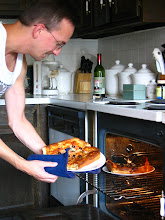
I'm back. Thanks, readers, for indulging me while I took a little time off from writing.
****************************************
I've been thinking about this quote a lot recently:
The best time to plant a tree is twenty years ago.
The next best time to plant a tree is now.
Unfortunately, I've been agonizing lately over why I didn't start doing certain things earlier in life. I wish, for example, that I had begun compound lifting much, much earlier in my life. My body (at its current age) just doesn't respond all that well to heavy workouts. It takes me days to recover, and after a good workout of deadlifts, squats, pullups and bench presses, I am wiped. Wiped out for the rest of the day. I wish I were fitter and more robust than I am, despite all the effort I put into my fitness.
Sure, there are solutions here. I can do lighter, milder, maintenance-type workouts. I usually feel good after workouts of that level of intensity. But then I'll just be in maintenance mode. That's fine, but in maintenance mode I won't be getting stronger, I won't be growing.
This is one of those examples where I think to myself, "shit, if I had just planted this compound lifting 'tree' twenty years ago, I'd have a real tree now. I'd be much more adapted to lifting at a level that I'd be satisfied with." But I can't go back to twenty years ago and plant that compound lifting tree. I can only plant it today. (Well, technically, I planted it a few years ago, but still.)
I can come up with lots of other examples, sadly: I wish I had taken up drawing or painting earlier in life. I wish I had learned to surf earlier. I wish I had taken up language learning wayyyy earlier--like back when I was still a teenager.
And then, I recall a conversation with a friend of mine who's then-partner told her, "It's too late for me to get started on retirement. I'm too old now to bother to save money." He was just thirty-seven at the time.
Now, let's take a moment and notice the circular logic and self-defeatism of giving up on doing something simply because it's possible you could have started earlier. This should resonate with anyone embracing YMOYL, early retirement or any of the frugality strategies discussed thoughout Casual Kitchen. If your first thought is "it's too late for me" then nothing can ever be worth doing. Tough to go through life like that.
And so here, readers, is where I confess my hypocrisy to you. The complaint about not starting to save money earlier and my complaint about not starting lifting earlier are identical! They are the same.
Of course it's always easier to see flaws and hypocrisies in others than in ourselves, isn't it?
So there's my problem and my challenge--and yours too, if you struggle with the "it's too late" issue anywhere in your life: Get over yourself and plant the tree. Now.
READ NEXT: Good Games
AND: YMOYL: The Full Companion Guide Archive
You can help support the work I do here at Casual Kitchen by visiting Amazon via any link on this site. Amazon pays a small commission to me based on whatever purchase you make on that visit, and it's at no extra cost to you. Thank you!
And, if you are interested at all in cryptocurrencies, yet another way you can help support my work here is to use this link to open up your own cryptocurrency account at Coinbase. I will receive a small affiliate commission with each opened account. Once again, thank you for your support!
Showing posts with label excuse-making. Show all posts
Showing posts with label excuse-making. Show all posts


Epistemic Humility
Today's post expands on some of the thoughts from last week's post. I'll start by offering a few more examples of those sneaky epistemically arrogant statements:
1) I can't run a marathon at my age.
2) Lose 50 pounds? Maybe I can do 20.
3) It's impossible for me at my age to deadlift twice my weight. No way.
4) You want to eat healthy? It's gonna cost you...
5) I think the stock market is rigged against the little guy.
Remember our conversational autist from last post, that imaginary person who tactlessly tells people what they're actually saying? Once again, let's imagine what she might say here in response to any (or all) of these statements:
Wait. What you're really saying is "I refuse to find a solution." You know that's pure ego protection, right? And it's kind of intellectually lazy too. Think about it: Is it really possible that you, limited you, just a tiny human being in the vast expanse of the universe, can "know" that there's no solution to something? Seriously, be honest: how can you *know* there's no solution?
Just to be extra-extra clear: do not say things like this out loud. Use your inside voice.
However, the oddly good thing about conversational autists is they tell you the truth when you don't want to hear it. Especially when you don't want to hear it.[1] And as we'll soon see, "I can't find a solution to X" and its even more disempowered cousin "There is no solution to X" are both statements of supreme epistemic arrogance. Both are false too.
Now, nobody likes to think of themselves as arrogant, certainly not epistemically so. Which is why, on the intellectual and abstract level, we're all fairly comfortable with the idea that we usually don't really know very much. Furthermore, we think we have an accurate assessment of the boundaries of our knowledge. "I know what I'm talking about when it comes to the stock market, but when it comes to neurosurgery, I'm definitely out of my depth. And by the way, Russia definitely interfered in our elections."
See how easy it is to leap blithely beyond our circle of knowledge? We simply do not know our boundaries: we overstate and understate[2] them, and we do so below the level of conscious awareness. Once again, the things we "know" just ain't so.
I realize I'm not going to go very far in life telling my readers that they're a bunch of epistemically arrogant fools who don't even know what they don't know. So, try not to remember that part. Instead, what I really want to convey in this post is the value of being humble about what you think you can't do.
To see what I'm getting at, let's take another look at those five confidently-stated, epistemically arrogant statements above, and let's consider them from a perspective of deep humility. Let's state those statements with a total lack of confidence. Try it.
You'll see that things get weird in a hurry, because the less confidently you state "that's impossible" type statements and the more humble you are about them, the more possible they become.
If you know you most likely don't know--which is the definition of epistemic humility by the way--you might as well choose thoughts, ideas, and possibilities that produce the best outcomes. This might invert how most people think about "truth" and "falsehood." But the truth is, when it comes to questions about our own personal agency, we almost always have profoundly incomplete knowledge of what's true, what's false and what's possible.
So assume you can do it, that you can find a solution, that it is possible, and that the solution is out there waiting for you to find it. To do so is not only more epistemically humble, it's the more empowering choice.
Readers, share your thoughts!
[1] Readers might wonder how I know so much about conversational autists. Let's just say I'm still learning to use my inside voice.
[2] I'll leave it to readers to guess which is the more common error.
READ NEXT: On Writing for Casual Kitchen
1) I can't run a marathon at my age.
2) Lose 50 pounds? Maybe I can do 20.
3) It's impossible for me at my age to deadlift twice my weight. No way.
4) You want to eat healthy? It's gonna cost you...
5) I think the stock market is rigged against the little guy.
Remember our conversational autist from last post, that imaginary person who tactlessly tells people what they're actually saying? Once again, let's imagine what she might say here in response to any (or all) of these statements:
Wait. What you're really saying is "I refuse to find a solution." You know that's pure ego protection, right? And it's kind of intellectually lazy too. Think about it: Is it really possible that you, limited you, just a tiny human being in the vast expanse of the universe, can "know" that there's no solution to something? Seriously, be honest: how can you *know* there's no solution?
Just to be extra-extra clear: do not say things like this out loud. Use your inside voice.
However, the oddly good thing about conversational autists is they tell you the truth when you don't want to hear it. Especially when you don't want to hear it.[1] And as we'll soon see, "I can't find a solution to X" and its even more disempowered cousin "There is no solution to X" are both statements of supreme epistemic arrogance. Both are false too.
Now, nobody likes to think of themselves as arrogant, certainly not epistemically so. Which is why, on the intellectual and abstract level, we're all fairly comfortable with the idea that we usually don't really know very much. Furthermore, we think we have an accurate assessment of the boundaries of our knowledge. "I know what I'm talking about when it comes to the stock market, but when it comes to neurosurgery, I'm definitely out of my depth. And by the way, Russia definitely interfered in our elections."
See how easy it is to leap blithely beyond our circle of knowledge? We simply do not know our boundaries: we overstate and understate[2] them, and we do so below the level of conscious awareness. Once again, the things we "know" just ain't so.
I realize I'm not going to go very far in life telling my readers that they're a bunch of epistemically arrogant fools who don't even know what they don't know. So, try not to remember that part. Instead, what I really want to convey in this post is the value of being humble about what you think you can't do.
To see what I'm getting at, let's take another look at those five confidently-stated, epistemically arrogant statements above, and let's consider them from a perspective of deep humility. Let's state those statements with a total lack of confidence. Try it.
You'll see that things get weird in a hurry, because the less confidently you state "that's impossible" type statements and the more humble you are about them, the more possible they become.
If you know you most likely don't know--which is the definition of epistemic humility by the way--you might as well choose thoughts, ideas, and possibilities that produce the best outcomes. This might invert how most people think about "truth" and "falsehood." But the truth is, when it comes to questions about our own personal agency, we almost always have profoundly incomplete knowledge of what's true, what's false and what's possible.
So assume you can do it, that you can find a solution, that it is possible, and that the solution is out there waiting for you to find it. To do so is not only more epistemically humble, it's the more empowering choice.
Readers, share your thoughts!
[1] Readers might wonder how I know so much about conversational autists. Let's just say I'm still learning to use my inside voice.
[2] I'll leave it to readers to guess which is the more common error.
READ NEXT: On Writing for Casual Kitchen
Epistemic Arrogance
It ain't what you don't know that gets you into trouble. It's what you know for sure that just ain't so.
--Mark Twain
***************************
When someone makes a statement like "I'm too busy to do X" or "I don't have time to do X" what they're really saying "I've chosen to not make X a priority in my life."
Long time Casual Kitchen readers know this already. In fact, readers--especially those familiar with various other articles here on excuse-making--might go even further and say that these statements say even more: something along the lines of "I've chosen to not make X a priority in my life, and my ego wants to protect me from true responsibility for this choice, so it concocted an authoritative-sounding statement about my not having time."
Thus we can see this genre of excuse scripts for what it is: an interesting mix of virtue-signalling (I'm busy! I've got a lot going on!) and passivity (I don't have time so it's not my fault!) all rolled into one quick sentence.
Okay. Now, imagine if you were talking to someone and they made one of the following two scripts:
1) You know, I really should cook some of CK's laughably cheap and easy recipes, but I don't have time.
2) I ought to open up a brokerage account and start learning how to invest, but I'm just too busy.
Further, imagine that instead of smiling and nodding and changing the subject like a normal person, you went full autist on that person and actually told them what they were really saying:
"You know, when I hear that pitiful excuse for an excuse, I hear a interesting mixture of passivity and virtue-signalling. Your ego is getting off on feeling busy, while at the same time it disavows agency in making an important and helpful change in your life."
Assuming the person doesn't slap you, most likely they'd instantly disagree. They'd completely deny they were being passive, they'd deny they were disavowing their agency. And certainly they'd deny they were virtue-signalling. After all, nobody ever thinks they're virtue-signalling when they virtue-signal. It's circular like that.
In other words, people don't really understand their own minds, and they often don't understand the full meaning of what they're saying.
A quick tangent before I go any further. Yes, I know, it is possible for someone to literally not have time to do something. It's not always an excuse. Note, however, that the more fragile our egos are, the more desperately we want this to be true in our case! What's also deeply interesting about verbal scripts like these is how quickly and autonomically our brain spits them out, and how little we really know about the various implicit and explicit assumptions underlying those statements.
And now, finally, two-thirds of the way through this post, we get to the concept of epistemic arrogance.
We "know" we don't have time to do something. And yet by virtue of the way our ego structures this very statement, it cannot be true. Yet we really think we know! We declare it, we state it, and we vigorously defend against it if somebody questions it. We don't doubt ourselves for a second.
That is what epistemic arrogance is in a nutshell. It's knowing we know when we really don't know.
Now, wouldn't it be interesting to take the excuse scripts above and "un-know" them, and articulate the exact opposite instead? If only to see what it feels like?
1) I have time to cook some of CK's laughably cheap and easy recipes.
2) I am not too busy to open up a brokerage account and start learning how to invest.
Hmmmmm. Interesting.
Of course, these are epistemically arrogant statements too! You don't know that these statements are true either... that is, until you attempt them and succeed or fail. But note: there are substantial elements of self-fulfilling prophecy in both the negative statements and the affirmative statements, isn't there? Which makes it pretty obvious which sets of statements are worth stating, and which aren't.
READ NEXT: Expediency and Treadmill Effects
--Mark Twain
***************************
When someone makes a statement like "I'm too busy to do X" or "I don't have time to do X" what they're really saying "I've chosen to not make X a priority in my life."
Long time Casual Kitchen readers know this already. In fact, readers--especially those familiar with various other articles here on excuse-making--might go even further and say that these statements say even more: something along the lines of "I've chosen to not make X a priority in my life, and my ego wants to protect me from true responsibility for this choice, so it concocted an authoritative-sounding statement about my not having time."
Thus we can see this genre of excuse scripts for what it is: an interesting mix of virtue-signalling (I'm busy! I've got a lot going on!) and passivity (I don't have time so it's not my fault!) all rolled into one quick sentence.
Okay. Now, imagine if you were talking to someone and they made one of the following two scripts:
1) You know, I really should cook some of CK's laughably cheap and easy recipes, but I don't have time.
2) I ought to open up a brokerage account and start learning how to invest, but I'm just too busy.
Further, imagine that instead of smiling and nodding and changing the subject like a normal person, you went full autist on that person and actually told them what they were really saying:
"You know, when I hear that pitiful excuse for an excuse, I hear a interesting mixture of passivity and virtue-signalling. Your ego is getting off on feeling busy, while at the same time it disavows agency in making an important and helpful change in your life."
Assuming the person doesn't slap you, most likely they'd instantly disagree. They'd completely deny they were being passive, they'd deny they were disavowing their agency. And certainly they'd deny they were virtue-signalling. After all, nobody ever thinks they're virtue-signalling when they virtue-signal. It's circular like that.
In other words, people don't really understand their own minds, and they often don't understand the full meaning of what they're saying.
A quick tangent before I go any further. Yes, I know, it is possible for someone to literally not have time to do something. It's not always an excuse. Note, however, that the more fragile our egos are, the more desperately we want this to be true in our case! What's also deeply interesting about verbal scripts like these is how quickly and autonomically our brain spits them out, and how little we really know about the various implicit and explicit assumptions underlying those statements.
And now, finally, two-thirds of the way through this post, we get to the concept of epistemic arrogance.
We "know" we don't have time to do something. And yet by virtue of the way our ego structures this very statement, it cannot be true. Yet we really think we know! We declare it, we state it, and we vigorously defend against it if somebody questions it. We don't doubt ourselves for a second.
That is what epistemic arrogance is in a nutshell. It's knowing we know when we really don't know.
Now, wouldn't it be interesting to take the excuse scripts above and "un-know" them, and articulate the exact opposite instead? If only to see what it feels like?
1) I have time to cook some of CK's laughably cheap and easy recipes.
2) I am not too busy to open up a brokerage account and start learning how to invest.
Hmmmmm. Interesting.
Of course, these are epistemically arrogant statements too! You don't know that these statements are true either... that is, until you attempt them and succeed or fail. But note: there are substantial elements of self-fulfilling prophecy in both the negative statements and the affirmative statements, isn't there? Which makes it pretty obvious which sets of statements are worth stating, and which aren't.
READ NEXT: Expediency and Treadmill Effects
The Teacher Was Already There All Along
Readers, this is an off-topic post. *Very* off-topic. Feel free to skip it.
*******************************************
Everybody's heard the following saying so often it's become a near-cliche:
When the student is ready, the teacher appears.
But I've been wondering about this expression lately. I think it means more than it means.
Think about it: Is it really plausible that the very moment I'm ready to learn something, the universe knows to plop a teacher right there, right next to me?
Right then? Really?
I mean, as much as I'd love to think otherwise, the universe doesn't revolve around me. Heck, the universe doesn't even know who I am. Or for that matter where I am.
And the presumption that the universe not only knows all these things, but also knows my exact level of "readiness" for a given lesson… well, now we're beginning to border on pathological narcissism.
Yet this saying is still true, strikingly so, almost to the point of being eerie. I've seen many, many examples of teachers “appearing” at just the right time, not just in my life, but in the lives of almost everyone I know.
Which is why I think this expression means something completely different, something shocking: It suggests that we are surrounded by teachers, the right teachers, all the time. For everything! It's just that we're too busy stiff-arming all these teachers and all these opportunities to learn.
We ignore or reject advice, we use "yes-but" tactics, we react emotionally or with rage, and we shoot down their ideas and teachings with a wide range of ego-defending excuses and rationalizations.
The only reason a teacher occasionally "appears" is because at that time, for whatever reason, we didn't stick out our arms and block the insights--insights that, all along, were right there for the taking. In other words, we were "ready."
So, imagine: What if we stopped stiff-arming all the teachers? What if, instead of letting in a teacher only when we're ready, what if we just stayed ready?
I bet a lot more teachers would appear. After all, they were there all along.
Read Next: Why Can't I Find People Who Share My Values on Anti-Consumerism and Frugality?
How can I support Casual Kitchen?
Easy. Do all your shopping at Amazon.com via the links on this site! You can also link to me or subscribe to my RSS feed. Finally, consider sharing this article, or any other article you particularly enjoyed here, to Facebook, Twitter (follow me @danielckoontz!) or to bookmarking sites like reddit, digg or stumbleupon. I'm deeply grateful to my readers for their ongoing support.
*******************************************
Everybody's heard the following saying so often it's become a near-cliche:
When the student is ready, the teacher appears.
But I've been wondering about this expression lately. I think it means more than it means.
Think about it: Is it really plausible that the very moment I'm ready to learn something, the universe knows to plop a teacher right there, right next to me?
Right then? Really?
I mean, as much as I'd love to think otherwise, the universe doesn't revolve around me. Heck, the universe doesn't even know who I am. Or for that matter where I am.
And the presumption that the universe not only knows all these things, but also knows my exact level of "readiness" for a given lesson… well, now we're beginning to border on pathological narcissism.
Yet this saying is still true, strikingly so, almost to the point of being eerie. I've seen many, many examples of teachers “appearing” at just the right time, not just in my life, but in the lives of almost everyone I know.
Which is why I think this expression means something completely different, something shocking: It suggests that we are surrounded by teachers, the right teachers, all the time. For everything! It's just that we're too busy stiff-arming all these teachers and all these opportunities to learn.
We ignore or reject advice, we use "yes-but" tactics, we react emotionally or with rage, and we shoot down their ideas and teachings with a wide range of ego-defending excuses and rationalizations.
The only reason a teacher occasionally "appears" is because at that time, for whatever reason, we didn't stick out our arms and block the insights--insights that, all along, were right there for the taking. In other words, we were "ready."
So, imagine: What if we stopped stiff-arming all the teachers? What if, instead of letting in a teacher only when we're ready, what if we just stayed ready?
I bet a lot more teachers would appear. After all, they were there all along.
Read Next: Why Can't I Find People Who Share My Values on Anti-Consumerism and Frugality?
How can I support Casual Kitchen?
Easy. Do all your shopping at Amazon.com
via the links on this site! You can also link to me or subscribe to my RSS feed. Finally, consider sharing this article, or any other article you particularly enjoyed here, to Facebook, Twitter (follow me @danielckoontz!) or to bookmarking sites like reddit, digg or stumbleupon. I'm deeply grateful to my readers for their ongoing support.
“I Don’t Want to Spend All This Time Thinking About Food.”
I don't want to spend all this time thinking about food. I just want to get dinner on the table.
This is a comment you'll often see online (and hear in real life) whenever the subject of food and frugality comes up. It's a fascinating comment because in one fell swoop it both over-complicates and misses the entire point of everything.
To see what I mean, I'll share with you a recent trip I made to the grocery store, at a time when I really didn't want to spend any time thinking or cooking. And I didn't want to spend a lot of money either. So, I bought:
1 pound of generic white beans,
1 pound of generic lentils,
Carrots and celery,
Onions,
2 cans whole peeled tomatoes and 1 can diced tomatoes.
These items enabled me to make a hug pot of Lentil Soup and another big pot of hilariously easy White Bean Stew. Voila: Dinner and lunches for several days at a total cost of maybe ten bucks, and done literally without thought.
There's a catch, however. I can do this without thought because at one time in the past I spent some time thinking about exactly what makes a given recipe cheap, easy, healthy and good. Then, I spent time looking for (and in some cases creating) many such easy and cheap recipes.
And yet our hypothetical person making the statement above doesn't have to worry about this catch: He doesn't have to spend any time thinking about this at all. He doesn't have to figure out what qualities make for easy and cheap recipes, much less does he have to come up with them. Those recipes and those ideas are already here, waiting for him!
In other words, the high-level thinking only has to occur once. Just once. Better yet, the thinking doesn't even have to happen in his head--it has to happen in mine, so I can render the ideas here, in writing, for you.
You then get to use the concepts, the ideas and all of the recipes to make your own hilariously easy and cheap meals whenever you want to.
The notion of "spending all this time thinking about food" is a canard. It's just pushback. The solutions have already been figured out, and they're waiting for you. If you're willing to see them.
Read Next: The Top Lame-Ass Excuses Between You and Better Health
How can I support Casual Kitchen?
Easy. Do all your shopping at Amazon.com via the links on this site! You can also link to me or subscribe to my RSS feed. Finally, consider sharing this article, or any other article you particularly enjoyed here, to Facebook, Twitter (follow me @danielckoontz!) or to bookmarking sites like reddit, digg or stumbleupon. I'm deeply grateful to my readers for their ongoing support.
This is a comment you'll often see online (and hear in real life) whenever the subject of food and frugality comes up. It's a fascinating comment because in one fell swoop it both over-complicates and misses the entire point of everything.
To see what I mean, I'll share with you a recent trip I made to the grocery store, at a time when I really didn't want to spend any time thinking or cooking. And I didn't want to spend a lot of money either. So, I bought:
1 pound of generic white beans,
1 pound of generic lentils,
Carrots and celery,
Onions,
2 cans whole peeled tomatoes and 1 can diced tomatoes.
These items enabled me to make a hug pot of Lentil Soup and another big pot of hilariously easy White Bean Stew. Voila: Dinner and lunches for several days at a total cost of maybe ten bucks, and done literally without thought.
There's a catch, however. I can do this without thought because at one time in the past I spent some time thinking about exactly what makes a given recipe cheap, easy, healthy and good. Then, I spent time looking for (and in some cases creating) many such easy and cheap recipes.
And yet our hypothetical person making the statement above doesn't have to worry about this catch: He doesn't have to spend any time thinking about this at all. He doesn't have to figure out what qualities make for easy and cheap recipes, much less does he have to come up with them. Those recipes and those ideas are already here, waiting for him!
In other words, the high-level thinking only has to occur once. Just once. Better yet, the thinking doesn't even have to happen in his head--it has to happen in mine, so I can render the ideas here, in writing, for you.
You then get to use the concepts, the ideas and all of the recipes to make your own hilariously easy and cheap meals whenever you want to.
The notion of "spending all this time thinking about food" is a canard. It's just pushback. The solutions have already been figured out, and they're waiting for you. If you're willing to see them.
Read Next: The Top Lame-Ass Excuses Between You and Better Health
How can I support Casual Kitchen?
Easy. Do all your shopping at Amazon.com
via the links on this site! You can also link to me or subscribe to my RSS feed. Finally, consider sharing this article, or any other article you particularly enjoyed here, to Facebook, Twitter (follow me @danielckoontz!) or to bookmarking sites like reddit, digg or stumbleupon. I'm deeply grateful to my readers for their ongoing support.
Tips vs Strategy
Let's pretend we've stumbled into the middle of a conversation. It's between two people discussing how to get ahead on a long term goal--in this case, their retirement:
Person A: Have you ever read the Early Retirement Extreme blog? Or Mr. Money Mustache's blog? There's some really useful strategies in those sites.
Person B: You mean Jacob? That weird guy who lives in a trailer? Man, that's crazy. No way would I live in a trailer just so I could retire a few years earlier. And Mr. Money Mustache? I mean, I tried reading him, but he's just a jerk. Too much profanity and he taunts his readers.
See what just happened there, from a psychological standpoint? Let's start with an obvious distinction: these two speakers have dramatically different information gathering techniques. Anyone who open-mindedly reads half a dozen posts or more at ERE or MMM will quickly pick up several striking new ways to think about work, retirement, spending and money. Person A's method of information gathering, likely both strategic and open-minded, enabled him to capture several useful ideas from both sites.
But Person B on the other hand... well, let's be blunt: Person B's mind is closed. And when he does read something, it's likely with a "skim until offended" mindset (this kind of reader wouldn't last three paragraphs at Mr. Money Mustache's blog). Worst of all, Person B uses irrelevant details to invalidate ideas: The fact that Jacob lives in a trailer, or that Mr. Money Mustache is "a jerk" means--to him--that every single one of their ideas is worth no further consideration.
The result, of course, is Person B instantaneously lays waste to an entire ecology of insight.
But what's the central flaw in Person B's approach to new ideas and information? It's this: Person B exists on the level of tips rather than on the level of strategy.
When you live on the level of tips, it's much easier to reject ideas for minor or irrelevant reasons. We humans are cognitive misers: if we want to rule out an entire knowledge domain quickly and with utter totality, just pick any list of tips generated by that strategy and select the worst tip you can find. Bundle that tip with a snarky remark (He lives in a trailer! That's crazy!), et voila: you get to wash your hands of an entire knowledge domain.
But here's the important part: the tip is not the strategy. They are not the same. By conflating them, Person B ends up rejecting a highly desirable strategy (pursuing financial independence) merely because one potential implementation of that strategy (living in a trailer) sounds dumb to him.
Remember: we stumbled into a conversation between two people talking about getting ahead on retirement planning. The fact that Person B is even participating in this conversation--to the point where Person A offered him a couple of deeply useful resources--suggests that Person B has serious interest in the topic. The problem of course, is that Person B also has some serious mental baggage to work through before he's ready to make forward progress.
I see this phenomenon a lot--a lot--among people grappling with large, long-term strategic projects like retirement, learning to invest, improving your diet, improving your fitness, becoming more well-read, and many other subject domains.
Remember, we humans are cognitive misers. In the short run, it's far easier, cognitively speaking, to blow an entire subject domain out of the water with a remark. In the long run... well, let's just say I'd lay money on Person A being the one who makes progress in these domains. Wouldn't you?
Don't confuse tips with strategies. If you find yourself rejecting a tip a little too quickly, a little too autonomically, stop. Go back. Chances are there's something there that you're resisting--something you probably should look at more closely. The key cue here is the instantaneous, automatic rejection.
When you live on the level of strategy, however, tips stop mattering so much. They don't swing your opinion at all about the overall strategy. You're already aware that some tips fit your strategy while some don't. You'll also be generative with your tips: Rather than seeking out (and rejecting) tips one by one, you'll produce your own.
No single tip can invalidate a strategy. After all, there's a central truth about all tips: it takes exactly the same amount of thought and creativity to to tweak a tip to meet your needs than to reject it with a snarky putdown. Thus if you react negatively to advice at the tip level, it's strong evidence of a significant incongruency between your current mental state and your true goals.
Finally, here's something you'll notice once you grasp and adopt a given strategy, and once you find others to discuss it with who have done the same: The dialog becomes a lot less snarky. There are no put-downs, no condescending remarks. The conversation becomes generative, creative. And you take positive action to attack and achieve your goals, whatever those goals might be.
How can I support Casual Kitchen?
Easy. Do all your shopping at Amazon.com via the links on this site! You can also link to me or subscribe to my RSS feed. Finally, consider sharing this article, or any other article you particularly enjoyed here, to Facebook, Twitter (follow me @danielckoontz!) or to bookmarking sites like reddit, digg or stumbleupon. I'm deeply grateful to my readers for their ongoing support.
Person A: Have you ever read the Early Retirement Extreme blog? Or Mr. Money Mustache's blog? There's some really useful strategies in those sites.
Person B: You mean Jacob? That weird guy who lives in a trailer? Man, that's crazy. No way would I live in a trailer just so I could retire a few years earlier. And Mr. Money Mustache? I mean, I tried reading him, but he's just a jerk. Too much profanity and he taunts his readers.
See what just happened there, from a psychological standpoint? Let's start with an obvious distinction: these two speakers have dramatically different information gathering techniques. Anyone who open-mindedly reads half a dozen posts or more at ERE or MMM will quickly pick up several striking new ways to think about work, retirement, spending and money. Person A's method of information gathering, likely both strategic and open-minded, enabled him to capture several useful ideas from both sites.
But Person B on the other hand... well, let's be blunt: Person B's mind is closed. And when he does read something, it's likely with a "skim until offended" mindset (this kind of reader wouldn't last three paragraphs at Mr. Money Mustache's blog). Worst of all, Person B uses irrelevant details to invalidate ideas: The fact that Jacob lives in a trailer, or that Mr. Money Mustache is "a jerk" means--to him--that every single one of their ideas is worth no further consideration.
The result, of course, is Person B instantaneously lays waste to an entire ecology of insight.
But what's the central flaw in Person B's approach to new ideas and information? It's this: Person B exists on the level of tips rather than on the level of strategy.
When you live on the level of tips, it's much easier to reject ideas for minor or irrelevant reasons. We humans are cognitive misers: if we want to rule out an entire knowledge domain quickly and with utter totality, just pick any list of tips generated by that strategy and select the worst tip you can find. Bundle that tip with a snarky remark (He lives in a trailer! That's crazy!), et voila: you get to wash your hands of an entire knowledge domain.
But here's the important part: the tip is not the strategy. They are not the same. By conflating them, Person B ends up rejecting a highly desirable strategy (pursuing financial independence) merely because one potential implementation of that strategy (living in a trailer) sounds dumb to him.
Remember: we stumbled into a conversation between two people talking about getting ahead on retirement planning. The fact that Person B is even participating in this conversation--to the point where Person A offered him a couple of deeply useful resources--suggests that Person B has serious interest in the topic. The problem of course, is that Person B also has some serious mental baggage to work through before he's ready to make forward progress.
I see this phenomenon a lot--a lot--among people grappling with large, long-term strategic projects like retirement, learning to invest, improving your diet, improving your fitness, becoming more well-read, and many other subject domains.
Remember, we humans are cognitive misers. In the short run, it's far easier, cognitively speaking, to blow an entire subject domain out of the water with a remark. In the long run... well, let's just say I'd lay money on Person A being the one who makes progress in these domains. Wouldn't you?
Don't confuse tips with strategies. If you find yourself rejecting a tip a little too quickly, a little too autonomically, stop. Go back. Chances are there's something there that you're resisting--something you probably should look at more closely. The key cue here is the instantaneous, automatic rejection.
When you live on the level of strategy, however, tips stop mattering so much. They don't swing your opinion at all about the overall strategy. You're already aware that some tips fit your strategy while some don't. You'll also be generative with your tips: Rather than seeking out (and rejecting) tips one by one, you'll produce your own.
No single tip can invalidate a strategy. After all, there's a central truth about all tips: it takes exactly the same amount of thought and creativity to to tweak a tip to meet your needs than to reject it with a snarky putdown. Thus if you react negatively to advice at the tip level, it's strong evidence of a significant incongruency between your current mental state and your true goals.
Finally, here's something you'll notice once you grasp and adopt a given strategy, and once you find others to discuss it with who have done the same: The dialog becomes a lot less snarky. There are no put-downs, no condescending remarks. The conversation becomes generative, creative. And you take positive action to attack and achieve your goals, whatever those goals might be.
How can I support Casual Kitchen?
Easy. Do all your shopping at Amazon.com
via the links on this site! You can also link to me or subscribe to my RSS feed. Finally, consider sharing this article, or any other article you particularly enjoyed here, to Facebook, Twitter (follow me @danielckoontz!) or to bookmarking sites like reddit, digg or stumbleupon. I'm deeply grateful to my readers for their ongoing support.
The Extreme Reach Fallacy
1) Count calories? Who has time for that?
2) Keep track of what I eat? Nah, I don't want to watch my diet that carefully. Can't I just enjoy my food?
3) There's no WAY I'd track my expenses to the penny. What are you, anal?
Readers, can you see what these three sentences have in common?
Each involves shooting down an idea by jumping to the extreme. In all three cases, the speaker makes a potential solution seem more difficult than it really is, which gives him a gift-wrapped justification for ruling out the idea.
This "Extreme Reach" fallacy is an excuse script that lets us rationalize and maintain our prior unsuccessful habits.
Let's put the sentences above in context by imagining a conversation that might surround them:
Person A: I'd really like to lose 20 pounds.
Person B: Really? Well, I managed to lose 45 pounds by counting calories. It really worked well for me.
Person A (defensive): Count calories? Who has time for that?
See what just happened there? Person A opens a conversation by claiming he wants to lose weight, but then when presented with a possible solution, he makes the absurd claim that counting calories takes too much time.
Never mind that counting calories actually doesn't take much time at all, and never mind that some have found it to be astoundingly effective. The point, of course, is that Person A gets to act like he wants to lose weight, while creating a ready-made rationalization for not taking action. And if Person B is a member of polite society, she'll smile wanly and change the subject. Which completes the circle of rationalization.
Hard to believe all this can happen in such a short conversation, right?
Okay, let's move on to our second example:
Person C: How in the world do you stay so thin? What do you do?
Person D: Oh, I struggled with my weight for years. But in 2010, I decided to keep a notebook where over three months I wrote down everything I ate. Literally everything. Man, I couldn't believe it when I saw it all in my own handwriting--how many sodas I was drinking, how much ice cream, how many snacks. It forced me to really accept what I ate. After that I started making big changes to my eating habits.
Person C (defensive): Keep track of what I eat? Nah, I don't want to watch my diet that carefully. Can't I just enjoy my food?
Person C leaps to an extreme conclusion too: keeping track of what she eats means she has to watch her diet more carefully than she'd like. Worse, it will interfere with her enjoyment of food.
This claim is of course exactly backwards. It's actually more plausible that keeping track of what she eats would help her enjoy her food more. Further, what does "watch my diet that carefully" mean, exactly? There are lots of ways to track your diet, some of which are probably easier than she thinks.
Sadly, she didn't leave the door open for these considerations. This idea died the moment it collided with her mind.
Do you see the pattern here? Now, to our last example:
Person Y: How did you manage to retire at such a young age? Man, I'd love to quit my job and retire early.
Person Z: Have you heard of this book Your Money Or Your Life?
Person Y: Yes! I saw something about it on some guy's food blog that I read every so often. He wrote some series on it. It was kind of long and boring, so I didn't read it.
Person Z: Well, we basically followed the steps of the book, starting several years ago. We started by tracking our expenses to the penny for a full ye--
Person Y (defensive, interrupting): There's no WAY I'd track my expenses to the penny. What are you, anal?
Ouch, right? Person Y spontaneously murders the conversation with an extreme reach excuse, and he also gets in a bonus dig at Person Z. (Well played!) Person Y knows for sure that tracking your expenses is "anal" and therefore unworthy of consideration.
But wait. What if tracking your expenses is just another minor daily habit, like brushing your teeth? That's what we found here at CK: within days of adopting our expense-tracking habit, we were doing it in a fraction of the time we spent brushing our teeth.
Or is brushing your teeth anal too?
Either way, instead of considering a new idea that might be congruent with his goals, Person Y employs the extreme reach fallacy to rationalize taking no action. And he likely walks away from this conversation with an improved opinion of himself.
Watch for this excuse script in and around your daily life. Believe me: now that you're familiar with it, you'll see it and hear it all over the place. Don't complete the circle of rationalization.
I owe a debt of gratitude to Ramit at I Will Teach You To Be Rich for helping me think through some of the ideas in this post.
2) Keep track of what I eat? Nah, I don't want to watch my diet that carefully. Can't I just enjoy my food?
3) There's no WAY I'd track my expenses to the penny. What are you, anal?
Readers, can you see what these three sentences have in common?
Each involves shooting down an idea by jumping to the extreme. In all three cases, the speaker makes a potential solution seem more difficult than it really is, which gives him a gift-wrapped justification for ruling out the idea.
This "Extreme Reach" fallacy is an excuse script that lets us rationalize and maintain our prior unsuccessful habits.
Let's put the sentences above in context by imagining a conversation that might surround them:
Person A: I'd really like to lose 20 pounds.
Person B: Really? Well, I managed to lose 45 pounds by counting calories. It really worked well for me.
Person A (defensive): Count calories? Who has time for that?
See what just happened there? Person A opens a conversation by claiming he wants to lose weight, but then when presented with a possible solution, he makes the absurd claim that counting calories takes too much time.
Never mind that counting calories actually doesn't take much time at all, and never mind that some have found it to be astoundingly effective. The point, of course, is that Person A gets to act like he wants to lose weight, while creating a ready-made rationalization for not taking action. And if Person B is a member of polite society, she'll smile wanly and change the subject. Which completes the circle of rationalization.
Hard to believe all this can happen in such a short conversation, right?
Okay, let's move on to our second example:
Person C: How in the world do you stay so thin? What do you do?
Person D: Oh, I struggled with my weight for years. But in 2010, I decided to keep a notebook where over three months I wrote down everything I ate. Literally everything. Man, I couldn't believe it when I saw it all in my own handwriting--how many sodas I was drinking, how much ice cream, how many snacks. It forced me to really accept what I ate. After that I started making big changes to my eating habits.
Person C (defensive): Keep track of what I eat? Nah, I don't want to watch my diet that carefully. Can't I just enjoy my food?
Person C leaps to an extreme conclusion too: keeping track of what she eats means she has to watch her diet more carefully than she'd like. Worse, it will interfere with her enjoyment of food.
This claim is of course exactly backwards. It's actually more plausible that keeping track of what she eats would help her enjoy her food more. Further, what does "watch my diet that carefully" mean, exactly? There are lots of ways to track your diet, some of which are probably easier than she thinks.
Sadly, she didn't leave the door open for these considerations. This idea died the moment it collided with her mind.
Do you see the pattern here? Now, to our last example:
Person Y: How did you manage to retire at such a young age? Man, I'd love to quit my job and retire early.
Person Z: Have you heard of this book Your Money Or Your Life?
Person Y: Yes! I saw something about it on some guy's food blog that I read every so often. He wrote some series on it. It was kind of long and boring, so I didn't read it.
Person Z: Well, we basically followed the steps of the book, starting several years ago. We started by tracking our expenses to the penny for a full ye--
Person Y (defensive, interrupting): There's no WAY I'd track my expenses to the penny. What are you, anal?
Ouch, right? Person Y spontaneously murders the conversation with an extreme reach excuse, and he also gets in a bonus dig at Person Z. (Well played!) Person Y knows for sure that tracking your expenses is "anal" and therefore unworthy of consideration.
But wait. What if tracking your expenses is just another minor daily habit, like brushing your teeth? That's what we found here at CK: within days of adopting our expense-tracking habit, we were doing it in a fraction of the time we spent brushing our teeth.
Or is brushing your teeth anal too?
Either way, instead of considering a new idea that might be congruent with his goals, Person Y employs the extreme reach fallacy to rationalize taking no action. And he likely walks away from this conversation with an improved opinion of himself.
Watch for this excuse script in and around your daily life. Believe me: now that you're familiar with it, you'll see it and hear it all over the place. Don't complete the circle of rationalization.
I owe a debt of gratitude to Ramit at I Will Teach You To Be Rich for helping me think through some of the ideas in this post.
On Excuses and Insensitivity
I received two particularly interesting types of responses to last week's controversial post Extreme Savings, and I wanted to share both with readers. See what you think, and please share your thoughts and reactions in the comments.
Response 1: "My reason for not saving money isn't an excuse, it's a real reason!"
I'm simplifying a bit, but several reader responses essentially took this form. And hey, that's okay: at the end of the day, it's your money, they're your reasons, and it's your right to do what you want with both.
But excuses sometimes masquerade as reasons. And our egos deceive us into confusing which is which. Why? Because it's awful to discover we've been giving our power away to a "reason" that never deserved our power in the first place. And worse, if we figure out that our "reason" was never a real reason, then it means we should have been taking action all along.
Many people lack the ego strength to face this degree of brutal self-examination. And that's why when a reader gets defensive (or even lashes out) when the subject of excuse-making comes up, it suggests this reader is indeed confusing a reason with an excuse. Deep down he may even know it.
Again, sometimes excuses really feel like reasons. And they stop us from taking action. All I want is for readers to think it over sincerely: are your reasons really real? Can you examine your reasons objectively? Or when your reasons are challenged, do you become defensive and slip into ego-protection mode? To me, this gives tremendous insight into how willing (or unwilling) we are to take action on the key challenges we face.
Response 2: "You are rude and insensitive towards low-income readers."
First, some background for newer readers: Casual Kitchen regularly gets hit with the complaint that it's insensitive to poor people, or insensitive to those facing some sort of disadvantage. Normally, I get this complaint script in a cooking-related context, where it goes something like this:
Look CK, just because it's easy for YOU to have all these ideas on how to cook healthy food for less doesn't mean these ideas are easy for everybody. There are people who have no stove to cook on, and who don't live near grocery stores, and who have no time to cook. Assuming this is so easy is simply being insensitive to those who don't share your advantages.
The problem is, there are three gaping logic holes in this "reason":
1) If I shared only hard-to-follow ideas, no one would follow them.
2) I don't write CK for hypothetical people with insurmountable disadvantages who are projections in readers' minds. I write for actual readers who can choose to take action or not.
3) It's actually far more insensitive to presume people with disadvantages can't do things too. Many of my readers have overcome significant disadvantages, both economic and otherwise, on their road to eating healthy and inexpensive food. Likewise, I have no doubt readers facing financial disadvantages can make use of Extreme Savings. To think otherwise is deeply condescending.
By the way, years ago, when I received my first "you're insensitive to the poor!" criticism, I actually felt like a jerk for giving away free advice on how to save money eating healthy food.
Okay. Back to last week's post. Was what I wrote truly insensitive to low-income readers? At least one reader believed so, saying "as a student who visits your site for advice on living cheaply because I already live on $12,000 a year I find the insistence that people who don't save are 'making excuses' rudely presented."
Now, to me, living on $12,000 a year qualifies as a real reason, although only this reader can know for sure. But I do feel like I should respond to the suggestion that last week's post was insensitive to low-income readers. Here, then, are a few important things to consider:
First, things can change: If you earn a low income now, it doesn't mean you'll always earn a low income. Once again, to think otherwise would be deeply condescending! Thus, some of the ideas in Extreme Savings may be difficult to execute today, but they may be extraordinarily useful later on.
Therefore, a low-income reader has four options: 1) use the advice now, 2) don't use it now, 3) use the advice in the future when it's more suitable, or 4) don't use it in the future.
But there's one option I will never permit readers to choose, no matter what their socioeconomic level: I can't do this because of [insert lame excuse here].
Finally, a thought at the very heart of what Casual Kitchen is all about. Should I withhold insights that are clearly useful to many readers, on the off chance that a small percentage of other readers might interpret them as insensitive? Or, more bluntly put, would the world be better off had I never written Extreme Savings, or if I had written it with a more spineless and conciliatory tone?
My (admittedly self-serving) view: No, no ... and no. Look,thousands tens of thousands of people have already read this post, in part because of the specific voice and rhetorical tone I used. With any luck, tens (hundreds?) of thousands more will read it in the coming years.
To me, it's worth writing it even if just one reader takes action--and if a few other readers sincerely evaluate their "reasons" for not taking action. Either way, I'm helping someone put themselves on the road towards greater financial independence.
One last word: I'm grateful for everyone's thoughts and insights--even from those readers who got angry at what I wrote. If there's one thing I can always count on here at Casual Kitchen, it's that my readers make me think.
Readers, what are your thoughts?
How can I support Casual Kitchen?
If you enjoy reading Casual Kitchen, tell a friend and spread the word! You can also support me by purchasing items from Amazon.com via links on this site, or by linking to me or subscribing to my RSS feed. Finally, you can consider submitting this article, or any other article you particularly enjoyed here, to bookmarking sites like del.icio.us, digg or stumbleupon. Thank you for your support!
Response 1: "My reason for not saving money isn't an excuse, it's a real reason!"
I'm simplifying a bit, but several reader responses essentially took this form. And hey, that's okay: at the end of the day, it's your money, they're your reasons, and it's your right to do what you want with both.
But excuses sometimes masquerade as reasons. And our egos deceive us into confusing which is which. Why? Because it's awful to discover we've been giving our power away to a "reason" that never deserved our power in the first place. And worse, if we figure out that our "reason" was never a real reason, then it means we should have been taking action all along.
Many people lack the ego strength to face this degree of brutal self-examination. And that's why when a reader gets defensive (or even lashes out) when the subject of excuse-making comes up, it suggests this reader is indeed confusing a reason with an excuse. Deep down he may even know it.
Again, sometimes excuses really feel like reasons. And they stop us from taking action. All I want is for readers to think it over sincerely: are your reasons really real? Can you examine your reasons objectively? Or when your reasons are challenged, do you become defensive and slip into ego-protection mode? To me, this gives tremendous insight into how willing (or unwilling) we are to take action on the key challenges we face.
Response 2: "You are rude and insensitive towards low-income readers."
First, some background for newer readers: Casual Kitchen regularly gets hit with the complaint that it's insensitive to poor people, or insensitive to those facing some sort of disadvantage. Normally, I get this complaint script in a cooking-related context, where it goes something like this:
Look CK, just because it's easy for YOU to have all these ideas on how to cook healthy food for less doesn't mean these ideas are easy for everybody. There are people who have no stove to cook on, and who don't live near grocery stores, and who have no time to cook. Assuming this is so easy is simply being insensitive to those who don't share your advantages.
The problem is, there are three gaping logic holes in this "reason":
1) If I shared only hard-to-follow ideas, no one would follow them.
2) I don't write CK for hypothetical people with insurmountable disadvantages who are projections in readers' minds. I write for actual readers who can choose to take action or not.
3) It's actually far more insensitive to presume people with disadvantages can't do things too. Many of my readers have overcome significant disadvantages, both economic and otherwise, on their road to eating healthy and inexpensive food. Likewise, I have no doubt readers facing financial disadvantages can make use of Extreme Savings. To think otherwise is deeply condescending.
By the way, years ago, when I received my first "you're insensitive to the poor!" criticism, I actually felt like a jerk for giving away free advice on how to save money eating healthy food.
Okay. Back to last week's post. Was what I wrote truly insensitive to low-income readers? At least one reader believed so, saying "as a student who visits your site for advice on living cheaply because I already live on $12,000 a year I find the insistence that people who don't save are 'making excuses' rudely presented."
Now, to me, living on $12,000 a year qualifies as a real reason, although only this reader can know for sure. But I do feel like I should respond to the suggestion that last week's post was insensitive to low-income readers. Here, then, are a few important things to consider:
First, things can change: If you earn a low income now, it doesn't mean you'll always earn a low income. Once again, to think otherwise would be deeply condescending! Thus, some of the ideas in Extreme Savings may be difficult to execute today, but they may be extraordinarily useful later on.
Therefore, a low-income reader has four options: 1) use the advice now, 2) don't use it now, 3) use the advice in the future when it's more suitable, or 4) don't use it in the future.
But there's one option I will never permit readers to choose, no matter what their socioeconomic level: I can't do this because of [insert lame excuse here].
Finally, a thought at the very heart of what Casual Kitchen is all about. Should I withhold insights that are clearly useful to many readers, on the off chance that a small percentage of other readers might interpret them as insensitive? Or, more bluntly put, would the world be better off had I never written Extreme Savings, or if I had written it with a more spineless and conciliatory tone?
My (admittedly self-serving) view: No, no ... and no. Look,
To me, it's worth writing it even if just one reader takes action--and if a few other readers sincerely evaluate their "reasons" for not taking action. Either way, I'm helping someone put themselves on the road towards greater financial independence.
One last word: I'm grateful for everyone's thoughts and insights--even from those readers who got angry at what I wrote. If there's one thing I can always count on here at Casual Kitchen, it's that my readers make me think.
Readers, what are your thoughts?
How can I support Casual Kitchen?
If you enjoy reading Casual Kitchen, tell a friend and spread the word! You can also support me by purchasing items from Amazon.com
via links on this site, or by linking to me or subscribing to my RSS feed. Finally, you can consider submitting this article, or any other article you particularly enjoyed here, to bookmarking sites like del.icio.us, digg or stumbleupon. Thank you for your support!
The Top Lame-Ass Excuses Between You and Better Health
Warning: This post is NOT intended for whiners or excuse-makers.
***********************************
In the more than 500 posts that I've written here at Casual Kitchen, I've shared all kinds of secrets for preparing easy and healthy food at home. I've shared all kinds of counterintuitive ideas for managing our appetites and embracing a healthy diet.
I've also heard every possible kind of excuse.
Here's the thing. Humans are really good at excuse-making. We love to avoid taking action, and we love to offer rationalizations and justifications for why. Half the time we make excuses autonomically, without even realizing it.
Here are six of the most common excuses I hear from people--in conversation, in emails, on Twitter, and in comments on this blog.
Have you ever caught yourself saying any of the following?
1) "That tip won't work for me."
You actually have to think creatively to take a tip that works for someone else and figure out why that same tip won't work for you. Ironically, it takes the same amount of creativity to take that tip and tweak it so that it can work for you.
Which do you think is a more productive use of your energy?
Astute readers will also note the circular argument buried in this excuse: if you assume that a solution won't work for you, it won't. And you'll be "right" in your prediction that it won't work. This is why I always want my readers to choose a solution-based mindset--and avoid all negative self-fulfilling prophecies--whenever they address challenges in their lives.
2) "But you haven't considered X, or Y, or Z."
Translation: If your tip isn't perfect in every way, then I'm going to point out a minor flaw in it and use that as an excuse not to take action.
This is a textbook example of letting the perfect being the enemy of the good, or as I've taken to saying lately: letting the perfect be the enema of the good.
Once again, it takes the same amount of creativity to shoot down an idea as it takes to think of ways to tweak it so it works for you.
3) "That's obvious."
You have to unpack this phrase a bit before you can truly understand what's going on in the mind of the person saying it. In one sense, this statement is a perfect excuse because it's short, simple and supremely condescending. In just two words, it quickly slaps away any idea. However, underneath this seemingly simple statement is both a circular argument and a lot of psychological baggage.
I'll start with the circular argument. Think about it: if some tip or suggestion is so obvious, then why isn't the person already putting it to use--and getting positive results? In reality, saying "that's obvious" is just another generalized excuse for not taking action.
Further, phrases like that's obvious or I know that already actually signal a lack of comprehension and knowledge. It suggests that this person's mind is closed to an idea, regardless of its merit.
All of this brings us to the psychological aspect of this excuse, which lies in its narcissism. The thing is, most of our problems actually have relatively simple (note that I didn't say easy) solutions. Spend less, save more; eat less, exercise more. However, there seems to be an odd habit--at least among the most narcissistic of blog commenters--of demanding 100% super-duper secret customized tips, designed specifically for them.
To those readers I say this: consider the notion that the things you read aren't written solely with you in mind.* And just because something is obvious to you doesn't mean it's obvious to others.
* Readers, I don't literally mean "you"--I'm speaking metaphorically to a narcissistic reader, who will never see themselves in this example anyway.
4) "Sure, that's easy for you, but..."
Whether a tip or suggestion is easy for me is completely beside the point. Some tips will be easy for you, some will be easy for me. Seriously, though, does that even matter? Isn't the effectiveness of a tip more important than its ease of use?
Once again, don't let the perfect be the enema of the good.
A side note for other bloggers who often hear this excuse: A productive response in many situations is to say "how do you know that it's easy for me?" This simple, disruptive question often breaks a person out of his or her presumptions and redirects the conversation towards solutions rather than excuses.
5) "This is all well and good for you, but there are other people out there who are suffering from [insert any disadvantage here] who can't do this like you can."
The brilliant thing about this excuse is that it's actually true. There are always going to be people with various disadvantages who cannot use the ideas or solutions you offer. But as readers of my series of posts on the "Yes, But" argument know, this response is nothing more than excuse-making by proxy.
Look, there will always be:
* People without education.
* People without money.
* People who live in food deserts in the inner city (uh, unless food deserts are a myth).
* People with five jobs, five kids and a five-hour commute.
* People who live out in the middle of nowhere, where there's only one store around for miles and who therefore cannot comparison shop.
* People who don't have the time to read through labels to avoid government subsidized ingredients in processed foods (these last two were actual excuses from one angry reader--I'm totally serious).
And so on.
Forget all that. The real question is: what are you going to do, in the context of your specific situation? You were not put here on this earth to whine on behalf of hypothetical people with hypothetical disadvantages and use that as an excuse to wring your hands.
Not to mention that many people who have actually faced those disadvantages could easily see your whining as insulting. For example, I've had readers who have faced poverty, as well as other significant disadvantages, who consider it totally condescending that other readers would presume their disadvantages are (or were) insurmountable.
The bottom line: this is just another excuse. The excuse-maker is merely manufacturing a series of disadvantages, experienced by some imaginary third person, as a reason not to take action.
6) "I don't have time."
Let me share a quick story: A friend of mine once asked me for my waffle recipe, and just as I was explaining the important step of separating the egg whites, he cut me off, saying, "Forget it. I don't have time to separate egg whites."
This pretty much murdered our conversation, and I hung my head and went to the other side of the room. In retrospect however, the statement I don't have time to separate egg whites was so preposterous that my wife Laura and I now use it as a general metaphor for pathetic time management excuses.
Of course, the truth is, "I don't have time" is excuse-making code for "I've made a passive choice not to allocate time for this, but I want to slip something into this conversation that validates my ego, and shows how busy and/or hardworking I am."
If you want to be healthy, you simply have to allocate time to choosing the right foods, eating well and exercising. There's no way around it. You have no choice but to make time for these things, or you'll suffer increasingly dire consequences. You'll weigh more each year. Your energy levels and your fitness will decline each year. Your joints and muscles will get weaker and less functional. Your cardiovascular system will get less and less efficient. And at some point, your body might stop working altogether.
Imagine yourself in ten or twenty years if you continue on your current path. If you don't like what that possible future holds for you, change it. We are all running out of time. Don't waste still more precious time whining about not having time.
Closing thoughts
Readers, you've just read a blog post where the author complained about complainers. Thus it's only fitting to close this post with a non-complaining call to action. And if there's one conclusion you should draw from the collective whine of the excuse-makers out there, it's this: the barriers separating us from the lives we want usually aren't physical. They are almost always psychological.
This is at once depressing and encouraging.
Depressing, because it simply proves that most people are their own worst enemies when it comes to solving problems. We think we have air-tight reasons to explain why we can't or aren't permitted to do certain things or achieve certain goals. But those reasons are really made of air. There's no there there.
Which brings us to the encouraging part. You have the power to choose your approach to the challenges and problems in your life. You can complain and make excuses, or you can use a solution-based mindset and take action.
More importantly, you can (gently) help others recognize when they're engaging in defeatist thinking. Most people use these excuses without really realizing it. You can help, by focusing on solutions and by redirecting conversations--both online and in the real world--back to productive ideas.
Just make sure you stay out of the "yes, but" vortex. :)
Readers, what have I missed in this post?
This post is dedicated to Ramit Sethi at I Will Teach You To Be Rich for defying the complainers and encouraging his readers to take action.
Related Posts:
A Reader Asks for Help
Weight Is Just a Number
The Worst Lie of the Food Blogosphere
Best Practices to Raise the Level of Discussion on Your Blog
How can I support Casual Kitchen?
If you enjoy reading Casual Kitchen, tell a friend and spread the word! You can also support me by purchasing items from Amazon.com via links on this site, or by linking to me or subscribing to my RSS feed. Finally, you can consider submitting this article, or any other article you particularly enjoyed here, to bookmarking sites like del.icio.us, digg or stumbleupon. Thank you for your support!
***********************************
In the more than 500 posts that I've written here at Casual Kitchen, I've shared all kinds of secrets for preparing easy and healthy food at home. I've shared all kinds of counterintuitive ideas for managing our appetites and embracing a healthy diet.
I've also heard every possible kind of excuse.
Here's the thing. Humans are really good at excuse-making. We love to avoid taking action, and we love to offer rationalizations and justifications for why. Half the time we make excuses autonomically, without even realizing it.
Here are six of the most common excuses I hear from people--in conversation, in emails, on Twitter, and in comments on this blog.
Have you ever caught yourself saying any of the following?
1) "That tip won't work for me."
You actually have to think creatively to take a tip that works for someone else and figure out why that same tip won't work for you. Ironically, it takes the same amount of creativity to take that tip and tweak it so that it can work for you.
Which do you think is a more productive use of your energy?
Astute readers will also note the circular argument buried in this excuse: if you assume that a solution won't work for you, it won't. And you'll be "right" in your prediction that it won't work. This is why I always want my readers to choose a solution-based mindset--and avoid all negative self-fulfilling prophecies--whenever they address challenges in their lives.
2) "But you haven't considered X, or Y, or Z."
Translation: If your tip isn't perfect in every way, then I'm going to point out a minor flaw in it and use that as an excuse not to take action.
This is a textbook example of letting the perfect being the enemy of the good, or as I've taken to saying lately: letting the perfect be the enema of the good.
Once again, it takes the same amount of creativity to shoot down an idea as it takes to think of ways to tweak it so it works for you.
3) "That's obvious."
You have to unpack this phrase a bit before you can truly understand what's going on in the mind of the person saying it. In one sense, this statement is a perfect excuse because it's short, simple and supremely condescending. In just two words, it quickly slaps away any idea. However, underneath this seemingly simple statement is both a circular argument and a lot of psychological baggage.
I'll start with the circular argument. Think about it: if some tip or suggestion is so obvious, then why isn't the person already putting it to use--and getting positive results? In reality, saying "that's obvious" is just another generalized excuse for not taking action.
Further, phrases like that's obvious or I know that already actually signal a lack of comprehension and knowledge. It suggests that this person's mind is closed to an idea, regardless of its merit.
All of this brings us to the psychological aspect of this excuse, which lies in its narcissism. The thing is, most of our problems actually have relatively simple (note that I didn't say easy) solutions. Spend less, save more; eat less, exercise more. However, there seems to be an odd habit--at least among the most narcissistic of blog commenters--of demanding 100% super-duper secret customized tips, designed specifically for them.
To those readers I say this: consider the notion that the things you read aren't written solely with you in mind.* And just because something is obvious to you doesn't mean it's obvious to others.
* Readers, I don't literally mean "you"--I'm speaking metaphorically to a narcissistic reader, who will never see themselves in this example anyway.
4) "Sure, that's easy for you, but..."
Whether a tip or suggestion is easy for me is completely beside the point. Some tips will be easy for you, some will be easy for me. Seriously, though, does that even matter? Isn't the effectiveness of a tip more important than its ease of use?
Once again, don't let the perfect be the enema of the good.
A side note for other bloggers who often hear this excuse: A productive response in many situations is to say "how do you know that it's easy for me?" This simple, disruptive question often breaks a person out of his or her presumptions and redirects the conversation towards solutions rather than excuses.
5) "This is all well and good for you, but there are other people out there who are suffering from [insert any disadvantage here] who can't do this like you can."
The brilliant thing about this excuse is that it's actually true. There are always going to be people with various disadvantages who cannot use the ideas or solutions you offer. But as readers of my series of posts on the "Yes, But" argument know, this response is nothing more than excuse-making by proxy.
Look, there will always be:
* People without education.
* People without money.
* People who live in food deserts in the inner city (uh, unless food deserts are a myth).
* People with five jobs, five kids and a five-hour commute.
* People who live out in the middle of nowhere, where there's only one store around for miles and who therefore cannot comparison shop.
* People who don't have the time to read through labels to avoid government subsidized ingredients in processed foods (these last two were actual excuses from one angry reader--I'm totally serious).
And so on.
Forget all that. The real question is: what are you going to do, in the context of your specific situation? You were not put here on this earth to whine on behalf of hypothetical people with hypothetical disadvantages and use that as an excuse to wring your hands.
Not to mention that many people who have actually faced those disadvantages could easily see your whining as insulting. For example, I've had readers who have faced poverty, as well as other significant disadvantages, who consider it totally condescending that other readers would presume their disadvantages are (or were) insurmountable.
The bottom line: this is just another excuse. The excuse-maker is merely manufacturing a series of disadvantages, experienced by some imaginary third person, as a reason not to take action.
6) "I don't have time."
Let me share a quick story: A friend of mine once asked me for my waffle recipe, and just as I was explaining the important step of separating the egg whites, he cut me off, saying, "Forget it. I don't have time to separate egg whites."
This pretty much murdered our conversation, and I hung my head and went to the other side of the room. In retrospect however, the statement I don't have time to separate egg whites was so preposterous that my wife Laura and I now use it as a general metaphor for pathetic time management excuses.
Of course, the truth is, "I don't have time" is excuse-making code for "I've made a passive choice not to allocate time for this, but I want to slip something into this conversation that validates my ego, and shows how busy and/or hardworking I am."
If you want to be healthy, you simply have to allocate time to choosing the right foods, eating well and exercising. There's no way around it. You have no choice but to make time for these things, or you'll suffer increasingly dire consequences. You'll weigh more each year. Your energy levels and your fitness will decline each year. Your joints and muscles will get weaker and less functional. Your cardiovascular system will get less and less efficient. And at some point, your body might stop working altogether.
Imagine yourself in ten or twenty years if you continue on your current path. If you don't like what that possible future holds for you, change it. We are all running out of time. Don't waste still more precious time whining about not having time.
Closing thoughts
Readers, you've just read a blog post where the author complained about complainers. Thus it's only fitting to close this post with a non-complaining call to action. And if there's one conclusion you should draw from the collective whine of the excuse-makers out there, it's this: the barriers separating us from the lives we want usually aren't physical. They are almost always psychological.
This is at once depressing and encouraging.
Depressing, because it simply proves that most people are their own worst enemies when it comes to solving problems. We think we have air-tight reasons to explain why we can't or aren't permitted to do certain things or achieve certain goals. But those reasons are really made of air. There's no there there.
Which brings us to the encouraging part. You have the power to choose your approach to the challenges and problems in your life. You can complain and make excuses, or you can use a solution-based mindset and take action.
More importantly, you can (gently) help others recognize when they're engaging in defeatist thinking. Most people use these excuses without really realizing it. You can help, by focusing on solutions and by redirecting conversations--both online and in the real world--back to productive ideas.
Just make sure you stay out of the "yes, but" vortex. :)
Readers, what have I missed in this post?
This post is dedicated to Ramit Sethi at I Will Teach You To Be Rich for defying the complainers and encouraging his readers to take action.
Related Posts:
A Reader Asks for Help
Weight Is Just a Number
The Worst Lie of the Food Blogosphere
Best Practices to Raise the Level of Discussion on Your Blog
How can I support Casual Kitchen?
If you enjoy reading Casual Kitchen, tell a friend and spread the word! You can also support me by purchasing items from Amazon.com
via links on this site, or by linking to me or subscribing to my RSS feed. Finally, you can consider submitting this article, or any other article you particularly enjoyed here, to bookmarking sites like del.icio.us, digg or stumbleupon. Thank you for your support!
Subscribe to:
Posts (Atom)