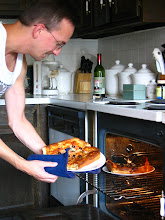
Last week's post on celebrating quitting my job got me thinking. Have you ever noticed, when you celebrate significant achievements and events in life, how there's often a shockingly low correlation between how much you spend on the celebration and how much value you get from the celebration?
Have you ever thought about the best way to celebrate a truly important occasion, while still spending an appropriate amount of money? And how do you train yourself to spend that "appropriate" amount of money if you're born with a strong frugality gene?
Today's post will seek to answer these questions. I'll start by sharing a solution that helps us make our celebrations more meaningful and has nothing to do with the price of anything:
Instead of focusing on costs, we do our favorite thing.
Here are a few examples, ranging from the trite to the significant: When I want to celebrate something small, I might buy a huge bar of my favorite dark chocolate. For a more substantial celebration, Laura and I might go out to one of our favorite restaurants. And if we want to celebrate something really big, then we might take a vacation to one of our favorite cities.
The costs of each of these things might come up for discussion, but it's rarely the focus of our decision on how celebrate. Instead, the primary focus is on doing our favorite thing. Using this mental framework makes any celebration meaningful regardless of cost, and yet the celebration remains a meaningful reward for a significant accomplishment. Heck, if you're doing your favorite thing, how can you possibly feel like you're skimping on yourself?
Ironically, we usually don't end up spending a significant amount of money using this approach. And if you're a regular reader of this blog, I'm willing to bet that a surprising number of your favorite things are surprisingly inexpensive too.
For example, many of our favorite restaurants aren't that expensive, and of course a home-cooked favorite meal can often be laughably cheap. And it really doesn't cost that much to vacation in Ithaca, NY--one of our favorite places on Earth (uh, during the summer at least).
Of course, I admit that this line of thinking begins to break down somewhat if Laura changes her favorite vacation spot to Tahiti or the Seychelles.
One other important concept: Don't go for the lowest-priced option with your first celebratory instinct. Sure, there's no set rule that says you have to spend more than a certain amount of money before you can have a genuinely meaningful celebration, but don't use the bottom of the barrel as your starting point, unless your favorite thing actually is the lowest-priced option (if this is consistently true for you, please email me; I'd like to adopt you). Remember, always think favorites, not costs.
For example, when I quit my job a few weeks ago, there was no way a couple of glasses of Carlo Rossi would suffice to celebrate something that important. At the same time, however, I didn't hang my head and feel like a loser when I passed on the $350 bottle of Cristal and "only" drank a $75 bottle of Veuve Clicquot. I picked the Veuve Clicquot because it's my favorite champagne.
Similarly, really important occasions (let's say your daughter's wedding or your parents' 50th anniversary), don't need to cost a zillion dollars in order to be enormously sincere and meaningful. And yet adding some important "favorite things" into these celebrations will make them sincere and meaningful regardless of the cost.
Finally, I'll leave you with one more important concept: the "price" of a zillion-dollar wedding or a $350 bottle of champagne is nothing more than a number. It's an arbitrary measure that provides external validation for people don't really trust their internal scales for weighing genuine, heartfelt value.
Try doing your own favorite thing the next time you celebrate something important. When you buy a favorite thing or do a favorite activity, the emotional value of the purchase is typically far greater than its actual dollar cost. Thus using this approach has enormous advantages over using price as a measure of value. And because the primary focus is something other than the cost, what you spend (whether it's a lot or a little) will never detract from the sincerity and meaning of the celebration.
What are some great events you've celebrated in your life, and how did you choose to celebrate?
How can I support Casual Kitchen?
If you enjoy reading Casual Kitchen, tell a friend and spread the word! Another way you can support me is by submitting this article, or any other article you particularly enjoyed here, to bookmarking sites like del.icio.us, digg or stumbleupon.
Doing Your Favorite Thing: How to Spend Exactly the Right Amount of Money for an Important Celebration


Celebrating Something Special with Veuve Clicquot Champagne
A few weeks ago, I had something big to celebrate, so Laura and I opened a bottle of Veuve Clicquot champagne that we'd been saving for more than a year.

We were celebrating the fact that I had just quit my job. My plan is to take a long sabbatical, and over the next year or so, take the opportunity to do some things with my life that I'd never have the chance to do while working full time. That's worth a bottle of really good champagne, isn't it?
Now, I was excited to quit my job, believe me. But I was almost as excited to get into this bottle of champagne, and it didn't disappoint. The champagne truly was spectacular, and finally opening that bottle (especially after it had been staring at me from the bottom of our fridge for so long) made the occasion all the more momentous.
What do you enjoy doing when you want to celebrate something particularly meaningful?

 --Photographs courtesy of Laura L. Perrin.
How can I support Casual Kitchen?
If you enjoy reading Casual Kitchen, tell a friend and spread the word! Another way you can support me is by submitting this article, or any other article you particularly enjoyed here, to bookmarking sites like del.icio.us, digg or stumbleupon.

We were celebrating the fact that I had just quit my job. My plan is to take a long sabbatical, and over the next year or so, take the opportunity to do some things with my life that I'd never have the chance to do while working full time. That's worth a bottle of really good champagne, isn't it?
Now, I was excited to quit my job, believe me. But I was almost as excited to get into this bottle of champagne, and it didn't disappoint. The champagne truly was spectacular, and finally opening that bottle (especially after it had been staring at me from the bottom of our fridge for so long) made the occasion all the more momentous.
What do you enjoy doing when you want to celebrate something particularly meaningful?

 --Photographs courtesy of Laura L. Perrin.
How can I support Casual Kitchen?
If you enjoy reading Casual Kitchen, tell a friend and spread the word! Another way you can support me is by submitting this article, or any other article you particularly enjoyed here, to bookmarking sites like del.icio.us, digg or stumbleupon.
CK Food Links--Friday August 8, 2008
Here's yet another selection of particularly interesting food-related links from around the internet.
*************************
Post Punk Kitchen: How to Make Sauce
The garden tomatoes are ripening, and it's that time of year again: time to make SAUCE. Here's an exceptional tutorial at Post Punk Kitchen.
My Indian Food Blogroll:
Laura received two Indian cookbooks as a gift a year or two ago and since then we've been taking baby steps into this cuisine. We've probably made ten or fifteen dishes so far, a mere drop of water in the comprehensive ocean that is Indian food, and eventually we hope to share a few of the easy-to-make recipes here at Casual Kitchen.
In the meantime, I thought I'd share the four Indian food blogs that reside on my feedreader:
Holy Cow!--vegan Indian recipes.
My Kitchen and Beyond--eclectic, easy Indian food.
Salt and Spice--meat- and fish-based recipes.
One Page Cookbooks for the First Time Cook--one of the most intriguing sites I've seen in a while. Every post is a one-page grid of various ingredients that can be combined together into a large number of recipes. Literally a one page cookbook. I could stare at these posts all day long.
And finally, here's the latest food blog I've completely fallen in love with: Rice and Beans: A Belizean in DC. Great stories about Belize, some interesting Belizean recipes, and an eclectic collection of other recipes as well. For a couple of particularly appetizing posts, try Salmon Salad with Roasted Summer Vegetables and Belizean Stewed Beans.
How can I support Casual Kitchen?
If you enjoy reading Casual Kitchen, tell a friend and spread the word! Another way you can support me is by submitting this article, or any other article you particularly enjoyed here, to bookmarking sites like del.icio.us, digg or stumbleupon.
*************************
Post Punk Kitchen: How to Make Sauce
The garden tomatoes are ripening, and it's that time of year again: time to make SAUCE. Here's an exceptional tutorial at Post Punk Kitchen.
My Indian Food Blogroll:
Laura received two Indian cookbooks as a gift a year or two ago and since then we've been taking baby steps into this cuisine. We've probably made ten or fifteen dishes so far, a mere drop of water in the comprehensive ocean that is Indian food, and eventually we hope to share a few of the easy-to-make recipes here at Casual Kitchen.
In the meantime, I thought I'd share the four Indian food blogs that reside on my feedreader:
Holy Cow!--vegan Indian recipes.
My Kitchen and Beyond--eclectic, easy Indian food.
Salt and Spice--meat- and fish-based recipes.
One Page Cookbooks for the First Time Cook--one of the most intriguing sites I've seen in a while. Every post is a one-page grid of various ingredients that can be combined together into a large number of recipes. Literally a one page cookbook. I could stare at these posts all day long.
And finally, here's the latest food blog I've completely fallen in love with: Rice and Beans: A Belizean in DC. Great stories about Belize, some interesting Belizean recipes, and an eclectic collection of other recipes as well. For a couple of particularly appetizing posts, try Salmon Salad with Roasted Summer Vegetables and Belizean Stewed Beans.
How can I support Casual Kitchen?
If you enjoy reading Casual Kitchen, tell a friend and spread the word! Another way you can support me is by submitting this article, or any other article you particularly enjoyed here, to bookmarking sites like del.icio.us, digg or stumbleupon.
What I'm Reading
I've been asked by a few readers what books I'm reading lately now that I'm not working and have quite a bit more time on my hands.
And so I've created a new blog, creatively named What I Just Read, to keep a record of the books I've read. I'll be reading a mix of fiction as well as nonfiction on a wide variety of subjects (including cooking and cookbooks of course!). You can get a feel for what I'll be reading by looking at the "Upcoming Titles" post. I'll write just a few brief paragraphs on what I think of each book.
I know I have a lot of extremely insightful and intelligent readers here at Casual Kitchen, and I'd be grateful for additional book recommendations as well as any reactions to the books I've read. As always, you can reach me privately at any time right here.
Stop by and take a look!
And so I've created a new blog, creatively named What I Just Read, to keep a record of the books I've read. I'll be reading a mix of fiction as well as nonfiction on a wide variety of subjects (including cooking and cookbooks of course!). You can get a feel for what I'll be reading by looking at the "Upcoming Titles" post. I'll write just a few brief paragraphs on what I think of each book.
I know I have a lot of extremely insightful and intelligent readers here at Casual Kitchen, and I'd be grateful for additional book recommendations as well as any reactions to the books I've read. As always, you can reach me privately at any time right here.
Stop by and take a look!
How to Use Leftover Ingredients
There's a regular occurrence in cooking (I call it the hot dog phenomenon*) that invariably happens whenever you buy ingredients for a homemade recipe: you will always end up with random leftovers of at least some ingredients.
After you're done cooking, and all those leftover ingredients are scattered around your kitchen, how can you make creative use of them? Today I'll share with you a simple example of ingredient reuse that shows how you can make a practically free meal, while reducing waste and saving time and money.
The other day, we had extra cheese left over from making burritos, as well as leftover corn tortillas after stuffing ourselves with homemade tortilla chips a few too many nights in a row. In fact, the corn tortillas were already cut into chip-sized wedges, ready to go, but we just didn't have the stomach for them.
So for the next few mornings, we put the two together and made mini-quesadillas to go along with our eggs. It made for a creative, and essentially free, breakfast, and it was delicious enough to qualify for our list of ways to Jazz Up Your Morning Eggs.
This painfully simple example of ingredient reuse illustrates some of our favorite concepts here at Casual Kitchen. First, reusing leftover ingredients that you've already bought for another recipe is an excellent example of the benefits of scale. We bought these ingredients in bulk, so they were already inexpensive to begin with, yet we derived still more scale benefits by making extra breakfasts from them. And here's yet another scale benefit: we didn't need to plan another meal or make another trip to the store.
Furthermore, how much does it cost to re-use ingredients that likely would have otherwise gone to waste? That's right: nothing. This delicious breakfast was pretty darn close to free, and yet it didn't have the boring and monotonous feel so typical of a meal made of leftovers. I've eaten similar meals in Manhattan diners and foolishly paid $13.95 a plate.
The next time you cook at home and have leftover ingredients, try and think of ways you can make extra meals from the remaining ingredients you have on hand. This is a skill that improves with a little practice--once you put a few simple and inexpensive meals together you'll really start to get the hang of it.
And for those of you interested in how we made our mini-quesadillas, I just put a few pieces of cheese (seasoned with a couple of generous shakes of ground chipotle pepper) between two tortilla triangles...
 ...and then fried a few of them in a pan right next to our eggs.
 What are some examples of free extra meals you've made from leftover ingredients?
* The hot dog phenomenon refers to the fact that hot dogs come in packages of ten, while hot dog buns come in packages of eight--essentially forcing the consumer to buy extra dogs or buns.
Related Posts:
How to Apply the 80/20 Rule to Cooking
More Applications of the 80/20 Rule to Diet, Food and Cooking
When High-Fat Food ... Can Actually Be Healthy For You: Diet and Athletic Training Part 1
How can I support Casual Kitchen?
If you enjoy reading Casual Kitchen, tell a friend and spread the word! Another way you can support me is by submitting this article, or any other article you particularly enjoyed here, to bookmarking sites like del.icio.us, digg or stumbleupon.
After you're done cooking, and all those leftover ingredients are scattered around your kitchen, how can you make creative use of them? Today I'll share with you a simple example of ingredient reuse that shows how you can make a practically free meal, while reducing waste and saving time and money.
The other day, we had extra cheese left over from making burritos, as well as leftover corn tortillas after stuffing ourselves with homemade tortilla chips a few too many nights in a row. In fact, the corn tortillas were already cut into chip-sized wedges, ready to go, but we just didn't have the stomach for them.
So for the next few mornings, we put the two together and made mini-quesadillas to go along with our eggs. It made for a creative, and essentially free, breakfast, and it was delicious enough to qualify for our list of ways to Jazz Up Your Morning Eggs.
This painfully simple example of ingredient reuse illustrates some of our favorite concepts here at Casual Kitchen. First, reusing leftover ingredients that you've already bought for another recipe is an excellent example of the benefits of scale. We bought these ingredients in bulk, so they were already inexpensive to begin with, yet we derived still more scale benefits by making extra breakfasts from them. And here's yet another scale benefit: we didn't need to plan another meal or make another trip to the store.
Furthermore, how much does it cost to re-use ingredients that likely would have otherwise gone to waste? That's right: nothing. This delicious breakfast was pretty darn close to free, and yet it didn't have the boring and monotonous feel so typical of a meal made of leftovers. I've eaten similar meals in Manhattan diners and foolishly paid $13.95 a plate.
The next time you cook at home and have leftover ingredients, try and think of ways you can make extra meals from the remaining ingredients you have on hand. This is a skill that improves with a little practice--once you put a few simple and inexpensive meals together you'll really start to get the hang of it.
And for those of you interested in how we made our mini-quesadillas, I just put a few pieces of cheese (seasoned with a couple of generous shakes of ground chipotle pepper) between two tortilla triangles...
 ...and then fried a few of them in a pan right next to our eggs.
 What are some examples of free extra meals you've made from leftover ingredients?
* The hot dog phenomenon refers to the fact that hot dogs come in packages of ten, while hot dog buns come in packages of eight--essentially forcing the consumer to buy extra dogs or buns.
Related Posts:
How to Apply the 80/20 Rule to Cooking
More Applications of the 80/20 Rule to Diet, Food and Cooking
When High-Fat Food ... Can Actually Be Healthy For You: Diet and Athletic Training Part 1
How can I support Casual Kitchen?
If you enjoy reading Casual Kitchen, tell a friend and spread the word! Another way you can support me is by submitting this article, or any other article you particularly enjoyed here, to bookmarking sites like del.icio.us, digg or stumbleupon.
Stacked Costs and Second-Order Foods: A New Way to Think About Rising Food Costs
My goal for today's post is ambitious. I want to give you an entirely new way to think about, and take advantage of, the food industry. After reading this article, you should have a new framework for understanding why some foods have become so expensive relative to others, and you'll also have several new practical ideas for beating food price inflation.
Before I get started, let me provide a brief warning for attention-span challenged readers: this essay approaches 1,600 words. If you don't have time to wade through it right now, feel free to come back later.
New Definitions
First, I'm going to use two new descriptive terms to define food in a totally different way: first-order foods and second-order foods.
First-order foods are the basic building blocks of our diets. Fruits, vegetables, unprocessed grains, beans and legumes, nuts, basic juices and even water are all examples of first-order foods. These foods require little processing and they come to you in basic form.
Second-order foods are simply foods derived from first-order foods.
Examples: TV Dinners, Doritos and Meat
Let's go over some brief examples to help illustrate this further. We'll start with the frozen dinner, which is an obvious example of a second-order food. The company that manufactures Lean Cuisine frozen dinners takes a combination of first-order foods, combines, packages and freezes them, and ships them to your local grocery store. The result? You can stand in the frozen foods aisle, shivering, and choose from a wide variety of frozen dinners, elegantly displayed in conveniently microwaveable cardboard boxes. Of course, you end up paying a premium for this convenience in the form of higher prices.
How about Doritos--one of my very favorite guilty pleasures? Unfortunately, that's another second-order food. A snackfood manufacturer takes corn, processes it into chips, mixes it with salt and other spices, and then packs it into plastic bags and ships it to your store.
Finally, meat is a more complex example of a second-order food, with several added process steps. The meat producer has to feed first-order foods (grain or feed corn) to his cows, chickens, hogs or other animals. He has to pay to clean, heat and/or air-condition the pens. Somebody has to pay to power and operate the plant that slaughters and processes the meat. Then, that meat is packaged in plastic wrap, frozen, and shipped to your local grocery store.
The Cost Stack
By now I'm sure you're figuring out where I'm going with this. Thinking about foods as either first-order or second-order gives you a simple model to explain why the prices of some foods are going up a lot more than others.
Let's use meat as an example. If corn prices (a primary input for animal feed) increase meaningfully, of course it's obvious that chicken or beef prices will increase too. But what if energy prices also increase? Suddenly, costs start rising for several steps involved in the making of second-order foods. Powering the farm and the meat processing plant gets more expensive. Transport costs increase for shipping grain, feed and supplies to the farmer. And of course the cost of freezing and shipping the meat to your local store increases as well.
If you think about this for a minute, it becomes quite clear that all second-order foods have a shocking number of layers of stacked costs:
1) Input costs for first order foods plus a reasonable profit margin for the suppliers,
2) Costs for food or meat processing, plus a reasonable profit margin for the processor,
3) Input costs for energy at all points of the production process, plus a reasonable profit margin both for the energy producer and the utility company,
4) Costs for transport, plus a reasonable profit margin for the transportation company,
5) Costs for branding and marketing, plus a reasonable profit margin for the advertising agency,
6) Costs for packaging.
You've just read through a sextuple-whammy of stacked costs, and I'm sure I left out a few.
You Shoulder the Cost Stack
I now have some terrible news for you: When you choose to purchase and consume second order foods, you end up shouldering the entire multi-layer cost stack.
It gets worse. These layers of extra costs tend to be multiplicative rather than additive, because each company throughout this supply chain passes their increased costs through to the next company, which passes those costs through to the next company, and so forth. Further, each participant in this supply chain (unless it wants to fail as a business entity) will need to tack on at least a little bit of profit margin above and beyond those extra costs--which then of course also get passed through to the next player.
This cost stack is what causes the prices of many second-order foods to increase monstrously, far out of proportion to the increase in the costs of their component first-order foods.
And of course meat products--because they are the most levered to energy costs and they typically have the most layers in their cost stack--give us the most monstrous examples of second-order food price inflation. This is why, with a 30% increase in the cost of a first-order input like chicken feed, and a 30% increase in the cost of energy, the price of the end product (let's say frozen plastic-wrapped chicken breasts), can easily increase by 100% or more.
Solutions
Let's stop with the bad news for a moment and switch to talking about solutions. At this point, you now have definitions of first- and second-order foods, an explanation of cost stacking, and you've seen an example of how cost stacking can drive substantial increases in second-order food prices.
And by now I'm sure you're squirming in your chair with your hand up, wanting to shout out the painfully obvious solution for beating food price inflation: eat more first-order foods and eat fewer second-order foods.
Yep. I knew all along that I had really smart readers.
Let me encourage you still more. The cost advantage of first-order foods over second-order foods is a non-linear function: the savings you get from eating first-order foods gets more compelling as food inflation worsens. Sure, the cost of all food (including the cost of first-order foods) may be going up, but because of our cost-stacking phenomenon, the cost differential between first- and second-order foods gets larger the more food and energy costs increase. Which gives you all the more incentive to bias your diet toward first-order foods.
Health Benefits
How about some more good news? As first-order foods become the foundation of your diet, you'll capture benefits beyond merely saving money.
For example, first-order foods are typically far healthier than second-order foods. They haven't been processed, so they retain more antioxidants with their massive health benefits. They aren't buried in salt, high-fructose corn syrup or sodium hexametaphosphate like many second-order foods. And there is an enormous body of evidence suggesting that if you limit your intake of processed foods, particularly those containing refined carbs and hydrogenated fats, you will have dramatically lower chances of becoming obese, developing cardiovascular problems, or developing Type 2 diabetes.
Practical Applications
So what are the practical steps you can take to focus your diet on first-order foods and take advantage of this new way to look at the food industry? At the risk of being overly prescriptive, here's a list of ten solutions to help you to break the grip of second-order food price inflation:
1) Adopt part-time vegetarianism.
2) Make basic staples, like beans, lentils, grains and white and brown rice, the foundation of your diet.
3) Eat more raw foods.
4) Cook more at home. Restaurant food has an enormous cost stack, including the restaurant's overhead expenses, branding and marketing costs, staffing costs, the air-conditioning bill, and so forth. And don't forget the cost of a generous tip for high-quality table service.
5) Bias your diet away from prepared foods (especially TV dinners).
6) Drop the traditional American conception of a "square meal." Vegetarians of course figured out this secret long ago, but the entire concept of having meat as the focal point of every meal is an obsolete construct.
7) Ruthlessly cut junk food and sweetened beverages out of your diet.
8) Buy foods grown locally, or near-locally. These foods will have lower embedded transport costs.
9) Grow your own food. This is ultimate example of a first-order food.
10) Refuse to pay for "excessively branded" products (full disclosure: we own shares in both Coke and Unilever so you can justifiably call me a hypocrite here). There is no reason to shoulder the cost of a national (or worse, global) advertising budget, especially if you can find equivalent generic products as substitutes.
Readers, if you have additional solutions, feel free to leave them in the comments section below.
******************
Epilogue
Let me take the liberty of adding one final wrinkle to this essay on first- and second-order foods. Don't worry--it's yet another piece of really good news, in my opinion anyway.
Just think: processed meat-like products such olive loaf and liverwurst are third-order foods, because they take high input cost second-order foods (mostly meat, I hope) and apply still more processing, energy, packaging and branding to create yet another level of "food."
So now, I have an airtight excuse never to eat olive loaf or liverwurst, ever. And with any luck, these so-called foods will soon become so expensive that they will go completely extinct, and no one will ever serve them to me ever again.
Who said there aren't advantages to rising food prices?
Related Posts:
Seven Ways to Get Faster at Cooking
All Casual Kitchen posts filed under "Vegetarianism"
All Casual Kitchen posts filed under "Laughably Cheap"
The Dinner Party: 10 Tips to Make Cooking for Company Fun and Easy
Cooking Like the Stars? Don't Waste Your Money
Ten Strategies to Stop Mindless Eating
Mastering Kitchen Setup Costs
How can I support Casual Kitchen?
If you enjoy reading Casual Kitchen, or tell a friend and spread the word! You can also support me by purchasing items from Amazon.com via links on this site, or by linking to me or subscribing to my RSS feed. Finally, you can consider submitting this article, or any other article you particularly enjoyed here, to bookmarking sites like del.icio.us, digg or stumbleupon. Thank you for your support!
Before I get started, let me provide a brief warning for attention-span challenged readers: this essay approaches 1,600 words. If you don't have time to wade through it right now, feel free to come back later.
New Definitions
First, I'm going to use two new descriptive terms to define food in a totally different way: first-order foods and second-order foods.
First-order foods are the basic building blocks of our diets. Fruits, vegetables, unprocessed grains, beans and legumes, nuts, basic juices and even water are all examples of first-order foods. These foods require little processing and they come to you in basic form.
Second-order foods are simply foods derived from first-order foods.
Examples: TV Dinners, Doritos and Meat
Let's go over some brief examples to help illustrate this further. We'll start with the frozen dinner, which is an obvious example of a second-order food. The company that manufactures Lean Cuisine frozen dinners takes a combination of first-order foods, combines, packages and freezes them, and ships them to your local grocery store. The result? You can stand in the frozen foods aisle, shivering, and choose from a wide variety of frozen dinners, elegantly displayed in conveniently microwaveable cardboard boxes. Of course, you end up paying a premium for this convenience in the form of higher prices.
How about Doritos--one of my very favorite guilty pleasures? Unfortunately, that's another second-order food. A snackfood manufacturer takes corn, processes it into chips, mixes it with salt and other spices, and then packs it into plastic bags and ships it to your store.
Finally, meat is a more complex example of a second-order food, with several added process steps. The meat producer has to feed first-order foods (grain or feed corn) to his cows, chickens, hogs or other animals. He has to pay to clean, heat and/or air-condition the pens. Somebody has to pay to power and operate the plant that slaughters and processes the meat. Then, that meat is packaged in plastic wrap, frozen, and shipped to your local grocery store.
The Cost Stack
By now I'm sure you're figuring out where I'm going with this. Thinking about foods as either first-order or second-order gives you a simple model to explain why the prices of some foods are going up a lot more than others.
Let's use meat as an example. If corn prices (a primary input for animal feed) increase meaningfully, of course it's obvious that chicken or beef prices will increase too. But what if energy prices also increase? Suddenly, costs start rising for several steps involved in the making of second-order foods. Powering the farm and the meat processing plant gets more expensive. Transport costs increase for shipping grain, feed and supplies to the farmer. And of course the cost of freezing and shipping the meat to your local store increases as well.
If you think about this for a minute, it becomes quite clear that all second-order foods have a shocking number of layers of stacked costs:
1) Input costs for first order foods plus a reasonable profit margin for the suppliers,
2) Costs for food or meat processing, plus a reasonable profit margin for the processor,
3) Input costs for energy at all points of the production process, plus a reasonable profit margin both for the energy producer and the utility company,
4) Costs for transport, plus a reasonable profit margin for the transportation company,
5) Costs for branding and marketing, plus a reasonable profit margin for the advertising agency,
6) Costs for packaging.
You've just read through a sextuple-whammy of stacked costs, and I'm sure I left out a few.
You Shoulder the Cost Stack
I now have some terrible news for you: When you choose to purchase and consume second order foods, you end up shouldering the entire multi-layer cost stack.
It gets worse. These layers of extra costs tend to be multiplicative rather than additive, because each company throughout this supply chain passes their increased costs through to the next company, which passes those costs through to the next company, and so forth. Further, each participant in this supply chain (unless it wants to fail as a business entity) will need to tack on at least a little bit of profit margin above and beyond those extra costs--which then of course also get passed through to the next player.
This cost stack is what causes the prices of many second-order foods to increase monstrously, far out of proportion to the increase in the costs of their component first-order foods.
And of course meat products--because they are the most levered to energy costs and they typically have the most layers in their cost stack--give us the most monstrous examples of second-order food price inflation. This is why, with a 30% increase in the cost of a first-order input like chicken feed, and a 30% increase in the cost of energy, the price of the end product (let's say frozen plastic-wrapped chicken breasts), can easily increase by 100% or more.
Solutions
Let's stop with the bad news for a moment and switch to talking about solutions. At this point, you now have definitions of first- and second-order foods, an explanation of cost stacking, and you've seen an example of how cost stacking can drive substantial increases in second-order food prices.
And by now I'm sure you're squirming in your chair with your hand up, wanting to shout out the painfully obvious solution for beating food price inflation: eat more first-order foods and eat fewer second-order foods.
Yep. I knew all along that I had really smart readers.
Let me encourage you still more. The cost advantage of first-order foods over second-order foods is a non-linear function: the savings you get from eating first-order foods gets more compelling as food inflation worsens. Sure, the cost of all food (including the cost of first-order foods) may be going up, but because of our cost-stacking phenomenon, the cost differential between first- and second-order foods gets larger the more food and energy costs increase. Which gives you all the more incentive to bias your diet toward first-order foods.
Health Benefits
How about some more good news? As first-order foods become the foundation of your diet, you'll capture benefits beyond merely saving money.
For example, first-order foods are typically far healthier than second-order foods. They haven't been processed, so they retain more antioxidants with their massive health benefits. They aren't buried in salt, high-fructose corn syrup or sodium hexametaphosphate like many second-order foods. And there is an enormous body of evidence suggesting that if you limit your intake of processed foods, particularly those containing refined carbs and hydrogenated fats, you will have dramatically lower chances of becoming obese, developing cardiovascular problems, or developing Type 2 diabetes.
Practical Applications
So what are the practical steps you can take to focus your diet on first-order foods and take advantage of this new way to look at the food industry? At the risk of being overly prescriptive, here's a list of ten solutions to help you to break the grip of second-order food price inflation:
1) Adopt part-time vegetarianism.
2) Make basic staples, like beans, lentils, grains and white and brown rice, the foundation of your diet.
3) Eat more raw foods.
4) Cook more at home. Restaurant food has an enormous cost stack, including the restaurant's overhead expenses, branding and marketing costs, staffing costs, the air-conditioning bill, and so forth. And don't forget the cost of a generous tip for high-quality table service.
5) Bias your diet away from prepared foods (especially TV dinners).
6) Drop the traditional American conception of a "square meal." Vegetarians of course figured out this secret long ago, but the entire concept of having meat as the focal point of every meal is an obsolete construct.
7) Ruthlessly cut junk food and sweetened beverages out of your diet.
8) Buy foods grown locally, or near-locally. These foods will have lower embedded transport costs.
9) Grow your own food. This is ultimate example of a first-order food.
10) Refuse to pay for "excessively branded" products (full disclosure: we own shares in both Coke and Unilever so you can justifiably call me a hypocrite here). There is no reason to shoulder the cost of a national (or worse, global) advertising budget, especially if you can find equivalent generic products as substitutes.
Readers, if you have additional solutions, feel free to leave them in the comments section below.
******************
Epilogue
Let me take the liberty of adding one final wrinkle to this essay on first- and second-order foods. Don't worry--it's yet another piece of really good news, in my opinion anyway.
Just think: processed meat-like products such olive loaf and liverwurst are third-order foods, because they take high input cost second-order foods (mostly meat, I hope) and apply still more processing, energy, packaging and branding to create yet another level of "food."
So now, I have an airtight excuse never to eat olive loaf or liverwurst, ever. And with any luck, these so-called foods will soon become so expensive that they will go completely extinct, and no one will ever serve them to me ever again.
Who said there aren't advantages to rising food prices?
Related Posts:
Seven Ways to Get Faster at Cooking
All Casual Kitchen posts filed under "Vegetarianism"
All Casual Kitchen posts filed under "Laughably Cheap"
The Dinner Party: 10 Tips to Make Cooking for Company Fun and Easy
Cooking Like the Stars? Don't Waste Your Money
Ten Strategies to Stop Mindless Eating
Mastering Kitchen Setup Costs
How can I support Casual Kitchen?
If you enjoy reading Casual Kitchen, or tell a friend and spread the word! You can also support me by purchasing items from Amazon.com
via links on this site, or by linking to me or subscribing to my RSS feed. Finally, you can consider submitting this article, or any other article you particularly enjoyed here, to bookmarking sites like del.icio.us, digg or stumbleupon. Thank you for your support!
CK Food Links--Friday August 1, 2008
Here's yet another selection of particularly interesting food-related links from around the internet.
*************************
Another helpful food photography post, this time about etiquette and technique for restaurant food photos, from the always insightful Jen Yu at Use Real Butter. And for those readers who really want to get in touch with their inner photographer, see an excellent roundup of 25 Great Photography Tutorials from Digital Photography School.
Arroz Verde (green rice) courtesy of Frantic Home Cook. This is the kind of easy, creative and ethnic food that CK is all about. Almost as easy as my Mock Wild Rice! By the way, if you can't find poblano chiles, you can substitute green bell peppers.
Antioxidant alert! Ben Herrera brings us Collard Greens Wraps stuffed with shredded chicken in red salsa at his blog What's Cooking.
Two glorious posts on making gnocchi:
Potato Gnocchi: A Primer from CheapHealthyGood, and
Ricotta Gnocchi from Chefs Gone Wild.
The last full on tantrum I had in the kitchen was more than four years ago, when I tried to make gnocchi and those little bastards all gave up and disintegrated in the water on me. I thank Kris at CheapHealthyGood from the bottom of my heart for her primer on how to make gnocchi the right way. And Chefs Gone Wild takes things up another level with a lighter, fluffier gnocchi that you actually saute to a deep golden brown. I can't wait to try it.
And finally, for all you David Bowie fans out there... this one's for you.
How can I support Casual Kitchen?
If you enjoy reading Casual Kitchen, tell a friend and spread the word! Another way you can support me is by submitting this article, or any other article you particularly enjoyed here, to bookmarking sites like del.icio.us, digg or stumbleupon.
*************************
Another helpful food photography post, this time about etiquette and technique for restaurant food photos, from the always insightful Jen Yu at Use Real Butter. And for those readers who really want to get in touch with their inner photographer, see an excellent roundup of 25 Great Photography Tutorials from Digital Photography School.
Arroz Verde (green rice) courtesy of Frantic Home Cook. This is the kind of easy, creative and ethnic food that CK is all about. Almost as easy as my Mock Wild Rice! By the way, if you can't find poblano chiles, you can substitute green bell peppers.
Antioxidant alert! Ben Herrera brings us Collard Greens Wraps stuffed with shredded chicken in red salsa at his blog What's Cooking.
Two glorious posts on making gnocchi:
Potato Gnocchi: A Primer from CheapHealthyGood, and
Ricotta Gnocchi from Chefs Gone Wild.
The last full on tantrum I had in the kitchen was more than four years ago, when I tried to make gnocchi and those little bastards all gave up and disintegrated in the water on me. I thank Kris at CheapHealthyGood from the bottom of my heart for her primer on how to make gnocchi the right way. And Chefs Gone Wild takes things up another level with a lighter, fluffier gnocchi that you actually saute to a deep golden brown. I can't wait to try it.
And finally, for all you David Bowie fans out there... this one's for you.
How can I support Casual Kitchen?
If you enjoy reading Casual Kitchen, tell a friend and spread the word! Another way you can support me is by submitting this article, or any other article you particularly enjoyed here, to bookmarking sites like del.icio.us, digg or stumbleupon.
Subscribe to:
Posts (Atom)