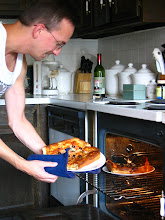
"You're going to want to 'peel' your feet up off the pavement more. And then lay them back down with a mid-sole strike. It'll help you make more of a circular motion with your legs as you run."
This was Laura, helping correct my running form, and quoting directly from Danny Dreyer's excellent book Chi Running. Which, oddly enough, I had her read years ago to improve her running form. Hmm.
I had a negative reaction to this comment, even considering it (wrongly, as we will soon see) vaguely condescending.
My reaction was nothing more than my ego attempting to "protect" me. And what I'd like to do in today's post is explore how dangerous our egos can be when they defensively and aggressively overprotect us.
I'll start by considering reality from my ego's deeply insecure point of view. Assume for the moment that my ego was 100% correct in its worst-case interpretation of Laura's comment: that Laura's intention was to lord over me how terrible my running form was, and by implicit comparison how amazingly perfect her form is. Her comment was intended to condescend and to indicate superiority.
Yes, I know this sounds ridiculous already (I mean, jeez, who wants to go through life automatically assuming negative intent in everything said around you? [1]), but bear with me.
Now, we're both reasonably intelligent people who try to be "meta" about a conversation while we're in it. We're both mostly aware that it pays to say things in such a way that the other people understands the point you're trying to make. Likewise, we also try to be aware that the other person has "intentionality" in what he or she says too. In other words: I can generally assume if something is important enough for Laura to say, there's most likely a decent reason for her to bother to say it.
Otherwise, I've chosen to marry somebody who blithers at me for no discernible reason, something I really don't want to be true.
Once you start considering the real purpose of a conversation about running form (instead of your ego's insecure and false assumptions about that purpose), and once you ruminate a little bit about why somebody might offer a suggestion about something they noticed about your form, you start to see how important intentionality is, and likewise how important it is to assume positive intent in what others say to you.
Let's go back to my ego for a second, and return to my ego's negative interpretation of Laura's statement. My ego arrived at this negative interpretation in a split second, without any real consideration of Laura's intentions. The only thing it "considered" was the idea that I was likely being insulted somehow. Thus my ego reacted in order to protect itself from a potential ego injury... and this ended up preventing me from improving my running form, by insta-rejecting an excellent idea from a book I already knew and totally agreed with.
Thanks ego! Thanks a lot.
It gets even worse. Our ego protection reaction, if habitual, will condition the people around us to never offer any helpful suggestions. Think about it: if I continue to react this way to Laura's ideas and suggestions, eventually she'll stop trying to help me.
A disturbing way to look at this is to conclude that the more reactant your ego, the more your life will be bereft of help in all forms.
Yes, you and I both know the truism about never giving unsolicited advice. But at the same time, helpful suggestions exist for us only if they are said to us, and those helpful ideas and suggestions arrive when they arrive, not necessarily when we want them to arrive. Thus we have to be ready for this help on other peoples' schedules, not on our own. It's just like being consistently ready in case a teacher appears.
There's yet another aspect of our ego protection reflex that's just as pernicious. Consider an example I read recently about trees in a biosphere project. Scientists couldn't understand why all the trees inside of the biosphere kept falling over before they matured. Well, it turns out that if you're a tree inside a biosphere, you never get exposed to wind. Wind is a type of stressor, and trees exposed to wind as they mature become far stronger and resilient.[2]
Essentially, our egos want to keep us in a biosphere, where we never face any wind. Our egos presume negative intent, they presume insult and condescension, and they do so instantly, reflexively. If all we do is react like this, all we'll end up with is a fragile, brittle, easy-to-injure psyche.
So I started peeling up my feet.
Footnotes:
[1] One useful heuristic to use at all times when interacting with others: never, ever assume negative intent in the things other people say.
[2] A fancy word for this is hormesis, or hormetic response. A tree's hormetic response to wind strengthens it over time. For further reading on the human body's hormetic response to running and how even running shoes interfere with hormesis, see also What Barefoot Running Taught Us About Expensive Sneakers (And What Nike and Others Really Don't Want You To Know)
*****************
You can help support the work I do here at Casual Kitchen by visiting Amazon via any link on this site. Amazon pays a small commission to me based on whatever purchase you make on that visit, and it's at no extra cost to you. Thank you!
And, if you are interested at all in cryptocurrencies, yet another way you can help support my work here is to use this link to open up your own cryptocurrency account at Coinbase. I will receive a small affiliate commission with each opened account. Once again, thank you for your support!
Showing posts with label fitness. Show all posts
Showing posts with label fitness. Show all posts


The Old Lie: Breakfast Is the Most Important Meal of the Day
Everybody knows the saying "eat breakfast like a king, eat lunch like a prince and eat dinner like a pauper." And we've all been told that if we want to lose weight we should never skip breakfast.
Unfortunately, neither "breakfast is the most important meal of the day" nor "you should eat a big breakfast" are true! Both are pieces of once-widely-believed dietary wisdom that, largely, turned out to be lies--lies that only recently collapsed under the weight of many, many major discoveries in the domains of human metabolism and nutrition science.
I've addressed many other examples of now-debunked consensus diet ideas elsewhere here at Casual Kitchen, where I've talked about the Big Lie of the Food Pyramid, in my discussion of the logic behind paleo-style eating, and in my discussion of some of the counterintuitive insights in Gary Taubes' excellent book Why We Get Fat.
The Big Eating Window
Here's the problem with breakfast: depending on when you eat it, it can massively expand the number of hours of potential eating time available to you during the day. If you eat at, say, 7:30am or earlier and then go to bed at, say, 10 or 11pm at night, you will have an "eating window" of as much as 15-16 hours over the course of the day. That's a lot of time to eat--and a lot of time to feel hungry if you're trying not to.
An axiom: the longer your eating window, the shorter your your fasting window. And vice versa. Remember, you fast while you sleep, and your body burns fat while you fast. Therefore, if you can extend this fasting period by eating breakfast later, or not eating breakfast at all, you will accomplish three incredibly beneficial things for your body's long-term health:
1) You'll burn a lot more body fat,
2) You'll ingest meaningfully fewer calories over the course of the day,
...and, more importantly (and counterintuitively!):
3) You'll feel less hungry.
Meals beget meals. The moment you start eating food, you prime your body to expect still more calories in the (near) future. How often have you eaten breakfast only to be hungry again just an hour or two later? Of course you only compound the problem further eating a typical (and carb-based) breakfast of grains, branded boxed cereal, fruit and juice.
Finally, it's worth noting that all of these insights slot comfortably into place with many of the various ideas we've discussed here about intermittent fasting and how to expand your fasting window, ideas I've borrowed (stolen?) from Arthur De Vany's excellent book The New Evolution Diet to help me improve my body's metabolism and reduce my body fat levels. (Note to readers: I reviewed De Vany's book here, and I highly recommend it.)
So, push back your breakfast until later in the day, and shorten up your eating window by a few hours. Or, skip breakfast entirely and shorten your eating window by a lot. Whatever you do, make the first meal of your day protein- and fat-centered. Combine these easy dietary tweaks with a healthy, balanced diet, take your exercise up a notch or two, and you'll be extraordinarily happy with the results.
Some of the ideas in this post come from the strikingly useful diet and fitness book Engineering the Alpha by John Romaniello and Adam Bornstein.
READ NEXT: The Scientific Study That Cried Wolf
AND: Minimum Viable Progress
How can I support Casual Kitchen?
Easy. Do all your shopping at Amazon.com via the links on this site! You can also link to me or subscribe to my RSS feed. Finally, consider sharing this article, or any other article you particularly enjoyed here, to Facebook, Twitter (follow me @danielckoontz!) or to bookmarking sites like reddit, digg or stumbleupon. I'm deeply grateful to my readers for their ongoing support.
Unfortunately, neither "breakfast is the most important meal of the day" nor "you should eat a big breakfast" are true! Both are pieces of once-widely-believed dietary wisdom that, largely, turned out to be lies--lies that only recently collapsed under the weight of many, many major discoveries in the domains of human metabolism and nutrition science.
I've addressed many other examples of now-debunked consensus diet ideas elsewhere here at Casual Kitchen, where I've talked about the Big Lie of the Food Pyramid, in my discussion of the logic behind paleo-style eating, and in my discussion of some of the counterintuitive insights in Gary Taubes' excellent book Why We Get Fat.
The Big Eating Window
Here's the problem with breakfast: depending on when you eat it, it can massively expand the number of hours of potential eating time available to you during the day. If you eat at, say, 7:30am or earlier and then go to bed at, say, 10 or 11pm at night, you will have an "eating window" of as much as 15-16 hours over the course of the day. That's a lot of time to eat--and a lot of time to feel hungry if you're trying not to.
An axiom: the longer your eating window, the shorter your your fasting window. And vice versa. Remember, you fast while you sleep, and your body burns fat while you fast. Therefore, if you can extend this fasting period by eating breakfast later, or not eating breakfast at all, you will accomplish three incredibly beneficial things for your body's long-term health:
1) You'll burn a lot more body fat,
2) You'll ingest meaningfully fewer calories over the course of the day,
...and, more importantly (and counterintuitively!):
3) You'll feel less hungry.
Meals beget meals. The moment you start eating food, you prime your body to expect still more calories in the (near) future. How often have you eaten breakfast only to be hungry again just an hour or two later? Of course you only compound the problem further eating a typical (and carb-based) breakfast of grains, branded boxed cereal, fruit and juice.
Finally, it's worth noting that all of these insights slot comfortably into place with many of the various ideas we've discussed here about intermittent fasting and how to expand your fasting window, ideas I've borrowed (stolen?) from Arthur De Vany's excellent book The New Evolution Diet
 to help me improve my body's metabolism and reduce my body fat levels. (Note to readers: I reviewed De Vany's book here, and I highly recommend it.)
So, push back your breakfast until later in the day, and shorten up your eating window by a few hours. Or, skip breakfast entirely and shorten your eating window by a lot. Whatever you do, make the first meal of your day protein- and fat-centered. Combine these easy dietary tweaks with a healthy, balanced diet, take your exercise up a notch or two, and you'll be extraordinarily happy with the results.
Some of the ideas in this post come from the strikingly useful diet and fitness book Engineering the Alpha
 by John Romaniello and Adam Bornstein.
READ NEXT: The Scientific Study That Cried Wolf
AND: Minimum Viable Progress
How can I support Casual Kitchen?
Easy. Do all your shopping at Amazon.com
via the links on this site! You can also link to me or subscribe to my RSS feed. Finally, consider sharing this article, or any other article you particularly enjoyed here, to Facebook, Twitter (follow me @danielckoontz!) or to bookmarking sites like reddit, digg or stumbleupon. I'm deeply grateful to my readers for their ongoing support.
Review: The New Evolution Diet by Arthur De Vany
"There is no failure, only feedback."
--Arthur De Vany
Readers, I'd like to recommend an extremely useful and insightful book to you: The New Evolution Diet: What Our Paleolithic Ancestors Can Teach Us about Weight Loss, Fitness, and Aging by Art De Vany.
I'll start with the author's three central dietary and fitness principles:
1) Do not count or restrict calories.
2) Do not starve yourself, but do go hungry episodically, for brief periods.
3) Exercise less, not more, but with greater playfulness and intensity.
Interesting. Now granted, I know people who have had exceptional success counting calories. And I've seen (and have myself followed) advice to do extended exercise, particularly extended cardio workouts like distance running.
The thing is, most of us hate doing these things. Which is why a book that suggests you do neither is pretty intriguing.
Early on in his book, De Vany offers what I consider to be one of the best brief explanations I've ever read of why we humans are literally built to overeat and underexercise:
"We humans evolved when food was scarce and life was full of arduous physical activity. Hence, our bodies instruct us to eat everything we can lay our hands on and to exert ourselves as little as possible.
That's right. We are, in essence, hardwired to be lazy overeaters.
This was a perfect strategy for success thousands of years ago. No human could survive in 40,000 BC unless he or she ate anytime food was available. Our ancestors knew that famine was always close at hand--feast now or suffer tomorrow. They were also careful to expend as little energy as possible, because burning more calories than absolutely necessary was a threat to survival."
In short, the human body was designed for an insecure food environment. Which is why it's so easy to get fat today, when we're constantly surrounded by an abundance of delicious, tempting and high-calorie food. And it's not like we need to chase down any of this food either! In the mechanized, modern era you can go your whole life without intense exercise. It's easy to see why obesity is our primary health problem.
Thus when De Vany turns the standard diet/fitness advice on its head, it's with full awareness of this critical concept: our bodies are not designed for the modern era. Therefore, we need to imitate--as much as is practicable in modern day-to-day life--the food and fitness environment we are designed for. This is the central thinking behind paleo living. Not just paleo eating--but paleo exercising too.
De Vany tells you to mix your exercise routine up so you won't get bored, and to challenge your body in new and different ways to avoid repetitive stress injuries. Boring, repetitive exercise isn't a recipe for getting in better shape: it's a recipe for, well, getting bored. And quitting.
And De Vany's notion of avoiding boredom extends to eating too. Just as Mother Nature never intended us to exercise on a fixed, rigid schedule, she never intended us to eat on a fixed, rigid schedule either. The human body craves--and benefits significantly from--variation and randomness.
Which is why this book calls for a widely varied diet, not some self-parodying low-carb diet of slabs of meat and bacon. Carbs aren't forbidden: they're okay in moderation--usually in the form of fresh, seasonal fruits and vegetables. The author also suggests experimenting with brief and intermittent periods of fasting: "just remind yourself that your ancestors endured many episodes of hunger and that your metabolism is designed to handle brief fasts."
And while junk foods like processed chips, sugary cereals and soda are generally off limits, even the author himself indulges in a once-a-month piece of cheesecake. This flexibility and allowance for enjoyment is the central strength of De Vany's eating style. As De Vany says: "We are not trying to literally live in the Ice Age, just to emulate aspects of that diet."
Finally, The New Evolution Diet offers readers striking insights and new, healthier paradigms for how to think about food, fitness and the human body. Ideas like:
1) Focusing on building muscle instead of dropping pounds.
2) Using the 80/20 Rule and other non-linear paradigms (e.g., cascade effects, butterfly effects, even outright randomness) to think about the body and how it functions.
3) Adding "kurtosis" in various forms to your life. This might mean adding significant randomness to your workout routine, or varying your diet significantly. As we mentioned before, the human body craves variation. This is the kind of stuff that can make life fun, unpredictable and--most importantly--healthier.
Readers, I strongly recommend this book. It’s rational, practical, thought-provoking and an easy read. Have a look at it and let me know what you think!
Finally, a few things I'm planning to add to my life after reading this book:
1) Add some light exercise before dinner to raise my insulin sensitivity. De Vany explains that this helps train your body to turn food into fuel rather than fat.
2) Make my exercise routines much more varied and unpredictable. I'm the kind of person who craves steady routine, so this may be a challenge for me.
3) Add a few specific foods to my diet: canned salmon and canned shellfish. Both are great sources of lean protein, vitamins, minerals and essential oils.
4) I'm going to try some small personal experiments with intermittent fasting and see what the effects are.
Share your thoughts!
Related Posts:
Cookbook Review: Mollie Katzen's The Heart of the Plate
Ask CK: How Do I Find Good Books To Read?
Interview with Jayson Lusk, Author of "The Food Police"
Review: Wheat Belly by William Davis
How can I support Casual Kitchen?
Easy. Do all your shopping at Amazon.com via the links on this site! You can also link to me or subscribe to my RSS feed. Finally, consider sharing this article, or any other article you particularly enjoyed here, to Facebook, Twitter (follow me @danielckoontz!) or to bookmarking sites like reddit, digg or stumbleupon. I'm deeply grateful to my readers for their ongoing support.
--Arthur De Vany
Readers, I'd like to recommend an extremely useful and insightful book to you: The New Evolution Diet: What Our Paleolithic Ancestors Can Teach Us about Weight Loss, Fitness, and Aging
by Art De Vany.I'll start with the author's three central dietary and fitness principles:
1) Do not count or restrict calories.
2) Do not starve yourself, but do go hungry episodically, for brief periods.
3) Exercise less, not more, but with greater playfulness and intensity.
Interesting. Now granted, I know people who have had exceptional success counting calories. And I've seen (and have myself followed) advice to do extended exercise, particularly extended cardio workouts like distance running.
The thing is, most of us hate doing these things. Which is why a book that suggests you do neither is pretty intriguing.
Early on in his book, De Vany offers what I consider to be one of the best brief explanations I've ever read of why we humans are literally built to overeat and underexercise:
"We humans evolved when food was scarce and life was full of arduous physical activity. Hence, our bodies instruct us to eat everything we can lay our hands on and to exert ourselves as little as possible.
That's right. We are, in essence, hardwired to be lazy overeaters.
This was a perfect strategy for success thousands of years ago. No human could survive in 40,000 BC unless he or she ate anytime food was available. Our ancestors knew that famine was always close at hand--feast now or suffer tomorrow. They were also careful to expend as little energy as possible, because burning more calories than absolutely necessary was a threat to survival."
In short, the human body was designed for an insecure food environment. Which is why it's so easy to get fat today, when we're constantly surrounded by an abundance of delicious, tempting and high-calorie food. And it's not like we need to chase down any of this food either! In the mechanized, modern era you can go your whole life without intense exercise. It's easy to see why obesity is our primary health problem.
Thus when De Vany turns the standard diet/fitness advice on its head, it's with full awareness of this critical concept: our bodies are not designed for the modern era. Therefore, we need to imitate--as much as is practicable in modern day-to-day life--the food and fitness environment we are designed for. This is the central thinking behind paleo living. Not just paleo eating--but paleo exercising too.
De Vany tells you to mix your exercise routine up so you won't get bored, and to challenge your body in new and different ways to avoid repetitive stress injuries. Boring, repetitive exercise isn't a recipe for getting in better shape: it's a recipe for, well, getting bored. And quitting.
And De Vany's notion of avoiding boredom extends to eating too. Just as Mother Nature never intended us to exercise on a fixed, rigid schedule, she never intended us to eat on a fixed, rigid schedule either. The human body craves--and benefits significantly from--variation and randomness.
Which is why this book calls for a widely varied diet, not some self-parodying low-carb diet of slabs of meat and bacon. Carbs aren't forbidden: they're okay in moderation--usually in the form of fresh, seasonal fruits and vegetables. The author also suggests experimenting with brief and intermittent periods of fasting: "just remind yourself that your ancestors endured many episodes of hunger and that your metabolism is designed to handle brief fasts."
And while junk foods like processed chips, sugary cereals and soda are generally off limits, even the author himself indulges in a once-a-month piece of cheesecake. This flexibility and allowance for enjoyment is the central strength of De Vany's eating style. As De Vany says: "We are not trying to literally live in the Ice Age, just to emulate aspects of that diet."
Finally, The New Evolution Diet
offers readers striking insights and new, healthier paradigms for how to think about food, fitness and the human body. Ideas like: 1) Focusing on building muscle instead of dropping pounds.
2) Using the 80/20 Rule and other non-linear paradigms (e.g., cascade effects, butterfly effects, even outright randomness) to think about the body and how it functions.
3) Adding "kurtosis" in various forms to your life. This might mean adding significant randomness to your workout routine, or varying your diet significantly. As we mentioned before, the human body craves variation. This is the kind of stuff that can make life fun, unpredictable and--most importantly--healthier.
Readers, I strongly recommend this book. It’s rational, practical, thought-provoking and an easy read. Have a look at it and let me know what you think!
Finally, a few things I'm planning to add to my life after reading this book:
1) Add some light exercise before dinner to raise my insulin sensitivity. De Vany explains that this helps train your body to turn food into fuel rather than fat.
2) Make my exercise routines much more varied and unpredictable. I'm the kind of person who craves steady routine, so this may be a challenge for me.
3) Add a few specific foods to my diet: canned salmon and canned shellfish. Both are great sources of lean protein, vitamins, minerals and essential oils.
4) I'm going to try some small personal experiments with intermittent fasting and see what the effects are.
Share your thoughts!
Related Posts:
Cookbook Review: Mollie Katzen's The Heart of the Plate
Ask CK: How Do I Find Good Books To Read?
Interview with Jayson Lusk, Author of "The Food Police"
Review: Wheat Belly by William Davis
How can I support Casual Kitchen?
Easy. Do all your shopping at Amazon.com
via the links on this site! You can also link to me or subscribe to my RSS feed. Finally, consider sharing this article, or any other article you particularly enjoyed here, to Facebook, Twitter (follow me @danielckoontz!) or to bookmarking sites like reddit, digg or stumbleupon. I'm deeply grateful to my readers for their ongoing support.
How to Keep a Fitness Training Journal
The purpose of this post is to show how a simple fitness journal, where you track your workouts and basic metrics about your body, will help you achieve even the most ambitious health and fitness goals.
[A friendly warning: this post is longer than typical, with about 2,300 words. It should take you about 10-12 minutes to read. Feel free to come back when you have more time!]
********************************
I don’t always keep a training journal, but when I do, it’s usually when I’m shooting for a significant fitness objective. I kept a journal for each of my three marathons, for example, and I kept an extremely detailed journal when I set the most ambitious fitness goal of my life: to get “back to normal” after catching chicken pox at age 39. This was an illness that literally shattered my body and reduced my fitness conditioning to all-time lows,[1] and I credit my recovery in large part to keeping a training journal.
In other words, a fitness journal is ideal any time you subject your body to new, difficult or potentially grueling training--a major exercise and weight loss program, recovery from an injury, and so on. You’ll want to know as much objective, factual information as you possibly can about how your body responds, and this factual information will help you combat your emotions, overcome discouragement, and make it much more likely you’ll sustain your new fitness regimen. Finally, a training journal is a permanent record of your fitness activity that you can look back on--proudly.
But exactly what information should you record in your fitness journal? And how should you set up your training journal? All great questions grasshopper!
First, the “how should you set it up?” part, which is easy: Just use a spiral notebook and a pen. Or a simple text file on your computer. Or a free Google Docs document at Google Drive. I've used each method and found them equally functional. Your goal here should be to find a simple format that’s easy to use and difficult to lose.
As far as what to record in your fitness journal… well, this part’s a little more complicated. Here’s what I track on a daily or near-daily basis:
1) Resting pulse
2) Exercise actions taken
3) Emotional State/How I feel
4) Notable dietary actions taken
5) Any injuries/discomfort?
6) (optional) Blood pressure
Below, I go over each metric, how to track it, and why each is important. And below that, as an extra bonus, I’ll share two additional metrics, to be tracked monthly, to round out a perfect, information-rich training journal.
1) Resting pulse - I check my resting pulse when I wake up, but before I get out of bed. Get a watch or clock with a second hand, count your pulse over a 15 second period (use an artery in your wrist or neck), and multiply the number of beats times four.
Generally, a normal pulse rate for an active person will be somewhere in the range of 60-72 beats per minute. Check yours for a few days in a row to get a sense of your baseline pulse. Then, be happily shocked at how much lower your resting pulse goes after just a few short weeks of meaningful fitness. When began training for my first marathon, my 72bpm pulse quickly dropped into to the low 50s. It’s been there ever since.
Why tracking your resting pulse is important: Your resting pulse is a simple but extremely useful measure of your general fitness. All else equal, a lower resting pulse means a stronger and more efficient cardiovascular system.[2]
Further, your resting pulse is your body’s early warning system: if your pulse normally runs 54-60 beats per minute and one random morning it’s running 72 or higher, you’re most likely overtraining. You’ll want to increase your rest/sleeping time and dial down (or eliminate) your next few workouts.
2) Exercise actions taken - This is more or less the most obvious piece of advice in this entire post. After all, why keep a training log unless it was to track your actual training? This is the sort simple record that I keep:
Sunday: Rest day
Monday: Ran 5 miles, easy pace
Tuesday: Rest day
Wednesday: 3 sets pushups x 30 reps; ran 3 miles (in 24:36, 8:12 mile splits)
Thursday: Rest day
Friday: Ran 5 miles (42:56, 8:35 splits)
Saturday: Ran a slow 3 miles in AM, played 3 hours doubles tennis in PM.
And so on. Apropos of nothing, my wife and I have a running argument about whether the exercise week starts on Sunday or Monday. I say Sunday (duh), she says Monday. Readers, please tell me I’m right.
Why it’s important: If you’re having trouble grasping the importance of tracking exercise in an exercise journal, just ask the staff at your group home for help. They care about you very much.
3) Emotional state/How I feel/My mood - I consider tracking how you feel to be the single most important element of your training journal. I typically write just one or two short sentences about anything notable about my physical or emotional state. Examples might be:
“I totally didn’t want to run today, but I did anyway. Felt really proud afterwards”
“Really good energy levels today, I felt like I could’ve worked out much longer.”
“Felt like shit.”
“When I left the gym I felt defeated, like I’d never get in shape.”
Started my workout off horribly but found a good rhythm midway through, finished strong.”
“Extremely tired today, but I had a surprisingly good workout anyway.”
And so on. Note that on rare days, I wouldn’t really have any notable feelings or comment-worthy moods, so I’d simply write “normal” or “good workout” in my fitness log.
Why it's important: As I said above, this is the single most important part of your training log. But why? Two reasons. First, you’ll never feel more proud of yourself than when you flip back through your training journal and see days when you:
...didn’t really want to run,
...didn’t feel like working out,
...thought you’d never get in better shape,
...and yet you worked out anyway. That’s what it’s all about.
Second, the act of recording your feelings and moods is a critical exercise in building emotional meta-awareness. Look once again at the “thought you’d never get in better shape” line above. If you’re beginning a new workout regimen, I’ll make you a promise: you will repeatedly experience that exact feeling. It doesn’t matter who you are or what your absolute level of fitness is, you will have moments when you truly believe you won’t improve, and that this whole workout thing is pointless.
Worse, at the time you feel it, it will seem utterly true. Crushingly true.
Except that three months in the future, when you are flipping through your training journal and looking back at that day... you actually will be in better shape! That feeling you had, as true as it may have seemed then, turned out to be exactly false.
What’s my point? Just this: when it comes any kind of goal-oriented or discipline-based habits, your ego and emotions will subvert and mislead you. Sometimes they will outright lie to you. But once you see--documented repeatedly in your own writing--how many times you overcame inertia, defeatism and negative feelings and still worked out, you’ll begin to know, deeply, that your negative feelings have no power over you. They are temporary and they will pass.
4) Notable dietary actions taken - Did you eat a bag of Doritos today? Or is this the third day in a row where you’ve eaten negligible amounts of protein? If you have an unexpectedly crappy workout one day, it helps enormously to be able to look back and see the likely reason why: probably it was a heavy and unhealthy meal (or series of meals) in the days prior.
Your diet fuels your body, and as you improve your fitness, you’ll want to improve your diet too. And the two go naturally--even effortlessly--hand in hand: you’ll find that as you get fitter, you’ll find it far easier to say no to crappy junk food.
A quick word on mechanics: I usually document the prior day’s notable dietary actions on my day’s workout log (examples might be: “crap-awful run today: I blame the three beers and unknown number of chicken wings from last night” or “great run today despite that pint of Cherry Garcia I had yesterday”). See what works best for you here.
Why it’s important: Remember, what gets measured gets managed. It’s true with money, it’s true with your diet, it’s true with fitness. Your diet will improve simply because you know you’re going to document what you eat. This is pretty close to magic, and it alone makes tracking worthwhile.
Sidenote: As you scale up the intensity of your training, you’ll likely want to increase the amount of protein in your diet. During weight training, or during periods of heavy distance running, for example, I’ll often drink a whey isolate protein powder shake on a near-daily basis to help my body recover.
5) Any injuries/discomfort? - Injuries happen, and as you’ll see shortly, you must track them. I usually jot down short phrases:
“Knees ached a bit today, pain 3 on a scale of 10, much better than last week’s long run.”
“Inflammation in my patellar tendons, not painful though, iced them down after tennis.”
“My back was killing me today, but it loosened up during my run.”
“Felt great!” (sadly, this entry appears increasingly infrequently after age 40)
“Calf muscle strain. Need to rest it for a few days.”
“Sore feet: feels like mild stress reactions.”
And so on. The point is to document any physical issue you’re having, and where necessary, to quantify it so you can see whether it’s worsening or improving.
Why it’s important: Our perceptions of our injuries are heavily colored by context, misrememberings and faulty perspectives--just like our moods and emotions. So, just as part 3 of your training journal is an exercise in emotional meta-awareness, this part of your training journal is an exercise in physical meta-awareness. It gives you a reliable and objective record of information about any physical problems you might be experiencing.
Face it, as we get older, “minor pains” and “minor injuries” become more and more a normal part of daily workout life.[3] Yet you still have to do your best to stay in shape! This part of your journal will help you make sure minor problems don’t morph into serious ones. Better still, you’ll start to see important patterns in how your body responds to training. Certain combinations of activities might lead to, say, knee pain, for example. Or, you might learn that your body starts to “act up” if you exercise too many days in a row. Thanks to my training journal, I learned that my knees behave much, much better over time if I generally run every other day rather than on consecutive days.
One last example: Last year during a random run, I hurt something badly in my left calf--I think it was an achilles tendon strain or perhaps even a small partial tear. Keeping track of the injury and noting gradual improvements helped me put the injury in proper context: I could clearly see, by what I wrote in my training log, that my injury was improving (albeit slowly) and that I wouldn't need to have it checked out by a doctor.
6) (Optional) Blood Pressure - I consider this datapoint optional, in part because a blood pressure cuff is a somewhat a pricey piece of equipment for a frugal household. Sure, you can often find free blood pressure machines in many chain pharmacies, but finding one (not to mention returning to it to get regular readings) simply may be too much of a bother logistically.
That said, it’s instructive see a historical series of blood pressure readings in the context of an exercise program. You may very well see your borderline high blood pressure drop right back into normal range. Not only is this highly encouraging and motivating, it can save you from blood pressure meds! Note that your blood pressure fluctuates--sometimes a lot--from day to day and hour to hour, which is why a series of datapoints over days and weeks is more useful than any single datapoint in a vacuum.[4]
Why it’s important: Honestly, your blood pressure isn't that important to track on a daily or near-daily basis in a fitness log. However, it's yet another excellent measure of your general cardiovascular health, and as I mentioned above, you’ll likely be pleasantly surprised by the favorable impact exercise has on your numbers.
One more thought: We have a blood pressure cuff here at home from way back in Laura’s optometry school days, and it’s come in handy lately as Laura’s borderline high blood pressure got to a point where she decided to start treating it with meds. Having a cuff at home--and having a longitudinal sample of blood pressure readings--helped her enormously in selecting (in consultation with her doctor of course) the proper med and dosage.
Finally, here are two additional datapoints that I recommend tracking monthly--not daily!--in your fitness and exercise journal:
1) Timed mile - Run a mile as fast as you can, time it, and write it down. Simple. Next month, do it again and watch how much faster you are. Rinse and repeat once a month. Note: don’t get discouraged by your first datapoint here. You’ll quickly discover that you have a lot more fitness in you than you thought, and as you get fitter, your mile time will drop substantially.
Why it’s important: A timed mile is possibly the best single measure of a person’s overall athletic fitness. If you can get your mile time (remember it’s just one mile!) below 8 minutes, you’re in pretty darn good shape. Remember, a vast number of Americans cannot run a mile at all.
2) Weight/BMI - Remember, your weight and your BMI are just numbers. However, these two numbers together make for an informative measure of your health and fitness. To figure out your BMI, you can go to any of several websites (I use this one at the NIH’s website). Enter your height and weight and it will give you the number.
Why it’s important: Because it just is. If your BMI numbers are in the “overweight” or “obese” range (high 20s to above 30), you’ll face significant health problems. But if you engage in a suitable exercise program and carefully watch and document the metrics above, you’ll see your BMI and body weight numbers improve rapidly.
Final thought: You see that I quite prominently excluded tracking weight and BMI from my list above of daily metrics. If you want to track your weight/BMI each day, feel free, but I recommend tracking your weight and BMI just once a month. Why? Two reasons: To filter out the noise of normal day-to-day weight fluctuations, and to prevent you from overfixating on your weight.
Trust the process of maintaining a regular exercise and fitness regime, track your data objectively and unemotionally, and weight loss and BMI improvement will be a guaranteed result.
Readers, what’s your take?
Footnotes:
[1] An example of how sickly I was: Two to three weeks after the chicken pox had fully run its course, I tried to run one mile. One mile. I had to stop and walk twice, and when I got back home I felt so ill I spent the rest of the day in bed. It was one of the most discouraging days of my life, because it seemed utterly obvious to me (at the time) that I would never get my health and fitness back.
[2] If you have heart issues, or if you’re showing an abnormally low resting pulse, get checked out by your doctor before beginning an exercise regimen.
[3] You can take it from me that fitness is a wholly different challenge in your 40s compared to your 30s and 20s. You can take it from my older sisters that fitness is a wholly different challenge in your 50s compared to your 40s. And you can take it from my father that fitness in your 80s is yet another thing entirely.
[4] It’s vaguely disturbing to see how your blood pressure data jumps around over time, both over the course of days and even from moment to moment. It helps you realize that when you’re in the doctor’s office you’re probably more likely to get an outlier reading than a typical reading (I get nervous in doctor’s offices, so both my systolic and diastolic numbers are sometimes as much as 20 points higher than when we take them at home). Thus any single bp reading is far more meaningful if you can judge it against the context of a series of readings.
Related Posts:
Ask CK: The Two-A-Day Workout
Eat Less, Exercise More Doesn't Work. Wait, What?
When Martina Navratilova Makes You Mad
Ask CK: Butter Or Margarine? What's a Girl To Do?
How can I support Casual Kitchen?
Easy. Do all your shopping at Amazon.com via the links on this site! You can also link to me or subscribe to my RSS feed. Finally, consider sharing this article, or any other article you particularly enjoyed here, to Facebook, Twitter (follow me @danielckoontz!) or to bookmarking sites like reddit, digg or stumbleupon. I'm deeply grateful to my readers for their ongoing support.
[A friendly warning: this post is longer than typical, with about 2,300 words. It should take you about 10-12 minutes to read. Feel free to come back when you have more time!]
********************************
I don’t always keep a training journal, but when I do, it’s usually when I’m shooting for a significant fitness objective. I kept a journal for each of my three marathons, for example, and I kept an extremely detailed journal when I set the most ambitious fitness goal of my life: to get “back to normal” after catching chicken pox at age 39. This was an illness that literally shattered my body and reduced my fitness conditioning to all-time lows,[1] and I credit my recovery in large part to keeping a training journal.
In other words, a fitness journal is ideal any time you subject your body to new, difficult or potentially grueling training--a major exercise and weight loss program, recovery from an injury, and so on. You’ll want to know as much objective, factual information as you possibly can about how your body responds, and this factual information will help you combat your emotions, overcome discouragement, and make it much more likely you’ll sustain your new fitness regimen. Finally, a training journal is a permanent record of your fitness activity that you can look back on--proudly.
But exactly what information should you record in your fitness journal? And how should you set up your training journal? All great questions grasshopper!
First, the “how should you set it up?” part, which is easy: Just use a spiral notebook and a pen. Or a simple text file on your computer. Or a free Google Docs document at Google Drive. I've used each method and found them equally functional. Your goal here should be to find a simple format that’s easy to use and difficult to lose.
As far as what to record in your fitness journal… well, this part’s a little more complicated. Here’s what I track on a daily or near-daily basis:
1) Resting pulse
2) Exercise actions taken
3) Emotional State/How I feel
4) Notable dietary actions taken
5) Any injuries/discomfort?
6) (optional) Blood pressure
Below, I go over each metric, how to track it, and why each is important. And below that, as an extra bonus, I’ll share two additional metrics, to be tracked monthly, to round out a perfect, information-rich training journal.
1) Resting pulse - I check my resting pulse when I wake up, but before I get out of bed. Get a watch or clock with a second hand, count your pulse over a 15 second period (use an artery in your wrist or neck), and multiply the number of beats times four.
Generally, a normal pulse rate for an active person will be somewhere in the range of 60-72 beats per minute. Check yours for a few days in a row to get a sense of your baseline pulse. Then, be happily shocked at how much lower your resting pulse goes after just a few short weeks of meaningful fitness. When began training for my first marathon, my 72bpm pulse quickly dropped into to the low 50s. It’s been there ever since.
Why tracking your resting pulse is important: Your resting pulse is a simple but extremely useful measure of your general fitness. All else equal, a lower resting pulse means a stronger and more efficient cardiovascular system.[2]
Further, your resting pulse is your body’s early warning system: if your pulse normally runs 54-60 beats per minute and one random morning it’s running 72 or higher, you’re most likely overtraining. You’ll want to increase your rest/sleeping time and dial down (or eliminate) your next few workouts.
2) Exercise actions taken - This is more or less the most obvious piece of advice in this entire post. After all, why keep a training log unless it was to track your actual training? This is the sort simple record that I keep:
Sunday: Rest day
Monday: Ran 5 miles, easy pace
Tuesday: Rest day
Wednesday: 3 sets pushups x 30 reps; ran 3 miles (in 24:36, 8:12 mile splits)
Thursday: Rest day
Friday: Ran 5 miles (42:56, 8:35 splits)
Saturday: Ran a slow 3 miles in AM, played 3 hours doubles tennis in PM.
And so on. Apropos of nothing, my wife and I have a running argument about whether the exercise week starts on Sunday or Monday. I say Sunday (duh), she says Monday. Readers, please tell me I’m right.
Why it’s important: If you’re having trouble grasping the importance of tracking exercise in an exercise journal, just ask the staff at your group home for help. They care about you very much.
3) Emotional state/How I feel/My mood - I consider tracking how you feel to be the single most important element of your training journal. I typically write just one or two short sentences about anything notable about my physical or emotional state. Examples might be:
“I totally didn’t want to run today, but I did anyway. Felt really proud afterwards”
“Really good energy levels today, I felt like I could’ve worked out much longer.”
“Felt like shit.”
“When I left the gym I felt defeated, like I’d never get in shape.”
Started my workout off horribly but found a good rhythm midway through, finished strong.”
“Extremely tired today, but I had a surprisingly good workout anyway.”
And so on. Note that on rare days, I wouldn’t really have any notable feelings or comment-worthy moods, so I’d simply write “normal” or “good workout” in my fitness log.
Why it's important: As I said above, this is the single most important part of your training log. But why? Two reasons. First, you’ll never feel more proud of yourself than when you flip back through your training journal and see days when you:
...didn’t really want to run,
...didn’t feel like working out,
...thought you’d never get in better shape,
...and yet you worked out anyway. That’s what it’s all about.
Second, the act of recording your feelings and moods is a critical exercise in building emotional meta-awareness. Look once again at the “thought you’d never get in better shape” line above. If you’re beginning a new workout regimen, I’ll make you a promise: you will repeatedly experience that exact feeling. It doesn’t matter who you are or what your absolute level of fitness is, you will have moments when you truly believe you won’t improve, and that this whole workout thing is pointless.
Worse, at the time you feel it, it will seem utterly true. Crushingly true.
Except that three months in the future, when you are flipping through your training journal and looking back at that day... you actually will be in better shape! That feeling you had, as true as it may have seemed then, turned out to be exactly false.
What’s my point? Just this: when it comes any kind of goal-oriented or discipline-based habits, your ego and emotions will subvert and mislead you. Sometimes they will outright lie to you. But once you see--documented repeatedly in your own writing--how many times you overcame inertia, defeatism and negative feelings and still worked out, you’ll begin to know, deeply, that your negative feelings have no power over you. They are temporary and they will pass.
4) Notable dietary actions taken - Did you eat a bag of Doritos today? Or is this the third day in a row where you’ve eaten negligible amounts of protein? If you have an unexpectedly crappy workout one day, it helps enormously to be able to look back and see the likely reason why: probably it was a heavy and unhealthy meal (or series of meals) in the days prior.
Your diet fuels your body, and as you improve your fitness, you’ll want to improve your diet too. And the two go naturally--even effortlessly--hand in hand: you’ll find that as you get fitter, you’ll find it far easier to say no to crappy junk food.
A quick word on mechanics: I usually document the prior day’s notable dietary actions on my day’s workout log (examples might be: “crap-awful run today: I blame the three beers and unknown number of chicken wings from last night” or “great run today despite that pint of Cherry Garcia I had yesterday”). See what works best for you here.
Why it’s important: Remember, what gets measured gets managed. It’s true with money, it’s true with your diet, it’s true with fitness. Your diet will improve simply because you know you’re going to document what you eat. This is pretty close to magic, and it alone makes tracking worthwhile.
Sidenote: As you scale up the intensity of your training, you’ll likely want to increase the amount of protein in your diet. During weight training, or during periods of heavy distance running, for example, I’ll often drink a whey isolate protein powder shake
on a near-daily basis to help my body recover. 5) Any injuries/discomfort? - Injuries happen, and as you’ll see shortly, you must track them. I usually jot down short phrases:
“Knees ached a bit today, pain 3 on a scale of 10, much better than last week’s long run.”
“Inflammation in my patellar tendons, not painful though, iced them down after tennis.”
“My back was killing me today, but it loosened up during my run.”
“Felt great!” (sadly, this entry appears increasingly infrequently after age 40)
“Calf muscle strain. Need to rest it for a few days.”
“Sore feet: feels like mild stress reactions.”
And so on. The point is to document any physical issue you’re having, and where necessary, to quantify it so you can see whether it’s worsening or improving.
Why it’s important: Our perceptions of our injuries are heavily colored by context, misrememberings and faulty perspectives--just like our moods and emotions. So, just as part 3 of your training journal is an exercise in emotional meta-awareness, this part of your training journal is an exercise in physical meta-awareness. It gives you a reliable and objective record of information about any physical problems you might be experiencing.
Face it, as we get older, “minor pains” and “minor injuries” become more and more a normal part of daily workout life.[3] Yet you still have to do your best to stay in shape! This part of your journal will help you make sure minor problems don’t morph into serious ones. Better still, you’ll start to see important patterns in how your body responds to training. Certain combinations of activities might lead to, say, knee pain, for example. Or, you might learn that your body starts to “act up” if you exercise too many days in a row. Thanks to my training journal, I learned that my knees behave much, much better over time if I generally run every other day rather than on consecutive days.
One last example: Last year during a random run, I hurt something badly in my left calf--I think it was an achilles tendon strain or perhaps even a small partial tear. Keeping track of the injury and noting gradual improvements helped me put the injury in proper context: I could clearly see, by what I wrote in my training log, that my injury was improving (albeit slowly) and that I wouldn't need to have it checked out by a doctor.
6) (Optional) Blood Pressure - I consider this datapoint optional, in part because a blood pressure cuff is a somewhat a pricey piece of equipment for a frugal household. Sure, you can often find free blood pressure machines in many chain pharmacies, but finding one (not to mention returning to it to get regular readings) simply may be too much of a bother logistically.
That said, it’s instructive see a historical series of blood pressure readings in the context of an exercise program. You may very well see your borderline high blood pressure drop right back into normal range. Not only is this highly encouraging and motivating, it can save you from blood pressure meds! Note that your blood pressure fluctuates--sometimes a lot--from day to day and hour to hour, which is why a series of datapoints over days and weeks is more useful than any single datapoint in a vacuum.[4]
Why it’s important: Honestly, your blood pressure isn't that important to track on a daily or near-daily basis in a fitness log. However, it's yet another excellent measure of your general cardiovascular health, and as I mentioned above, you’ll likely be pleasantly surprised by the favorable impact exercise has on your numbers.
One more thought: We have a blood pressure cuff here at home from way back in Laura’s optometry school days, and it’s come in handy lately as Laura’s borderline high blood pressure got to a point where she decided to start treating it with meds. Having a cuff at home--and having a longitudinal sample of blood pressure readings--helped her enormously in selecting (in consultation with her doctor of course) the proper med and dosage.
Finally, here are two additional datapoints that I recommend tracking monthly--not daily!--in your fitness and exercise journal:
1) Timed mile - Run a mile as fast as you can, time it, and write it down. Simple. Next month, do it again and watch how much faster you are. Rinse and repeat once a month. Note: don’t get discouraged by your first datapoint here. You’ll quickly discover that you have a lot more fitness in you than you thought, and as you get fitter, your mile time will drop substantially.
Why it’s important: A timed mile is possibly the best single measure of a person’s overall athletic fitness. If you can get your mile time (remember it’s just one mile!) below 8 minutes, you’re in pretty darn good shape. Remember, a vast number of Americans cannot run a mile at all.
2) Weight/BMI - Remember, your weight and your BMI are just numbers. However, these two numbers together make for an informative measure of your health and fitness. To figure out your BMI, you can go to any of several websites (I use this one at the NIH’s website). Enter your height and weight and it will give you the number.
Why it’s important: Because it just is. If your BMI numbers are in the “overweight” or “obese” range (high 20s to above 30), you’ll face significant health problems. But if you engage in a suitable exercise program and carefully watch and document the metrics above, you’ll see your BMI and body weight numbers improve rapidly.
Final thought: You see that I quite prominently excluded tracking weight and BMI from my list above of daily metrics. If you want to track your weight/BMI each day, feel free, but I recommend tracking your weight and BMI just once a month. Why? Two reasons: To filter out the noise of normal day-to-day weight fluctuations, and to prevent you from overfixating on your weight.
Trust the process of maintaining a regular exercise and fitness regime, track your data objectively and unemotionally, and weight loss and BMI improvement will be a guaranteed result.
Readers, what’s your take?
Footnotes:
[1] An example of how sickly I was: Two to three weeks after the chicken pox had fully run its course, I tried to run one mile. One mile. I had to stop and walk twice, and when I got back home I felt so ill I spent the rest of the day in bed. It was one of the most discouraging days of my life, because it seemed utterly obvious to me (at the time) that I would never get my health and fitness back.
[2] If you have heart issues, or if you’re showing an abnormally low resting pulse, get checked out by your doctor before beginning an exercise regimen.
[3] You can take it from me that fitness is a wholly different challenge in your 40s compared to your 30s and 20s. You can take it from my older sisters that fitness is a wholly different challenge in your 50s compared to your 40s. And you can take it from my father that fitness in your 80s is yet another thing entirely.
[4] It’s vaguely disturbing to see how your blood pressure data jumps around over time, both over the course of days and even from moment to moment. It helps you realize that when you’re in the doctor’s office you’re probably more likely to get an outlier reading than a typical reading (I get nervous in doctor’s offices, so both my systolic and diastolic numbers are sometimes as much as 20 points higher than when we take them at home). Thus any single bp reading is far more meaningful if you can judge it against the context of a series of readings.
Related Posts:
Ask CK: The Two-A-Day Workout
Eat Less, Exercise More Doesn't Work. Wait, What?
When Martina Navratilova Makes You Mad
Ask CK: Butter Or Margarine? What's a Girl To Do?
How can I support Casual Kitchen?
Easy. Do all your shopping at Amazon.com
via the links on this site! You can also link to me or subscribe to my RSS feed. Finally, consider sharing this article, or any other article you particularly enjoyed here, to Facebook, Twitter (follow me @danielckoontz!) or to bookmarking sites like reddit, digg or stumbleupon. I'm deeply grateful to my readers for their ongoing support.
How To Ask All the Wrong Questions
Way, way back in the early days of Casual Kitchen, an acquaintance who wanted to start a blog emailed me with several questions:
What do you do for database backup?
Where do you host your blog?
How do you scale up when your readership grows?
And so on. They were all very interesting, intelligent-sounding questions. And seemingly reasonable questions too, considering that this woman worked in a technical field.
Except that every single one of her questions turned out to be wrong.
Why? Because barely a month or two after she (enthusiastically!) started her blog, she just ...dropped it. She wrote a grand total of four posts.
Four posts. And she hasn’t touched her blog since.
So, all those questions about scaling up, about hosting, about database backup--none of them mattered in the slightest. They were the wrong questions.
You don’t know what you don’t know
Whenever we consider a brand new activity--investing, blogging, cooking, playing tennis, etc.--we always think we know more than we do. It’s when we actually start doing the activity that we come face to face with a real sense of how pathetically little we know.
In fact, our first step towards competence in any new field only comes when we truly wrap our minds around our incompetence. You have to accept and face the disheartening knowledge that you have a long way--a really long way--to go.
In other words, my friend knew so little about blogging that she didn’t even know the right questions to ask. She couldn’t know. Worse, the questions she did ask merely caused her to focus on all the wrong things. Forget worrying about how to back up her blog, she should have been trying to figure out what would make blogging fun enough so she wouldn't quit after four posts.
Wrong about tennis
Another example: Let’s say you decide to take up tennis. You’re in a sports equipment store, nibbling on your fingernail and staring at a wall of tennis racquets. And when the tennis racquet salesperson approaches you, a (seemingly) reasonable question might occur to you: what string tension I should use for my racquet?
Sounds intelligent, right? Except that anyone who's played tennis seriously for any amount of time would laugh uproariously at you for asking it.
Once again: know that your first questions are likely the wrong questions. The only person who will pretend this is the right question is the tennis racquet salesperson, as he attempts to sell you an overpriced $300 racquet.
Worst of all, that $300 racquet raises the stakes. It puts pressure on you to maximize your enjoyment out of tennis, and it may actually increase the chances that you’ll quit the sport in short order.[1]
Better to just go out and spend a summer or two hitting ten thousand balls with an inexpensive, or even a second-hand, racquet. Learn how to keep a ball in play for twenty hits without a miss. Then you'll be competent enough to ask informed questions about proper string tension, what kind of racquet is ideal, what tools you need to add to your game, and so on.
This principle applies to all spots: running, golf, beanbag tossing, even competitive belching. Never buy expensive equipment up front. Wait until you actually know what you need to know.
Wrong about Martha
One last example, from the domain of food: Let’s say you decide to take up cooking, and you’re wondering who to turn to in the food media for help on how and what to cook. You might reasonably look to Martha Stewart and all of her recipe ideas. After all, she’s famous for her cooking, isn’t she? She’s on TV and has her own magazine, right? Wouldn’t it be a great idea to try some of her recipes and techniques?
Nope. Any competent home cook would shake his head at your folly. Why? Because, as any Casual Kitchen reader could tell you, leaping to Martha Stewart-style recipes at the beginning of a home cooking career actually reduces the odds that you’ll continue to cook. You’re more likely to quit in frustration.
The point is this: when you start a new discipline, know that most of your questions, presumptions and ideas about that discipline will be wrong. Wrong in ways you never even imagined. Know this in advance.
Being right
Okay. So what are the right questions then? Here’s what to ask an expert in any field that’s completely new to you:
1) What are the most common mistakes that you typically see beginning [home cooks/ bloggers /tennis players] make?
2) What should I be learning as a new person starting to [cook/blog/play tennis, etc.]?
3) What did you find to be some of the unexpected early challenges of [cooking/blogging, etc.]?
4) What questions haven't I asked you that I should ask?
What’s the takeaway here? Primarily this: the questioner doesn't launch into a line of questions assuming she already knows. None of these are showoff questions that advertise the questioner’s expertise. Instead, each question is asked from a place of humility: this questioner knows she doesn't know.
This is how to take up blogging (or competitive belching) and not quit.
[1] It’s one thing to quit tennis in frustration after dropping $300 on a racquet. But in other domains, the stakes can be far higher. Take for example the domains of investing and personal finance: As many investors learned during the 2000-2002 tech crash and the 2008-2009 banking crisis, not knowing your own level of (in)competence--and not knowing the right questions to ask--can be financially devastating.
How can I support Casual Kitchen?
Easy. Do all your shopping at Amazon.com via the links on this site! You can also link to me or subscribe to my RSS feed. Finally, consider sharing this article, or any other article you particularly enjoyed here, to Facebook, Twitter (follow me @danielckoontz!) or to bookmarking sites like reddit, digg or stumbleupon. I'm deeply grateful to my readers for their ongoing support.
What do you do for database backup?
Where do you host your blog?
How do you scale up when your readership grows?
And so on. They were all very interesting, intelligent-sounding questions. And seemingly reasonable questions too, considering that this woman worked in a technical field.
Except that every single one of her questions turned out to be wrong.
Why? Because barely a month or two after she (enthusiastically!) started her blog, she just ...dropped it. She wrote a grand total of four posts.
Four posts. And she hasn’t touched her blog since.
So, all those questions about scaling up, about hosting, about database backup--none of them mattered in the slightest. They were the wrong questions.
You don’t know what you don’t know
Whenever we consider a brand new activity--investing, blogging, cooking, playing tennis, etc.--we always think we know more than we do. It’s when we actually start doing the activity that we come face to face with a real sense of how pathetically little we know.
In fact, our first step towards competence in any new field only comes when we truly wrap our minds around our incompetence. You have to accept and face the disheartening knowledge that you have a long way--a really long way--to go.
In other words, my friend knew so little about blogging that she didn’t even know the right questions to ask. She couldn’t know. Worse, the questions she did ask merely caused her to focus on all the wrong things. Forget worrying about how to back up her blog, she should have been trying to figure out what would make blogging fun enough so she wouldn't quit after four posts.
Wrong about tennis
Another example: Let’s say you decide to take up tennis. You’re in a sports equipment store, nibbling on your fingernail and staring at a wall of tennis racquets. And when the tennis racquet salesperson approaches you, a (seemingly) reasonable question might occur to you: what string tension I should use for my racquet?
Sounds intelligent, right? Except that anyone who's played tennis seriously for any amount of time would laugh uproariously at you for asking it.
Once again: know that your first questions are likely the wrong questions. The only person who will pretend this is the right question is the tennis racquet salesperson, as he attempts to sell you an overpriced $300 racquet.
Worst of all, that $300 racquet raises the stakes. It puts pressure on you to maximize your enjoyment out of tennis, and it may actually increase the chances that you’ll quit the sport in short order.[1]
Better to just go out and spend a summer or two hitting ten thousand balls with an inexpensive, or even a second-hand, racquet. Learn how to keep a ball in play for twenty hits without a miss. Then you'll be competent enough to ask informed questions about proper string tension, what kind of racquet is ideal, what tools you need to add to your game, and so on.
This principle applies to all spots: running, golf, beanbag tossing, even competitive belching. Never buy expensive equipment up front. Wait until you actually know what you need to know.
Wrong about Martha
One last example, from the domain of food: Let’s say you decide to take up cooking, and you’re wondering who to turn to in the food media for help on how and what to cook. You might reasonably look to Martha Stewart and all of her recipe ideas. After all, she’s famous for her cooking, isn’t she? She’s on TV and has her own magazine, right? Wouldn’t it be a great idea to try some of her recipes and techniques?
Nope. Any competent home cook would shake his head at your folly. Why? Because, as any Casual Kitchen reader could tell you, leaping to Martha Stewart-style recipes at the beginning of a home cooking career actually reduces the odds that you’ll continue to cook. You’re more likely to quit in frustration.
The point is this: when you start a new discipline, know that most of your questions, presumptions and ideas about that discipline will be wrong. Wrong in ways you never even imagined. Know this in advance.
Being right
Okay. So what are the right questions then? Here’s what to ask an expert in any field that’s completely new to you:
1) What are the most common mistakes that you typically see beginning [home cooks/ bloggers /tennis players] make?
2) What should I be learning as a new person starting to [cook/blog/play tennis, etc.]?
3) What did you find to be some of the unexpected early challenges of [cooking/blogging, etc.]?
4) What questions haven't I asked you that I should ask?
What’s the takeaway here? Primarily this: the questioner doesn't launch into a line of questions assuming she already knows. None of these are showoff questions that advertise the questioner’s expertise. Instead, each question is asked from a place of humility: this questioner knows she doesn't know.
This is how to take up blogging (or competitive belching) and not quit.
[1] It’s one thing to quit tennis in frustration after dropping $300 on a racquet. But in other domains, the stakes can be far higher. Take for example the domains of investing and personal finance: As many investors learned during the 2000-2002 tech crash and the 2008-2009 banking crisis, not knowing your own level of (in)competence--and not knowing the right questions to ask--can be financially devastating.
How can I support Casual Kitchen?
Easy. Do all your shopping at Amazon.com
via the links on this site! You can also link to me or subscribe to my RSS feed. Finally, consider sharing this article, or any other article you particularly enjoyed here, to Facebook, Twitter (follow me @danielckoontz!) or to bookmarking sites like reddit, digg or stumbleupon. I'm deeply grateful to my readers for their ongoing support.
Ask CK: The Two-A-Day Workout
This is an off-topic post on fitness.
****************************************
I'm starting to work out again, and I'm getting in better shape, but I want to make even faster progress with losing weight and getting more fit. Any suggestions from the Casual Kitchen?
First of all, congratulations for getting back onto the exercise train. And yes, I do have a suggestion for you: once you've built a consistent exercise habit, start including an occasional two-a-day into your workout schedule.
What's a two-a-day? It's just what it sounds like: two workouts in one day. An occasional two-a-day (followed by a manditory rest day the day after) is one of the most powerful tools in the entire fitness toolbox.
My favorite two-a-day workout format is to do a full weight-training workout at lunchtime, and then go for a long run in the evening. This specific workout taught me the true meaning of the word tired, but it also helped me cut my marathon time by 17 minutes. More on that in a minute.
But, hey, maybe weight training and running aren't your cup of tired? Fortunately, there's an infinity of other two-a-day formats you can try instead. Some examples:
* 2-3 sets of singles tennis in the morning followed by a run in the evening.
* Swimming in the morning and a long bike ride in the afternoon.
* A morning fast tempo run, with second slower, longer jog in the evening.
* An hour of your favorite sport in the morning, followed by extra time on a stationary bike later in the day.
Readers averse to high-impact exercise can try:
Weight training before work, followed by an evening bike ride.
An elliptical machine session in the morning, weights in the evening.
Weight training in the morning, a long swim workout later in the day.
And so on. Try a few of these variations, insert some of your own ideas, and see what resonates with you and provides good results.
A few words of caution. Even if you're in excellent physicial condition, two-a-day workouts can be tough on your body. And if you're fully sedentary, a leap directly to two-a-days could result in injury. Don't rush things. Give yourself some time to get to a reasonable fitness level first.
Second, you must rest on the day following any two-a-day workout. Remember: rest is as important as exercise in making your body fitter and stronger. After a tough two-a-day, your muscles and joints will need a full day of rest in order to recuperate and regenerate.
My conversion to the church of two-a-day workouts happened during my training for the 2005 Marine Corps Marathon. During my heaviest training weeks, I worked in at least one (and sometimes two) two-a-days per week: a 45 minute weight-training workout during my lunch break (both upper and lower body), followed by an eight or nine mile training run after work. (For the weightroom geeks out there: to maximize the limited gym time I had, I used free weights, used one set to failure, and used slow reps of five seconds up and five seconds down. The results I got from this lifting style were excellent.)
Just thinking about those workouts makes me tired. And I never had to persuade myself to take a rest day the following day--exercising was inconceivable. But the results were undeniable: After being stuck at a novice-level 4:00 marathon time, I used this technique to cut my marathon time down to 3:43. For a runner of my (middling) skill level, this was a gigantic improvement.
More Two-A-Day Tips:
Use a buddy. Schedule your second training session with a workout buddy to eliminate the temptation to blow it off.
Diet. You're gonna be unimaginably hungry in the days following a two-a-day. Don't satisfy that hunger with junk. Stick to clean foods (lean proteins, fruits, veggies and complex carbohydrates) and you'll capture even more health benefits from your workouts.
Joint care: Now that I'm in my (ack!) 40s, I have to be increasingly mindful of my joints during and after tougher training sessions. For example, I always ice down my knees as a preventative measure after any high-impact workout. Ice is your friend: applying it to heavily used joints reduces inflammation and aids in healing and recovery. The bottom line, however, is as we age, our joints can be infuriatingly unpredictable, and joint problems can spring up out of nowhere. Be careful, listen to your body, and back off from the heavier workouts if you need to.
Did I mention rest? Once again, the day after a tough two-a-day is all about rest, and it's during that rest that you get stronger, fitter and healthier. On your rest days, if you want to do a little light stretching, or go for a short walk, that's fine, but give your body a solid day of rest so it can regenerate and rebuild.
Readers, share your thoughts!
How can I support Casual Kitchen?
If you enjoy reading Casual Kitchen, tell a friend and spread the word! You can also support me by purchasing items from Amazon.com via links on this site, or by linking to me or subscribing to my RSS feed. Finally, you can consider submitting this article, or any other article you particularly enjoyed here, to bookmarking sites like del.icio.us, digg or stumbleupon. Thank you for your support!
****************************************
I'm starting to work out again, and I'm getting in better shape, but I want to make even faster progress with losing weight and getting more fit. Any suggestions from the Casual Kitchen?
First of all, congratulations for getting back onto the exercise train. And yes, I do have a suggestion for you: once you've built a consistent exercise habit, start including an occasional two-a-day into your workout schedule.
What's a two-a-day? It's just what it sounds like: two workouts in one day. An occasional two-a-day (followed by a manditory rest day the day after) is one of the most powerful tools in the entire fitness toolbox.
My favorite two-a-day workout format is to do a full weight-training workout at lunchtime, and then go for a long run in the evening. This specific workout taught me the true meaning of the word tired, but it also helped me cut my marathon time by 17 minutes. More on that in a minute.
But, hey, maybe weight training and running aren't your cup of tired? Fortunately, there's an infinity of other two-a-day formats you can try instead. Some examples:
* 2-3 sets of singles tennis in the morning followed by a run in the evening.
* Swimming in the morning and a long bike ride in the afternoon.
* A morning fast tempo run, with second slower, longer jog in the evening.
* An hour of your favorite sport in the morning, followed by extra time on a stationary bike later in the day.
Readers averse to high-impact exercise can try:
Weight training before work, followed by an evening bike ride.
An elliptical machine session in the morning, weights in the evening.
Weight training in the morning, a long swim workout later in the day.
And so on. Try a few of these variations, insert some of your own ideas, and see what resonates with you and provides good results.
A few words of caution. Even if you're in excellent physicial condition, two-a-day workouts can be tough on your body. And if you're fully sedentary, a leap directly to two-a-days could result in injury. Don't rush things. Give yourself some time to get to a reasonable fitness level first.
Second, you must rest on the day following any two-a-day workout. Remember: rest is as important as exercise in making your body fitter and stronger. After a tough two-a-day, your muscles and joints will need a full day of rest in order to recuperate and regenerate.
My conversion to the church of two-a-day workouts happened during my training for the 2005 Marine Corps Marathon. During my heaviest training weeks, I worked in at least one (and sometimes two) two-a-days per week: a 45 minute weight-training workout during my lunch break (both upper and lower body), followed by an eight or nine mile training run after work. (For the weightroom geeks out there: to maximize the limited gym time I had, I used free weights, used one set to failure, and used slow reps of five seconds up and five seconds down. The results I got from this lifting style were excellent.)
Just thinking about those workouts makes me tired. And I never had to persuade myself to take a rest day the following day--exercising was inconceivable. But the results were undeniable: After being stuck at a novice-level 4:00 marathon time, I used this technique to cut my marathon time down to 3:43. For a runner of my (middling) skill level, this was a gigantic improvement.
More Two-A-Day Tips:
Use a buddy. Schedule your second training session with a workout buddy to eliminate the temptation to blow it off.
Diet. You're gonna be unimaginably hungry in the days following a two-a-day. Don't satisfy that hunger with junk. Stick to clean foods (lean proteins, fruits, veggies and complex carbohydrates) and you'll capture even more health benefits from your workouts.
Joint care: Now that I'm in my (ack!) 40s, I have to be increasingly mindful of my joints during and after tougher training sessions. For example, I always ice down my knees as a preventative measure after any high-impact workout. Ice is your friend: applying it to heavily used joints reduces inflammation and aids in healing and recovery. The bottom line, however, is as we age, our joints can be infuriatingly unpredictable, and joint problems can spring up out of nowhere. Be careful, listen to your body, and back off from the heavier workouts if you need to.
Did I mention rest? Once again, the day after a tough two-a-day is all about rest, and it's during that rest that you get stronger, fitter and healthier. On your rest days, if you want to do a little light stretching, or go for a short walk, that's fine, but give your body a solid day of rest so it can regenerate and rebuild.
Readers, share your thoughts!
How can I support Casual Kitchen?
If you enjoy reading Casual Kitchen, tell a friend and spread the word! You can also support me by purchasing items from Amazon.com
via links on this site, or by linking to me or subscribing to my RSS feed. Finally, you can consider submitting this article, or any other article you particularly enjoyed here, to bookmarking sites like del.icio.us, digg or stumbleupon. Thank you for your support!
Weight Is Just a Number
Do you weigh yourself regularly?
And do you have a specific number in mind that you'd like to weigh?
Here's a thought: what if the above two questions were the wrong questions?
The truth is your simple body weight can be a misleading and dangerously one-dimensional number, especially if you over-focus on it.
Instead consider these six other metrics, each of which provide more value, more insight and more information about your health and fitness.
Your cholesterol numbers
Think of your cholesterol numbers as a measurement of your long term cardiovascular health. After all, you can be "thin" in the body weight sense yet still have dangerously high cholesterol. Be sure to have bloodwork done with your regularly scheduled physical and ask your doctor how to interpret the results. Most importantly, ask for your own copy of your blood records for your personal files, so you can keep track of your HDL, LDL and total cholesterol numbers and ratios over time.
Your blood pressure
Most people know that the magic number for blood pressure is 120/80. Readings higher than that can indicate risk of heart disease, stroke or other cardiovascular illness. And while being overweight generally correlates with higher than normal blood pressure, you can also be thin in the body weight sense and still have blood pressure issues.
Obviously, your doctor or health professional will check your blood pressure as part of a normal exam, but you can also own your own blood pressure cuffs for home use (we actually own two here at Casual Kitchen, one that's manual and one that's battery powered). Finally, you can check your blood pressure for free in many drugstores and supermarkets.
Your body fat content
Your body fat percentage is an extremely useful measure of fitness and health, and it can be measured with varying techniques (and with varying degrees of accuracy) at any gym, fitness center or community health clinic. Ask a trainer or a health aide to help you understand the results.
Your BMI
Your BMI is simply your body's height/weight ratio, and it is a simple way to assess your fitness and health. There are limits to what your BMI can tell you, but it is an excellent shorthand way to determine if your weight is appropriate for your height, and it's a considerably more useful number than your simple one-dimensional body weight. [Here's an easy BMI calculator.]
Your Endurance
There are plenty of skinny people out there who aren't fit. And likewise, there are plenty of heavy people capable of stunning feats of fitness (two words: Charles Barkley). Let me propose two more nuanced and complete measures of your health and fitness:
1) How fast can you walk (or run) a mile?
2) Can you complete a 10K walk or fun run?
If you can't do the first and can't comprehend doing the second, then you've just stumbled onto some critically important information about your fitness--information that's far more useful than your absolute weight rendered in numerical form.
Your strength
Don't fall into the stereotypical trap of thinking weights are only for 24-year-old musclebound meatheads. There are stacks of studies showing the health benefits of weight-bearing exercise for women and men of all ages.
Ironically, an increasingly common sighting in gyms these days isn't the musclebound meathead, it's the weightroom geek: a friendly person who, while working out, roams the weight room with a pen and notebook, keeping assiduous records of his or her exercises, weights and rep counts. Visit your local gym or YMCA and see if regular weight training can help you achieve your health and fitness goals. I'm betting it will.
Getting fitter and gaining weight
I'll conclude this post with a brief story. When she was in her late 20s, my wife Laura decided she wanted to play better-quality tennis, and she knew in order to do so she had to improve her cardiovascular fitness. So, she started running 2-3 miles three times a week. Within a few months, her body fat content dropped and she developed much better endurance.
But guess what else? She gained weight. Nearly 10 pounds, which is notable on someone 5 feet 2 and 3/4 inches tall (and don't you dare forget the 3/4!).
Once she stopped screaming and thought about it for a few minutes, Laura easily figured out what happened: her body composition had changed as she burned fat and replaced it with muscle. And muscle has about double the density of body fat. This explains how someone can get into shape, even far better shape, and yet gain some weight in the process.
Many people can get so over-focused on their weight that they miss the big picture: that by getting fitter, you add years to your life. Essentially, you buy more time above ground. Isn't that a far more meaningful goal than shooting for some arbitrary number on your bathroom scales?
Measure your body by what it can do. Don't fixate on body weight to the exclusion of all the other information your body offers you. Weight is just a number, and it's nearly useless without context.
Readers: what experiences can you share?
Related Posts:
Make Your Diet Into a Flexible Tool
What to Eat When You're Sick as a Dog
Ten Strategies to Stop Mindless Eating
Eat Right to See Right: Foods for Better Eye Health
How can I support Casual Kitchen?
If you enjoy reading Casual Kitchen, tell a friend and spread the word! You can also support me by purchasing items from Amazon.com via links on this site, or by linking to me or subscribing to my RSS feed. Finally, you can consider submitting this article, or any other article you particularly enjoyed here, to bookmarking sites like del.icio.us, digg or stumbleupon. Thank you for your support!
And do you have a specific number in mind that you'd like to weigh?
Here's a thought: what if the above two questions were the wrong questions?
The truth is your simple body weight can be a misleading and dangerously one-dimensional number, especially if you over-focus on it.
Instead consider these six other metrics, each of which provide more value, more insight and more information about your health and fitness.
Your cholesterol numbers
Think of your cholesterol numbers as a measurement of your long term cardiovascular health. After all, you can be "thin" in the body weight sense yet still have dangerously high cholesterol. Be sure to have bloodwork done with your regularly scheduled physical and ask your doctor how to interpret the results. Most importantly, ask for your own copy of your blood records for your personal files, so you can keep track of your HDL, LDL and total cholesterol numbers and ratios over time.
Your blood pressure
Most people know that the magic number for blood pressure is 120/80. Readings higher than that can indicate risk of heart disease, stroke or other cardiovascular illness. And while being overweight generally correlates with higher than normal blood pressure, you can also be thin in the body weight sense and still have blood pressure issues.
Obviously, your doctor or health professional will check your blood pressure as part of a normal exam, but you can also own your own blood pressure cuffs
for home use (we actually own two here at Casual Kitchen, one that's manual and one that's battery powered). Finally, you can check your blood pressure for free in many drugstores and supermarkets.Your body fat content
Your body fat percentage is an extremely useful measure of fitness and health, and it can be measured with varying techniques (and with varying degrees of accuracy) at any gym, fitness center or community health clinic. Ask a trainer or a health aide to help you understand the results.
Your BMI
Your BMI is simply your body's height/weight ratio, and it is a simple way to assess your fitness and health. There are limits to what your BMI can tell you, but it is an excellent shorthand way to determine if your weight is appropriate for your height, and it's a considerably more useful number than your simple one-dimensional body weight. [Here's an easy BMI calculator.]
Your Endurance
There are plenty of skinny people out there who aren't fit. And likewise, there are plenty of heavy people capable of stunning feats of fitness (two words: Charles Barkley). Let me propose two more nuanced and complete measures of your health and fitness:
1) How fast can you walk (or run) a mile?
2) Can you complete a 10K walk or fun run?
If you can't do the first and can't comprehend doing the second, then you've just stumbled onto some critically important information about your fitness--information that's far more useful than your absolute weight rendered in numerical form.
Your strength
Don't fall into the stereotypical trap of thinking weights are only for 24-year-old musclebound meatheads. There are stacks of studies showing the health benefits of weight-bearing exercise for women and men of all ages.
Ironically, an increasingly common sighting in gyms these days isn't the musclebound meathead, it's the weightroom geek: a friendly person who, while working out, roams the weight room with a pen and notebook, keeping assiduous records of his or her exercises, weights and rep counts. Visit your local gym or YMCA and see if regular weight training can help you achieve your health and fitness goals. I'm betting it will.
Getting fitter and gaining weight
I'll conclude this post with a brief story. When she was in her late 20s, my wife Laura decided she wanted to play better-quality tennis, and she knew in order to do so she had to improve her cardiovascular fitness. So, she started running 2-3 miles three times a week. Within a few months, her body fat content dropped and she developed much better endurance.
But guess what else? She gained weight. Nearly 10 pounds, which is notable on someone 5 feet 2 and 3/4 inches tall (and don't you dare forget the 3/4!).
Once she stopped screaming and thought about it for a few minutes, Laura easily figured out what happened: her body composition had changed as she burned fat and replaced it with muscle. And muscle has about double the density of body fat. This explains how someone can get into shape, even far better shape, and yet gain some weight in the process.
Many people can get so over-focused on their weight that they miss the big picture: that by getting fitter, you add years to your life. Essentially, you buy more time above ground. Isn't that a far more meaningful goal than shooting for some arbitrary number on your bathroom scales?
Measure your body by what it can do. Don't fixate on body weight to the exclusion of all the other information your body offers you. Weight is just a number, and it's nearly useless without context.
Readers: what experiences can you share?
Related Posts:
Make Your Diet Into a Flexible Tool
What to Eat When You're Sick as a Dog
Ten Strategies to Stop Mindless Eating
Eat Right to See Right: Foods for Better Eye Health
How can I support Casual Kitchen?
If you enjoy reading Casual Kitchen, tell a friend and spread the word! You can also support me by purchasing items from Amazon.com
via links on this site, or by linking to me or subscribing to my RSS feed. Finally, you can consider submitting this article, or any other article you particularly enjoyed here, to bookmarking sites like del.icio.us, digg or stumbleupon. Thank you for your support!
Subscribe to:
Posts (Atom)