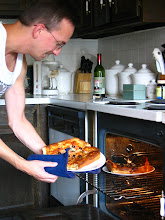
Here's yet another selection of particularly interesting food-related links from around the internet.
*************************
Spaghetti Alla Carbonara at Chefs Gone Wild
I've been following this private chef's blog for a while now, and when he put up a post on how to make a real carbonara sauce, I had to share it with my readers. That egg yolk really makes the dish into a work of art.
Antioxidant Alert! Braised Silverbeet Stalks at Cook (almost) Anything At Least Once:
A long time ago I ran a post on How to Cook Swiss Chard which celebrated this inexpensive and antioxidant-rich leafy green. This Aussie blogger posts one of the easiest, most elegant preparations of swiss chard (or silverbeet, as they call it down under) that I've ever seen. One side note: for those of us in the USA where that whole metric thing just never caught on, a 15 ounce can of crushed tomatoes is equivalent to 440 grams.
Homemade Belizean Hot Pepper Sauce
Lyra at Rice and Beans in DC shows us how to take habanero peppers and turn them into a ridiculously easy-to-make fiery hot pepper sauce. Glorious.
Minty Eggplant Masala from Holy Cow! One of my favorite vegetarian Indian food blogs featured a particularly delicious and easy-to-make eggplant dish this week. If you're curious what "jaggery" is (I certainly was), it's a form of unrefined sugar common to India and available here in Indian specialty food stores. You can use brown sugar in its place.
Rejected York Peppermint Pattie slogans at Timothy McSweeney's
My personal favorite: "When I bite into a York Peppermint Pattie, I get the sensation of being curled in a ball inside a cold, dark cave filled with my darkest, most paralyzing fears."
Life Skills 101 at Cheap Healthy Good
Kris over at CHG wrote a truly original post this week about all of the useful things we should have been taught in high school, and she even structured the post in the form of a lesson plan! Her thoughts range from budgeting and credit to cooking and diet. I always wish there had been a class in high school on deciphering your paycheck. If I had known way back then about all those taxes and paycheck deductions, I probably would have rethought that whole working thing.
How can I support Casual Kitchen?
If you enjoy reading Casual Kitchen, tell a friend and spread the word! Another way you can support me is by submitting this article, or any other article you particularly enjoyed here, to bookmarking sites like del.icio.us, digg or stumbleupon.


Countdown: Top Ten Low Alcohol Drinks
Here's a list of ten of the best low-alcohol drinks for when you need to keep your head about you on a night out on the town.
These alcoholic beverages generally have 1/2 to 1/3 of the alcohol in a typical standard drink (a standard drink is equivalent to roughly 6 ounces of wine, 12 ounces of beer, or 1.5 ounces of hard liquor).
All of these drinks are fun to make and easy to drink. And as you'll see, a few of the drinks on this list are real attention-getters. It just proves that you don't have to outdrink your friends to show off in a bar.
Readers, if you have any favorite low-alcohol content drinks of your own that you'd like to share, please tell us about them in the comments section below!
***************************
10) The Bellini
Colorful, flavorful, and so low in alcohol you'll be able to drink these all night.
3 ounces peach juice
A dash of lemon juice
3 ounces champagne or dry sparkling wine
1 dash grenadine
Pour peach juice into a champagne flute or wine glass. Add the dash of lemon juice and the dash of grenadine. Top glass off with chilled sparkling wine.
9) The Country Club Cooler
You might have to help your bartender out with the recipe for this drink--it's not all that common.
1/2 teaspoon grenadine
2 ounces ginger ale or carbonated water
2 ounces dry vermouth
Pour ingredients into a highball glass, add ice, and stir.
Garnish with a lemon or orange peel.
8) The Mimosa
This drink is of course known by brunchers everywhere. However, if you're out in a bar at a time other than brunch and you want to avoid looking like a lightweight, you can ask for your mimosa in a rocks glass--people will think you're drinking a screwdriver.
Fill a wine goblet or champagne flute with equal parts orange juice and chilled sparkling wine.
For a delicious variation, try the Passion Mimosa, which contains equal parts passion fruit juice and sparkling wine.
7) The Shandy
Featured sheepishly in this blog several months ago, this drink should not be ordered in public by any man unless he wants to spend the rest of his life crying over his shattered masculinity. Perfect for the ladies though.
Pour a pint glass half full of beer, then fill with ginger ale.
6) The Peppermint Pattie
Are you a fan of Peanuts? Do you enjoy reading rejected commercial blurbs for the York Peppermint Pattie? Then this drink's for you.
1 ounce creme de menthe
1 ounce creme de cacao
Shake with ice and strain into a small glass filled with ice cubes.
5) The Wine Cooler
We're not talking about those sickly sweet Bartles and Jaymes wine coolers you drank back in college. This is the real thing:
Pour 3 ounces red wine into a wine glass with ice cubes.
Fill the glass with Sprite, Seven-Up or other lemon-lime soda.
4) The Pineapple Cooler
This drink is a real thirst-quencher, and it packs a powerful punch of not one, but two, shots of pineapple juice.
Pour into a glass with ice cubes:
2 shots pineapple juice
1/2 teaspoon sugar
2-3 ounces club soda
2-3 ounces white wine
Garnish with a twist of lemon or a wedge of pineapple.
3) Port Wine Flip
The next time the holidays roll around, try this drink as a perfect low-alcohol substitute for eggnog.
1 whole egg
1 teaspoon sugar
1.5 ounces port
2 teaspoons light cream (optional)
Garnish with a few shakes of nutmeg.
Shake with ice and strain into a cocktail glass.
2) The Eclipse Cocktail
The coolest-looking drink on this list. A definite attention-getter.
Grenadine
1 ounce Gin
2 ounces Sloe Gin
1/2 teaspoon lemon juice
Put a small green olive in the bottom of a cocktail glass. Pour enough grenadine in the glass to just barely cover the olive. Then, shake gin, sloe gin and lemon juice with ice and pour carefully into the cocktail glass so that it settles on top of the grenadine and the two layers do not mix.
And the very best low-alcohol drink is....
1) The Cafe Royale
Not only is this drink preposterously low in alcohol, it involves fire!! Let your bartender light one of these up and you'll be the center of attention for the rest of the night.
1-2 sugar cubes (according to your preference)
Brandy
1 cup of hot black coffee.
Soak sugar cube(s) briefly in brandy. Place brandy-soaked cubes on a teaspoon and hold the teaspoon so that it balances on top of the cup of coffee. Light the sugar cubes with a match or lighter, and hold until the flame goes out. Drop the cubes into the coffee and stir.
*****************************
Related Posts:
Countdown: The Top Ten Alcoholic Drinks of Summer
Why You Should NEVER Use "Cooking Wine"
Ten Rules for the Modern Restaurant-Goer
The Dinner Party: 10 Tips to Make Cooking for Company Fun and Easy
These alcoholic beverages generally have 1/2 to 1/3 of the alcohol in a typical standard drink (a standard drink is equivalent to roughly 6 ounces of wine, 12 ounces of beer, or 1.5 ounces of hard liquor).
All of these drinks are fun to make and easy to drink. And as you'll see, a few of the drinks on this list are real attention-getters. It just proves that you don't have to outdrink your friends to show off in a bar.
Readers, if you have any favorite low-alcohol content drinks of your own that you'd like to share, please tell us about them in the comments section below!
***************************
10) The Bellini
Colorful, flavorful, and so low in alcohol you'll be able to drink these all night.
3 ounces peach juice
A dash of lemon juice
3 ounces champagne or dry sparkling wine
1 dash grenadine
Pour peach juice into a champagne flute or wine glass. Add the dash of lemon juice and the dash of grenadine. Top glass off with chilled sparkling wine.
9) The Country Club Cooler
You might have to help your bartender out with the recipe for this drink--it's not all that common.
1/2 teaspoon grenadine
2 ounces ginger ale or carbonated water
2 ounces dry vermouth
Pour ingredients into a highball glass, add ice, and stir.
Garnish with a lemon or orange peel.
8) The Mimosa
This drink is of course known by brunchers everywhere. However, if you're out in a bar at a time other than brunch and you want to avoid looking like a lightweight, you can ask for your mimosa in a rocks glass--people will think you're drinking a screwdriver.
Fill a wine goblet or champagne flute with equal parts orange juice and chilled sparkling wine.
For a delicious variation, try the Passion Mimosa, which contains equal parts passion fruit juice and sparkling wine.
7) The Shandy
Featured sheepishly in this blog several months ago, this drink should not be ordered in public by any man unless he wants to spend the rest of his life crying over his shattered masculinity. Perfect for the ladies though.
Pour a pint glass half full of beer, then fill with ginger ale.
6) The Peppermint Pattie
Are you a fan of Peanuts? Do you enjoy reading rejected commercial blurbs for the York Peppermint Pattie? Then this drink's for you.
1 ounce creme de menthe
1 ounce creme de cacao
Shake with ice and strain into a small glass filled with ice cubes.
5) The Wine Cooler
We're not talking about those sickly sweet Bartles and Jaymes wine coolers you drank back in college. This is the real thing:
Pour 3 ounces red wine into a wine glass with ice cubes.
Fill the glass with Sprite, Seven-Up or other lemon-lime soda.
4) The Pineapple Cooler
This drink is a real thirst-quencher, and it packs a powerful punch of not one, but two, shots of pineapple juice.
Pour into a glass with ice cubes:
2 shots pineapple juice
1/2 teaspoon sugar
2-3 ounces club soda
2-3 ounces white wine
Garnish with a twist of lemon or a wedge of pineapple.
3) Port Wine Flip
The next time the holidays roll around, try this drink as a perfect low-alcohol substitute for eggnog.
1 whole egg
1 teaspoon sugar
1.5 ounces port
2 teaspoons light cream (optional)
Garnish with a few shakes of nutmeg.
Shake with ice and strain into a cocktail glass.
2) The Eclipse Cocktail
The coolest-looking drink on this list. A definite attention-getter.
Grenadine
1 ounce Gin
2 ounces Sloe Gin
1/2 teaspoon lemon juice
Put a small green olive in the bottom of a cocktail glass. Pour enough grenadine in the glass to just barely cover the olive. Then, shake gin, sloe gin and lemon juice with ice and pour carefully into the cocktail glass so that it settles on top of the grenadine and the two layers do not mix.
And the very best low-alcohol drink is....
1) The Cafe Royale
Not only is this drink preposterously low in alcohol, it involves fire!! Let your bartender light one of these up and you'll be the center of attention for the rest of the night.
1-2 sugar cubes (according to your preference)
Brandy
1 cup of hot black coffee.
Soak sugar cube(s) briefly in brandy. Place brandy-soaked cubes on a teaspoon and hold the teaspoon so that it balances on top of the cup of coffee. Light the sugar cubes with a match or lighter, and hold until the flame goes out. Drop the cubes into the coffee and stir.
*****************************
Related Posts:
Countdown: The Top Ten Alcoholic Drinks of Summer
Why You Should NEVER Use "Cooking Wine"
Ten Rules for the Modern Restaurant-Goer
The Dinner Party: 10 Tips to Make Cooking for Company Fun and Easy
CK Food Links--Friday August 22, 2008
Here's yet another selection of particularly interesting food-related links from around the internet.
*************************
Tomato Soup Week at I(heart)Kale:
One of my very favorite food blogs did a series this week on raw tomato soups, and each recipe was more amazing than the last! Phoebe and Hannah have a real gift at combining simple ingredients into simple recipes in unusually creative ways. Here are my three favorites:
Tomato and Tahini Soup
Potato Gazpacho with Avocado
Gingered Raw Tomato and Coconut Soup
The Frugal Whole Chicken at the Simple Dollar
Trent shares his infectious enthusiasm for how he exploits one of the best deals in all of food. Whole chickens are among the least expensive of all meats, and this post gives ideas for using every part of a whole chicken across several meals. That's the true Casual Kitchen spirit. Oh--and Trent tweaks some whining complainer in the grocery store for good measure too.
German Roasted Potato Salad from Use Real Butter
I'm going to be a bit longwinded with this link, but I wanted to share it with you for two reasons. First, the recipe (it's at the very bottom of the page) is delicious and easy to make--a perfect recipe for CK readers. But the real reason I bring it to you is to illustrate a brilliant example of recipe modification by the very talented blogger Jen Yu.
If you click the link on her page where it says "based on Authentic German Potato Salad" it will take you to Allrecipes.com and the original recipe that Jen draws from. Flip between the two recipes and you can see her highly creative modifications:
1) She substitutes 3 lbs of unpeeled potatoes for 3 cups boiled and peeled potatoes (cuts out a lot of prep work, plus potato skin is highly nutritious anyway),
2) She uses shallots in place of onions, and she roasts the shallots with the potatoes instead of boiling the potatoes and frying the onions in bacon fat (three benefits here: it removes a process step, roasted potatoes taste better than boring boiled potatoes, and roasting the shallots instead of sauteing them in bacon fat cuts some 75% of the fat out of the recipe).
3) Finally, she triples the fresh parsley and doubles the bacon (more fresh greens means a more invigorated recipe, and because she's not frying things in bacon fat, she can double the bacon yet paradoxically have a lower-fat recipe).
The result is recipe that's easier, healthier and better-tasting. This is such a good illustration of recipe modification that I just had to share the mechanics and details with you.
Finally, let me close with two (actually three) more delicious recipes that really caught my attention:
Sweet Chili Lime Tofu from VeganYumYum
Thanks to Jaime at CheapHealthyGood for finding this one. If you can't find (or don't want to use) quinoa, rice or brown rice will nicely suffice.
Two Simple Salsas from Well Fed
Recipes for Chipotle Tomatillo Salsa and Roasted Jalapeno Salsa, for when you're sick of typical tomato-based salsa.
How can I support Casual Kitchen?
If you enjoy reading Casual Kitchen, tell a friend and spread the word! Another way you can support me is by submitting this article, or any other article you particularly enjoyed here, to bookmarking sites like del.icio.us, digg or stumbleupon.
*************************
Tomato Soup Week at I(heart)Kale:
One of my very favorite food blogs did a series this week on raw tomato soups, and each recipe was more amazing than the last! Phoebe and Hannah have a real gift at combining simple ingredients into simple recipes in unusually creative ways. Here are my three favorites:
Tomato and Tahini Soup
Potato Gazpacho with Avocado
Gingered Raw Tomato and Coconut Soup
The Frugal Whole Chicken at the Simple Dollar
Trent shares his infectious enthusiasm for how he exploits one of the best deals in all of food. Whole chickens are among the least expensive of all meats, and this post gives ideas for using every part of a whole chicken across several meals. That's the true Casual Kitchen spirit. Oh--and Trent tweaks some whining complainer in the grocery store for good measure too.
German Roasted Potato Salad from Use Real Butter
I'm going to be a bit longwinded with this link, but I wanted to share it with you for two reasons. First, the recipe (it's at the very bottom of the page) is delicious and easy to make--a perfect recipe for CK readers. But the real reason I bring it to you is to illustrate a brilliant example of recipe modification by the very talented blogger Jen Yu.
If you click the link on her page where it says "based on Authentic German Potato Salad" it will take you to Allrecipes.com and the original recipe that Jen draws from. Flip between the two recipes and you can see her highly creative modifications:
1) She substitutes 3 lbs of unpeeled potatoes for 3 cups boiled and peeled potatoes (cuts out a lot of prep work, plus potato skin is highly nutritious anyway),
2) She uses shallots in place of onions, and she roasts the shallots with the potatoes instead of boiling the potatoes and frying the onions in bacon fat (three benefits here: it removes a process step, roasted potatoes taste better than boring boiled potatoes, and roasting the shallots instead of sauteing them in bacon fat cuts some 75% of the fat out of the recipe).
3) Finally, she triples the fresh parsley and doubles the bacon (more fresh greens means a more invigorated recipe, and because she's not frying things in bacon fat, she can double the bacon yet paradoxically have a lower-fat recipe).
The result is recipe that's easier, healthier and better-tasting. This is such a good illustration of recipe modification that I just had to share the mechanics and details with you.
Finally, let me close with two (actually three) more delicious recipes that really caught my attention:
Sweet Chili Lime Tofu from VeganYumYum
Thanks to Jaime at CheapHealthyGood for finding this one. If you can't find (or don't want to use) quinoa, rice or brown rice will nicely suffice.
Two Simple Salsas from Well Fed
Recipes for Chipotle Tomatillo Salsa and Roasted Jalapeno Salsa, for when you're sick of typical tomato-based salsa.
How can I support Casual Kitchen?
If you enjoy reading Casual Kitchen, tell a friend and spread the word! Another way you can support me is by submitting this article, or any other article you particularly enjoyed here, to bookmarking sites like del.icio.us, digg or stumbleupon.
Navy Bean and Kielbasa Soup
I fell into acute cookbook exploitation mode two weekends ago, and I spent some careful time thumbing through my Better Homes cookbook.
I had two goals. One was to make it up to my old warhorse cookbook after recently making some condescending remarks about it in my Mexicali Pork Chops post. Sure, Better Homes may reach a bit when it comes to ethnic recipes, but this cookbook really tries hard. And it just sits there on the shelf--it doesn't ever hurt anybody. Why did I insult it? I'm sorry.
After I finished this heartfelt conversation with an inanimate cookbook, I settled on my other goal: to find a really simple and quick recipe that would feed us a for few days. What I found, right in the middle of the most humble cookbook in my kitchen, were the seeds of the most humble, simple and delicious soup ever.
"Better than chicken soup if you ask me," was Laura's verdict. Swish!
********************
Navy Bean and Kielbasa Soup
(modified from "Ham and Bean Soup" from Better Homes)
3 Tablespoons olive oil
1 onion, chopped
4-5 stalks celery, chopped
1 1/2 teaspoons dried thyme
A dash of salt
1/2 teaspoon pepper, or more to taste
1 bay leaf
1/2 lb kielbasa or other sausage, chopped into pieces
3 cups water
One 15-ounce can navy beans or white beans, drained and rinsed
Heat oil in a large pot over medium heat. Add onions, celery, thyme, salt, pepper and bay leaf and saute on medium for 5-7 minutes. Add the kielbasa, water and beans and bring to a boil. Simmer for 45 minutes. Serve immediately.
Serves 4 easily. Can be easily doubled (or tripled!).
********************
 A few brief recipe notes:
1) This soup was so preposterously easy and so laughably cheap that it literally burst off the page (don't you just love when that happens?). And the recipe is so scalable that it can be doubled or tripled with minimal extra effort. A textbook 80/20 recipe.
2) Keep in mind, if you make this soup with kielbasa, you will not be making a diet soup. It will be more on the energy-dense side. If you want a lower-fat soup, you can add less meat, or replace the kielbasa with relatively lean cuts of ham to the soup.
3) Finally, let me quantify the laughable cheapness of this recipe, because it just doesn't seem believable that a soup this good can be this inexpensive to make.
1/2 lb kielbasa, on sale for 2.50/lb: $1.25
1 medium onion, 5 celery stalks: ~75c
1 15 ounce can navy beans: 69c
olive oil, salt, pepper, thyme, bay leaf: ~40c
Total cost: $3.09
A delicious and easy-to-make soup, all for the staggering cost of 77c per serving!
Related Posts:
Two Useful Cooking Lessons From Another Cheap and Easy Side Dish
How to Tell if a Recipe is Worth Cooking With Five Easy Questions
Paul Prudhomme's Barbecued Shrimp: The Most Glorious Meal So Far This Year
Cookbook Exploitation: How to Get More Mileage Out of Your Cookbooks
How can I support Casual Kitchen?
If you enjoy reading Casual Kitchen, tell a friend and spread the word! Another way you can support me is by submitting this article, or any other article you particularly enjoyed here, to bookmarking sites like del.icio.us, digg or stumbleupon.


I had two goals. One was to make it up to my old warhorse cookbook after recently making some condescending remarks about it in my Mexicali Pork Chops post. Sure, Better Homes may reach a bit when it comes to ethnic recipes, but this cookbook really tries hard. And it just sits there on the shelf--it doesn't ever hurt anybody. Why did I insult it? I'm sorry.
After I finished this heartfelt conversation with an inanimate cookbook, I settled on my other goal: to find a really simple and quick recipe that would feed us a for few days. What I found, right in the middle of the most humble cookbook in my kitchen, were the seeds of the most humble, simple and delicious soup ever.
"Better than chicken soup if you ask me," was Laura's verdict. Swish!
********************
Navy Bean and Kielbasa Soup
(modified from "Ham and Bean Soup" from Better Homes)
3 Tablespoons olive oil
1 onion, chopped
4-5 stalks celery, chopped
1 1/2 teaspoons dried thyme
A dash of salt
1/2 teaspoon pepper, or more to taste
1 bay leaf
1/2 lb kielbasa or other sausage, chopped into pieces
3 cups water
One 15-ounce can navy beans or white beans, drained and rinsed
Heat oil in a large pot over medium heat. Add onions, celery, thyme, salt, pepper and bay leaf and saute on medium for 5-7 minutes. Add the kielbasa, water and beans and bring to a boil. Simmer for 45 minutes. Serve immediately.
Serves 4 easily. Can be easily doubled (or tripled!).
********************
 A few brief recipe notes:
1) This soup was so preposterously easy and so laughably cheap that it literally burst off the page (don't you just love when that happens?). And the recipe is so scalable that it can be doubled or tripled with minimal extra effort. A textbook 80/20 recipe.
2) Keep in mind, if you make this soup with kielbasa, you will not be making a diet soup. It will be more on the energy-dense side. If you want a lower-fat soup, you can add less meat, or replace the kielbasa with relatively lean cuts of ham to the soup.
3) Finally, let me quantify the laughable cheapness of this recipe, because it just doesn't seem believable that a soup this good can be this inexpensive to make.
1/2 lb kielbasa, on sale for 2.50/lb: $1.25
1 medium onion, 5 celery stalks: ~75c
1 15 ounce can navy beans: 69c
olive oil, salt, pepper, thyme, bay leaf: ~40c
Total cost: $3.09
A delicious and easy-to-make soup, all for the staggering cost of 77c per serving!
Related Posts:
Two Useful Cooking Lessons From Another Cheap and Easy Side Dish
How to Tell if a Recipe is Worth Cooking With Five Easy Questions
Paul Prudhomme's Barbecued Shrimp: The Most Glorious Meal So Far This Year
Cookbook Exploitation: How to Get More Mileage Out of Your Cookbooks
How can I support Casual Kitchen?
If you enjoy reading Casual Kitchen, tell a friend and spread the word! Another way you can support me is by submitting this article, or any other article you particularly enjoyed here, to bookmarking sites like del.icio.us, digg or stumbleupon.


Sauteed Penne with Broccoli and Chickpeas
Today's recipe is a healthy pasta salad that is sauteed, giving it an interesting depth of flavor not often found in your everyday pasta salad dishes.
It was both laughably cheap and laughably easy to make: it took me about 30 minutes from start to finish the very first time I made it--and I could have handled the prep work with the broccoli far more efficiently. Thus with a bit of practice, you could potentially get this entire dish made in around 20 minutes.
It was a quick, delicious and healthy meal, perfect for an evening when you don't have a lot of time to cook.
**********************
Sauteed Penne with Broccoli and Chickpeas
3 cups broccoli, cut up into smallish florets
2 Tablespoons salt (for the boiling water)
1 pound penne
3 Tablespoons olive oil
1 15 ounce can chickpeas, drained and well-rinsed
1 teaspoon crushed red pepper flakes (more or less, to taste)
2 Tablespoons fresh lemon juice (more or less, to taste)
1) Add salt to a large pot of water and bring to a boil. Briefly blanch the broccoli for 1-2 minutes, until tender but still crunchy. Using a slotted spoon, remove the broccoli from the boiling water and set broccoli aside (but save the water).
2) Bring the water that the broccoli was cooking in back to a boil and use it to cook the penne until al dente, according to the package directions. Drain well, and briefly rinse the pasta in cold water.
3) Heat the olive oil in a large, deep, non-stick pan over medium-high heat. Add the penne and red pepper flakes, and saute for 1 minute, stirring frequently. Add the chickpeas and broccoli florets and saute for about 4-5 minutes, stirring frequently, until the ingredients are lightly browned in places and the pasta is fully heated through.
4) Remove from heat, add the lemon juice, then toss and serve immediately.
Serves 4-5.
**********************
This recipe gave us an unexpected bonus: an excellent opportunity to apply some recipe modification skills.
The original name of this recipe was Sauteed Penne with Cauliflower and Chickpeas. Unfortunately, after seeing the cauliflower inventory in our grocery store's produce section (they were $3.99 per head and, judging by their pathetic size, not exactly in season), I knew I had a problem.
But I wasn't going to let this minor obstacle crush my spirit. Instead, I asked myself what would be a good substitute for mild-tasting vegetable like cauliflower? All I had to do was wander around in the produce aisle for a couple of minutes until I saw enormous, healthy-looking broccoli bunches selling for less than a third of the price of the stunted cauliflower nearby. Bingo.

It isn't rocket science, obviously, but basic ingredient substitutions like this are classic examples of simple recipe modification. Today's substitution also enabled me to make this recipe at a higher quality and a much lower cost than if I had been stubborn and kept the recipe as is.
Here, basically any firm vegetable will do, as long as it can survive a little bit of browning in a saute pan. Green beans, peas, even chunks of firm (and probably best unpeeled) eggplant would do nicely in this recipe. In fact any of these substitutions also provide a nice dash of welcome color that was missing from the recipe in its orginal, anemic form.
One extra comment on spicing: we prefer our food spicy, so we actually used a heaping teaspoon of red pepper flakes, as you can see below:
 If you want less spicy dish, obviously add less red pepper. But if you want a much less spicy dish, then wait until the very end to add the red pepper flakes (add in with the lemon juice). The longer the red pepper gets sauteed in the oil along with everything else, the more it has a chance to infuse the entire dish with heat.
And in the picture below, that's real live steam coming off our dinner. No photographic dirty tricks here.

Related Posts:
How to Modify a Recipe: The Six Rules
How to Modify a Recipe: Granola Before and After
Thai Pasta Salad
How to Create Your Own Original Pasta Salad Recipes Using the Pasta Salad Permutator
How can I support Casual Kitchen?
If you enjoy reading Casual Kitchen, tell a friend and spread the word! Another way you can support me is by submitting this article, or any other article you particularly enjoyed here, to bookmarking sites like del.icio.us, digg or stumbleupon.
It was both laughably cheap and laughably easy to make: it took me about 30 minutes from start to finish the very first time I made it--and I could have handled the prep work with the broccoli far more efficiently. Thus with a bit of practice, you could potentially get this entire dish made in around 20 minutes.
It was a quick, delicious and healthy meal, perfect for an evening when you don't have a lot of time to cook.
**********************
Sauteed Penne with Broccoli and Chickpeas
3 cups broccoli, cut up into smallish florets
2 Tablespoons salt (for the boiling water)
1 pound penne
3 Tablespoons olive oil
1 15 ounce can chickpeas, drained and well-rinsed
1 teaspoon crushed red pepper flakes (more or less, to taste)
2 Tablespoons fresh lemon juice (more or less, to taste)
1) Add salt to a large pot of water and bring to a boil. Briefly blanch the broccoli for 1-2 minutes, until tender but still crunchy. Using a slotted spoon, remove the broccoli from the boiling water and set broccoli aside (but save the water).
2) Bring the water that the broccoli was cooking in back to a boil and use it to cook the penne until al dente, according to the package directions. Drain well, and briefly rinse the pasta in cold water.
3) Heat the olive oil in a large, deep, non-stick pan over medium-high heat. Add the penne and red pepper flakes, and saute for 1 minute, stirring frequently. Add the chickpeas and broccoli florets and saute for about 4-5 minutes, stirring frequently, until the ingredients are lightly browned in places and the pasta is fully heated through.
4) Remove from heat, add the lemon juice, then toss and serve immediately.
Serves 4-5.
**********************
This recipe gave us an unexpected bonus: an excellent opportunity to apply some recipe modification skills.
The original name of this recipe was Sauteed Penne with Cauliflower and Chickpeas. Unfortunately, after seeing the cauliflower inventory in our grocery store's produce section (they were $3.99 per head and, judging by their pathetic size, not exactly in season), I knew I had a problem.
But I wasn't going to let this minor obstacle crush my spirit. Instead, I asked myself what would be a good substitute for mild-tasting vegetable like cauliflower? All I had to do was wander around in the produce aisle for a couple of minutes until I saw enormous, healthy-looking broccoli bunches selling for less than a third of the price of the stunted cauliflower nearby. Bingo.

It isn't rocket science, obviously, but basic ingredient substitutions like this are classic examples of simple recipe modification. Today's substitution also enabled me to make this recipe at a higher quality and a much lower cost than if I had been stubborn and kept the recipe as is.
Here, basically any firm vegetable will do, as long as it can survive a little bit of browning in a saute pan. Green beans, peas, even chunks of firm (and probably best unpeeled) eggplant would do nicely in this recipe. In fact any of these substitutions also provide a nice dash of welcome color that was missing from the recipe in its orginal, anemic form.
One extra comment on spicing: we prefer our food spicy, so we actually used a heaping teaspoon of red pepper flakes, as you can see below:
 If you want less spicy dish, obviously add less red pepper. But if you want a much less spicy dish, then wait until the very end to add the red pepper flakes (add in with the lemon juice). The longer the red pepper gets sauteed in the oil along with everything else, the more it has a chance to infuse the entire dish with heat.
And in the picture below, that's real live steam coming off our dinner. No photographic dirty tricks here.

Related Posts:
How to Modify a Recipe: The Six Rules
How to Modify a Recipe: Granola Before and After
Thai Pasta Salad
How to Create Your Own Original Pasta Salad Recipes Using the Pasta Salad Permutator
How can I support Casual Kitchen?
If you enjoy reading Casual Kitchen, tell a friend and spread the word! Another way you can support me is by submitting this article, or any other article you particularly enjoyed here, to bookmarking sites like del.icio.us, digg or stumbleupon.
CK Food Links--Friday August 15, 2008
Here's yet another selection of particularly interesting food-related links from around the internet.
*************************
Fresh Corn Risotto from Liz's Cooking Blog:
One of my long time commenters once called risotto "an artist's canvas" because of all the possible variations you can try. This fresh corn risotto recipe looks particularly delicious--I never thought of the combination, yet it sounds amazing. I'd suggest adding a few sliced scallions to this dish at the very end for some welcome color.
Beer Can Chicken from Una Buona Forchetta:
Has anybody out there ever tried to make chicken this way? I've seen this cooking method written up elsewhere, but never this concisely explained.
The Cookbook List:
What are the best cookbooks that food professionals turn to for inspiration? A colossal list of recommended cookbooks at The Moment, culled from a wide range of chefs, food writers, restaurant owners and food critics. This ought to give you some ideas to invigorate your cooking! Thanks to CheapHealthyGood for this gem.
In Praise of Sardines
In case you ever decide to start up a restaurant, be sure to read this blog first. Share in the well-written excitements and frustrations of a professional cook who is living his dream and starting his own restaurant in San Francisco. Then, be sure to go and be a regular customer at the owner-operated restaurants in your town. This is a hard job, people. And (unabashed plug coming) if you live in or around Manhattan, patronize my friend Jon's excellent restaurant, Bellavitae, on Minetta Lane near 6th Ave (unabashed plug ended).
Deeply Misguided Article of the Week:
Take Stephen Dubner, a brilliant economist famous for his fascinating book Freakonomics. Remove him completely from his sphere of competence. Add in a failed attempt to make homemade ice cream. What do you get? A thought-provoking but ultimately specious essay on how it's a waste of time and money to cook--or grow--your own food. No wonder they call it the dismal science.
How can I support Casual Kitchen?
If you enjoy reading Casual Kitchen, tell a friend and spread the word! Another way you can support me is by submitting this article, or any other article you particularly enjoyed here, to bookmarking sites like del.icio.us, digg or stumbleupon.
*************************
Fresh Corn Risotto from Liz's Cooking Blog:
One of my long time commenters once called risotto "an artist's canvas" because of all the possible variations you can try. This fresh corn risotto recipe looks particularly delicious--I never thought of the combination, yet it sounds amazing. I'd suggest adding a few sliced scallions to this dish at the very end for some welcome color.
Beer Can Chicken from Una Buona Forchetta:
Has anybody out there ever tried to make chicken this way? I've seen this cooking method written up elsewhere, but never this concisely explained.
The Cookbook List:
What are the best cookbooks that food professionals turn to for inspiration? A colossal list of recommended cookbooks at The Moment, culled from a wide range of chefs, food writers, restaurant owners and food critics. This ought to give you some ideas to invigorate your cooking! Thanks to CheapHealthyGood for this gem.
In Praise of Sardines
In case you ever decide to start up a restaurant, be sure to read this blog first. Share in the well-written excitements and frustrations of a professional cook who is living his dream and starting his own restaurant in San Francisco. Then, be sure to go and be a regular customer at the owner-operated restaurants in your town. This is a hard job, people. And (unabashed plug coming) if you live in or around Manhattan, patronize my friend Jon's excellent restaurant, Bellavitae, on Minetta Lane near 6th Ave (unabashed plug ended).
Deeply Misguided Article of the Week:
Take Stephen Dubner, a brilliant economist famous for his fascinating book Freakonomics.
Remove him completely from his sphere of competence. Add in a failed attempt to make homemade ice cream. What do you get? A thought-provoking but ultimately specious essay on how it's a waste of time and money to cook--or grow--your own food. No wonder they call it the dismal science.How can I support Casual Kitchen?
If you enjoy reading Casual Kitchen, tell a friend and spread the word! Another way you can support me is by submitting this article, or any other article you particularly enjoyed here, to bookmarking sites like del.icio.us, digg or stumbleupon.
Doing Your Favorite Thing: How to Spend Exactly the Right Amount of Money for an Important Celebration
Last week's post on celebrating quitting my job got me thinking. Have you ever noticed, when you celebrate significant achievements and events in life, how there's often a shockingly low correlation between how much you spend on the celebration and how much value you get from the celebration?
Have you ever thought about the best way to celebrate a truly important occasion, while still spending an appropriate amount of money? And how do you train yourself to spend that "appropriate" amount of money if you're born with a strong frugality gene?
Today's post will seek to answer these questions. I'll start by sharing a solution that helps us make our celebrations more meaningful and has nothing to do with the price of anything:
Instead of focusing on costs, we do our favorite thing.
Here are a few examples, ranging from the trite to the significant: When I want to celebrate something small, I might buy a huge bar of my favorite dark chocolate. For a more substantial celebration, Laura and I might go out to one of our favorite restaurants. And if we want to celebrate something really big, then we might take a vacation to one of our favorite cities.
The costs of each of these things might come up for discussion, but it's rarely the focus of our decision on how celebrate. Instead, the primary focus is on doing our favorite thing. Using this mental framework makes any celebration meaningful regardless of cost, and yet the celebration remains a meaningful reward for a significant accomplishment. Heck, if you're doing your favorite thing, how can you possibly feel like you're skimping on yourself?
Ironically, we usually don't end up spending a significant amount of money using this approach. And if you're a regular reader of this blog, I'm willing to bet that a surprising number of your favorite things are surprisingly inexpensive too.
For example, many of our favorite restaurants aren't that expensive, and of course a home-cooked favorite meal can often be laughably cheap. And it really doesn't cost that much to vacation in Ithaca, NY--one of our favorite places on Earth (uh, during the summer at least).
Of course, I admit that this line of thinking begins to break down somewhat if Laura changes her favorite vacation spot to Tahiti or the Seychelles.
One other important concept: Don't go for the lowest-priced option with your first celebratory instinct. Sure, there's no set rule that says you have to spend more than a certain amount of money before you can have a genuinely meaningful celebration, but don't use the bottom of the barrel as your starting point, unless your favorite thing actually is the lowest-priced option (if this is consistently true for you, please email me; I'd like to adopt you). Remember, always think favorites, not costs.
For example, when I quit my job a few weeks ago, there was no way a couple of glasses of Carlo Rossi would suffice to celebrate something that important. At the same time, however, I didn't hang my head and feel like a loser when I passed on the $350 bottle of Cristal and "only" drank a $75 bottle of Veuve Clicquot. I picked the Veuve Clicquot because it's my favorite champagne.
Similarly, really important occasions (let's say your daughter's wedding or your parents' 50th anniversary), don't need to cost a zillion dollars in order to be enormously sincere and meaningful. And yet adding some important "favorite things" into these celebrations will make them sincere and meaningful regardless of the cost.
Finally, I'll leave you with one more important concept: the "price" of a zillion-dollar wedding or a $350 bottle of champagne is nothing more than a number. It's an arbitrary measure that provides external validation for people don't really trust their internal scales for weighing genuine, heartfelt value.
Try doing your own favorite thing the next time you celebrate something important. When you buy a favorite thing or do a favorite activity, the emotional value of the purchase is typically far greater than its actual dollar cost. Thus using this approach has enormous advantages over using price as a measure of value. And because the primary focus is something other than the cost, what you spend (whether it's a lot or a little) will never detract from the sincerity and meaning of the celebration.
What are some great events you've celebrated in your life, and how did you choose to celebrate?
How can I support Casual Kitchen?
If you enjoy reading Casual Kitchen, tell a friend and spread the word! Another way you can support me is by submitting this article, or any other article you particularly enjoyed here, to bookmarking sites like del.icio.us, digg or stumbleupon.
Have you ever thought about the best way to celebrate a truly important occasion, while still spending an appropriate amount of money? And how do you train yourself to spend that "appropriate" amount of money if you're born with a strong frugality gene?
Today's post will seek to answer these questions. I'll start by sharing a solution that helps us make our celebrations more meaningful and has nothing to do with the price of anything:
Instead of focusing on costs, we do our favorite thing.
Here are a few examples, ranging from the trite to the significant: When I want to celebrate something small, I might buy a huge bar of my favorite dark chocolate. For a more substantial celebration, Laura and I might go out to one of our favorite restaurants. And if we want to celebrate something really big, then we might take a vacation to one of our favorite cities.
The costs of each of these things might come up for discussion, but it's rarely the focus of our decision on how celebrate. Instead, the primary focus is on doing our favorite thing. Using this mental framework makes any celebration meaningful regardless of cost, and yet the celebration remains a meaningful reward for a significant accomplishment. Heck, if you're doing your favorite thing, how can you possibly feel like you're skimping on yourself?
Ironically, we usually don't end up spending a significant amount of money using this approach. And if you're a regular reader of this blog, I'm willing to bet that a surprising number of your favorite things are surprisingly inexpensive too.
For example, many of our favorite restaurants aren't that expensive, and of course a home-cooked favorite meal can often be laughably cheap. And it really doesn't cost that much to vacation in Ithaca, NY--one of our favorite places on Earth (uh, during the summer at least).
Of course, I admit that this line of thinking begins to break down somewhat if Laura changes her favorite vacation spot to Tahiti or the Seychelles.
One other important concept: Don't go for the lowest-priced option with your first celebratory instinct. Sure, there's no set rule that says you have to spend more than a certain amount of money before you can have a genuinely meaningful celebration, but don't use the bottom of the barrel as your starting point, unless your favorite thing actually is the lowest-priced option (if this is consistently true for you, please email me; I'd like to adopt you). Remember, always think favorites, not costs.
For example, when I quit my job a few weeks ago, there was no way a couple of glasses of Carlo Rossi would suffice to celebrate something that important. At the same time, however, I didn't hang my head and feel like a loser when I passed on the $350 bottle of Cristal and "only" drank a $75 bottle of Veuve Clicquot. I picked the Veuve Clicquot because it's my favorite champagne.
Similarly, really important occasions (let's say your daughter's wedding or your parents' 50th anniversary), don't need to cost a zillion dollars in order to be enormously sincere and meaningful. And yet adding some important "favorite things" into these celebrations will make them sincere and meaningful regardless of the cost.
Finally, I'll leave you with one more important concept: the "price" of a zillion-dollar wedding or a $350 bottle of champagne is nothing more than a number. It's an arbitrary measure that provides external validation for people don't really trust their internal scales for weighing genuine, heartfelt value.
Try doing your own favorite thing the next time you celebrate something important. When you buy a favorite thing or do a favorite activity, the emotional value of the purchase is typically far greater than its actual dollar cost. Thus using this approach has enormous advantages over using price as a measure of value. And because the primary focus is something other than the cost, what you spend (whether it's a lot or a little) will never detract from the sincerity and meaning of the celebration.
What are some great events you've celebrated in your life, and how did you choose to celebrate?
How can I support Casual Kitchen?
If you enjoy reading Casual Kitchen, tell a friend and spread the word! Another way you can support me is by submitting this article, or any other article you particularly enjoyed here, to bookmarking sites like del.icio.us, digg or stumbleupon.
Subscribe to:
Posts (Atom)